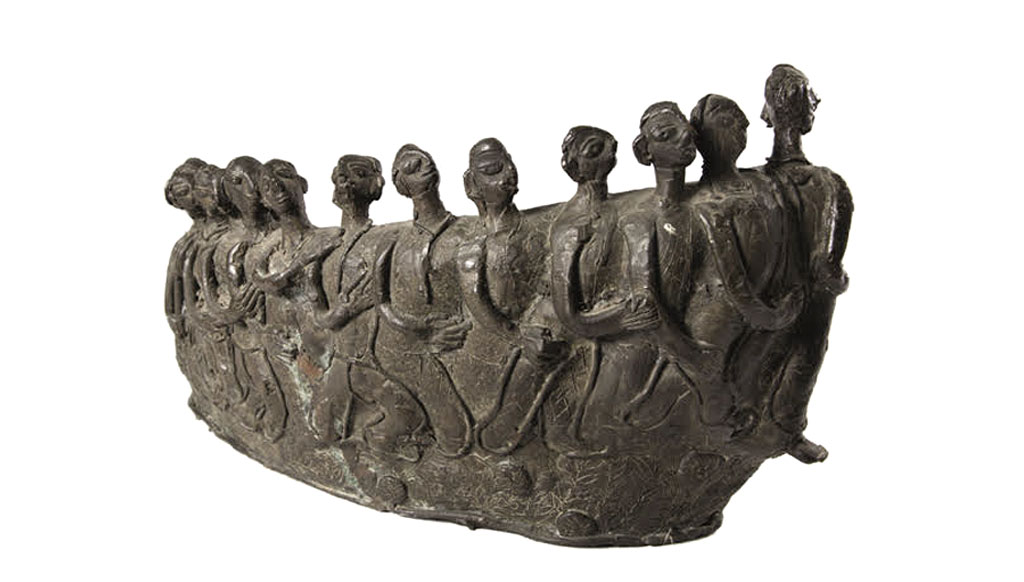
Christie’s fourth consecutive India Sale in Mumbai will take place on 18 December at the Taj Mahal Palace Hotel and will be led by one of the most important collections of modern Indian art put together over the past thirty years. Abhishek and Radhika Poddar have built one of India’s most comprehensive collections of modern and contemporary art, antiquities, folk and tribal art, textiles, craft, design and photography. Their collecting has always been based on an innate respect for the arts and a drive to learn about and document the country’s diverse cultural landscape and reflects their longstanding personal relationships with a multitude of artists, gallerists and scholars, as well as their own deep knowledge and unrelenting effort to train their eyes and hone their tastes. A total of 41 lots will be offered from this collection, including important works by Tyeb Mehta, Vasudeo S. Gaitonde, Ganesh Pyne, Meera Mukherjee, Bhupen Khakhar and several other modern Indian artists. The reason for parting with these works is that Abhishek and Radhika Poddar are currently expanding their collection in new and exciting directions.
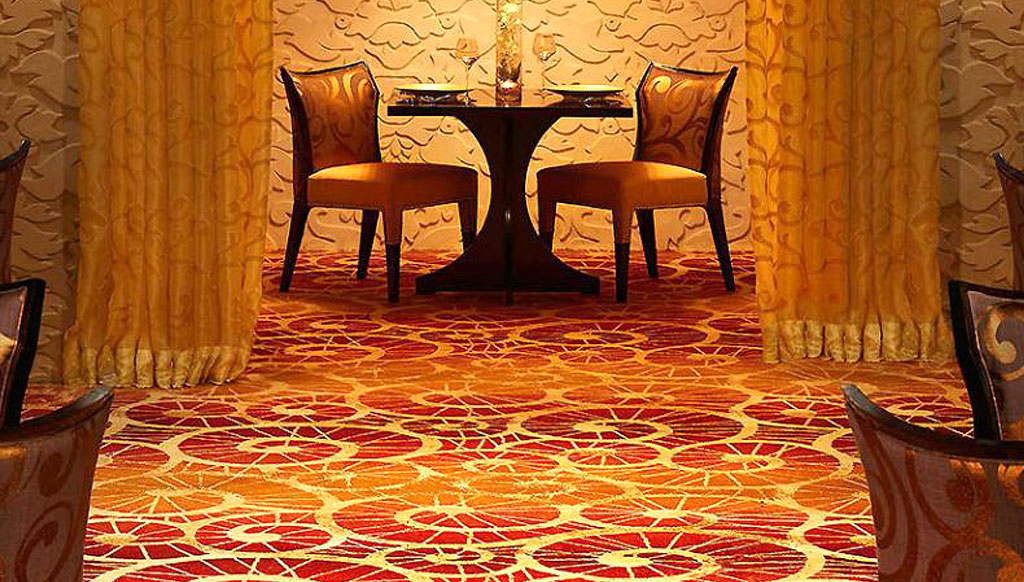
Sofitel BKC Mumbai has a plan that harks back to an older era, a time when real conversations mattered more than social media updates, when living in the moment took precedence over ‘clicking the moment’. The five star property is celebrating Saturdays as the day for guests to ‘Disconnect to Reconnect’—smartphone-free days. Guests are asked to leave their cell phones at the restaurant reception, and enjoy each other’s company in the simple, unobstructed way that we once did, without the constant interruption of rings and notifications. Of course, if it’s a special occasion and you need that picture perfect moment for posterity, you can always ask the restaurant ambassadors to capture the moment instead. Hassle free and gadget free! And for your ‘sacrifice’, you get a discount on your meal: a lavish buffet at Sofitel BKC’s Pondicherry Cafe that costs INR 3,100 would be available for INR 1,900 instead. So are you willing to take the plunge?

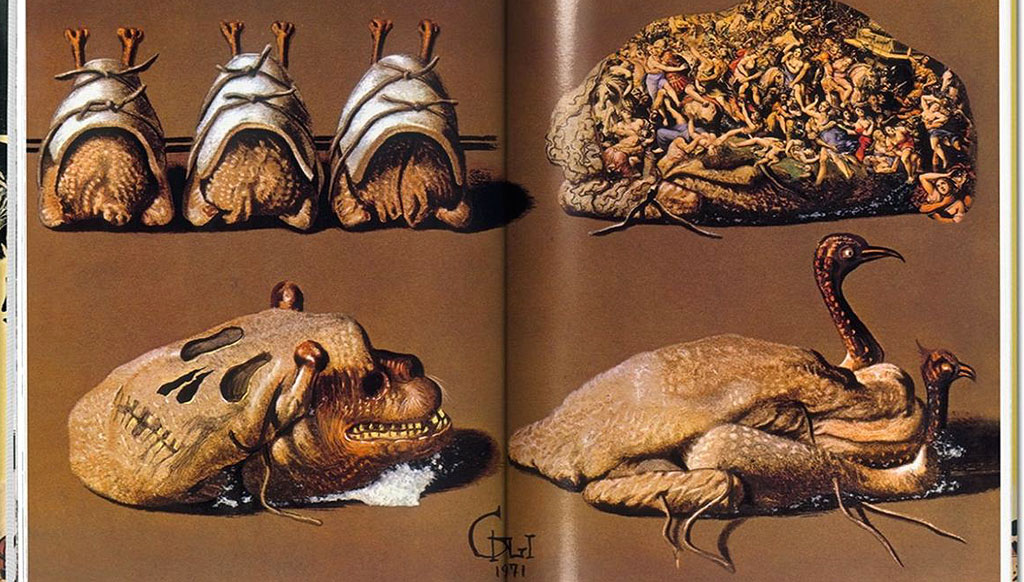
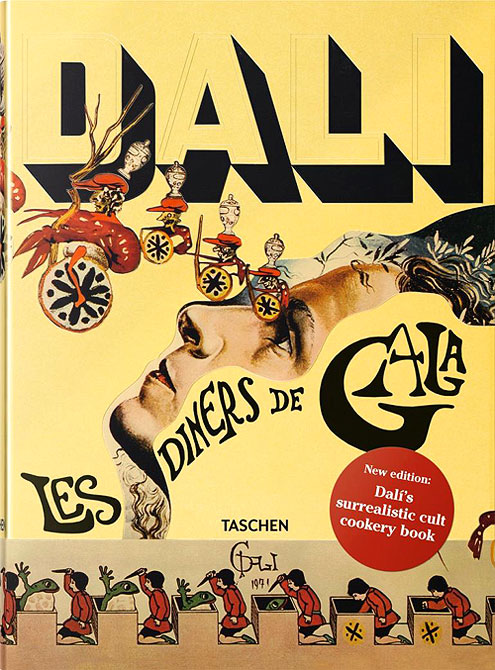
A rare and fantastical cookbook by the painter Salvador Dalí is being reissued for the first time in more than 40 years, and already looks set to be received with great fanfare. Taschen, Germany’s renowned art publisher, is all set to republish the cult cookery book featuring fantastic illustrations by the artist.

diners de gala

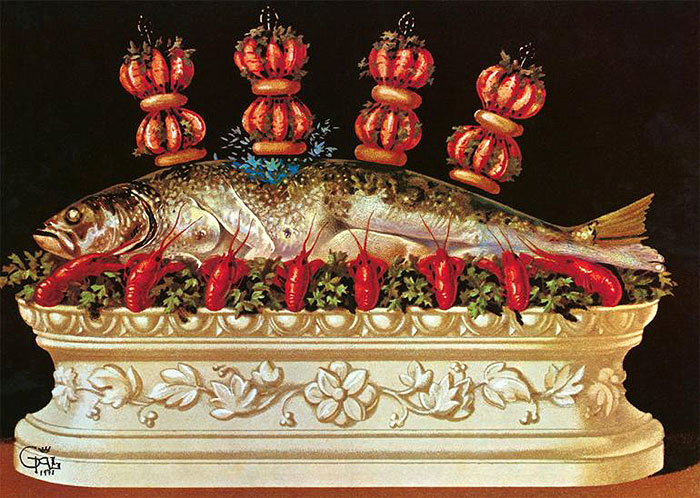
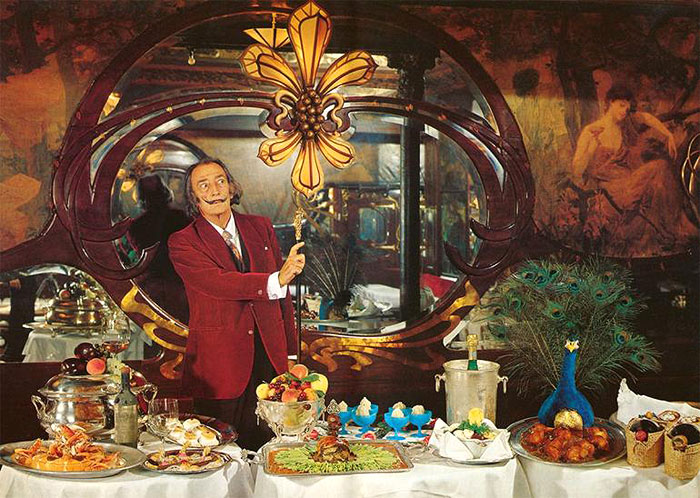
Dalí’s lavish and erotic cookbook Les Diners de Gala was first published in 1973, featuring 136 recipes compiled by the painter and his wife Gala. Divided into 12 chapters with titles such as “Prime Lilliputian malaises” (meat) and “Deoxyribonucleic Atavism” (vegetables), the book also features sumptuous Dalí illustrations and photographs of the painter posing alongside tables loaded with a banquet’s worth of food. Chapter 10, entitled “The ‘I Eat GALA’”, is devoted to aphrodisiacs.

peculiar artworks

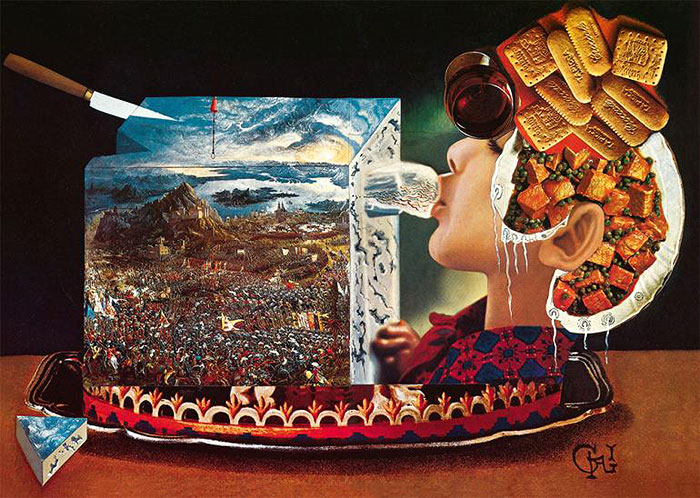
The pages are replete with peculiar artworks such as towering mountains of crayfish with unsettling overtones of cannibalism, an unusual meeting of a swan and a toothbrush in a pastry case, and portraits of Dali himself mingling with chefs against decadent place settings. In one illustration, a disembodied head with biscuits for hair and a fringe made of a jar of jam sits on a platter alongside a large cube of blue cheese, the sides of which show a crowd in front of a mountain. Another shows a desert scene in which a telephone receiver is suspended on a twig over a melting plate holding two fried eggs and a razor blade. Outlandish to the very tee, even the featured recipes carry weird (yet catchy) titles like – “Thousand Year Old Eggs”, “Veal Cutlets Stuffed with Snails”, “Frog Pasties”, and “Toffee with Pine Cones”!

parisian restaurants

As a matter of fact, many, many recipes from the book have been adopted at popular Parisian restaurants of the time such as Lasserre, La Tour d’Argent, Maxim’s, and Le Train Bleu. Furthermore, the manuscript comes with an outright disclaimer referring to the book as an assimilation of gastronomic delights as against methodical calorie counting. While the book’s original 1973 edition of 400 copies in known to retail in hundreds of dollar, Taschen offers it’s re-printed version (first of its kind in 43 years) for much less, and it can be can pre-ordered via Taschen’s e-commerce site.

salvador dali

the manuscript

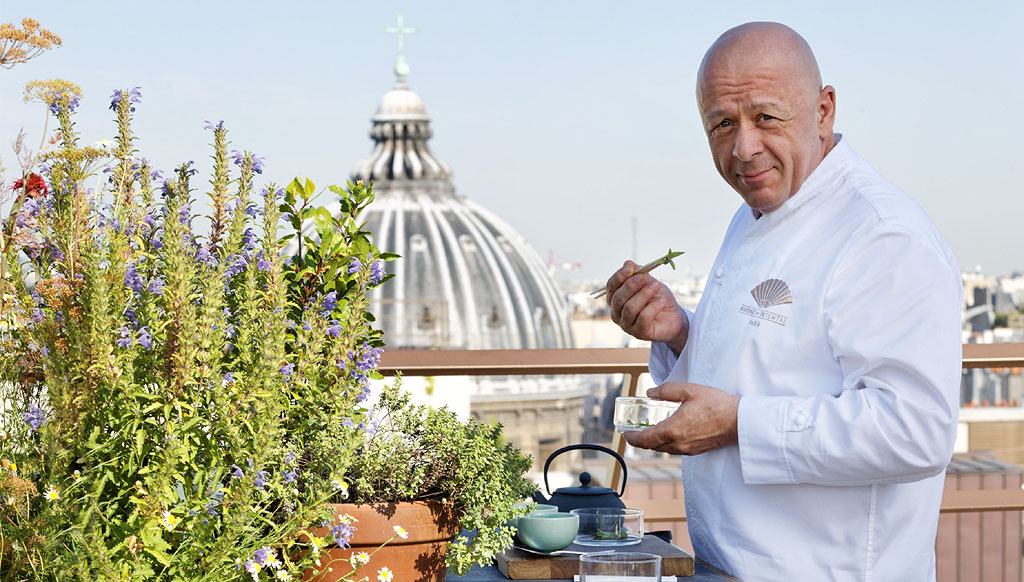
Mandarin Oriental, Paris has unveiled its new rooftop vegetable garden as part of its contribution to sustainability. Perched atop the city’s most fashionable district, the garden complements the hotel’s rooftop beehive and will contribute to the existing year-round supply of fresh, organic produce. Executive Chef, Thierry Marx, will use the garden’s produce as seasonings and herbal tea infusions at Sur Mesure par Thierry Marx. Ten types of fresh mint, plus other herbs, including thyme, rosemary, sage and fennel, will be grown in the garden, alongside vegetables, such as courgettes, tomatoes, celery and onions. Already, bees from the hotel’s hive have gathered nectar from the vegetable garden’s many flowers to produce an aromatic honey. In July 2016, they yielded 20 kg of honey, which Executive Chef, Thierry Marx, and Pastry Chef, David Landriot, have used in their recipes. The hotel installed the beehive to help reverse a decrease in the French bee population. An important part of the pollination process, bees thrive in Paris which is a pesticide-free zone. Since opening in 2011, Mandarin Oriental, Paris has been recognized as an eco-responsible hotel and is the first in France to obtain High Quality Environment certification (HQE). As an HQE certified building, the Palace consumes 20 to 30% less energy than a non-HQE building.

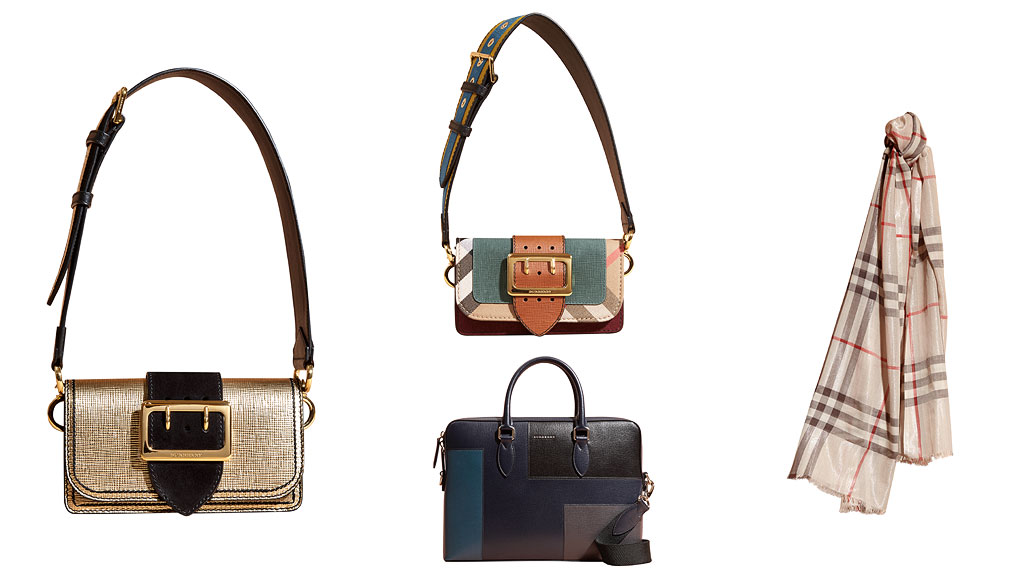
Burberry’s got a whole new range of luxe fashion giftables for the festival of light. You can choose from Buckle Bags in textured and metallic leather, scarves in metallic gold & silver, fragrances and wallets. Now that’s a trendy way to celebrate Diwali.

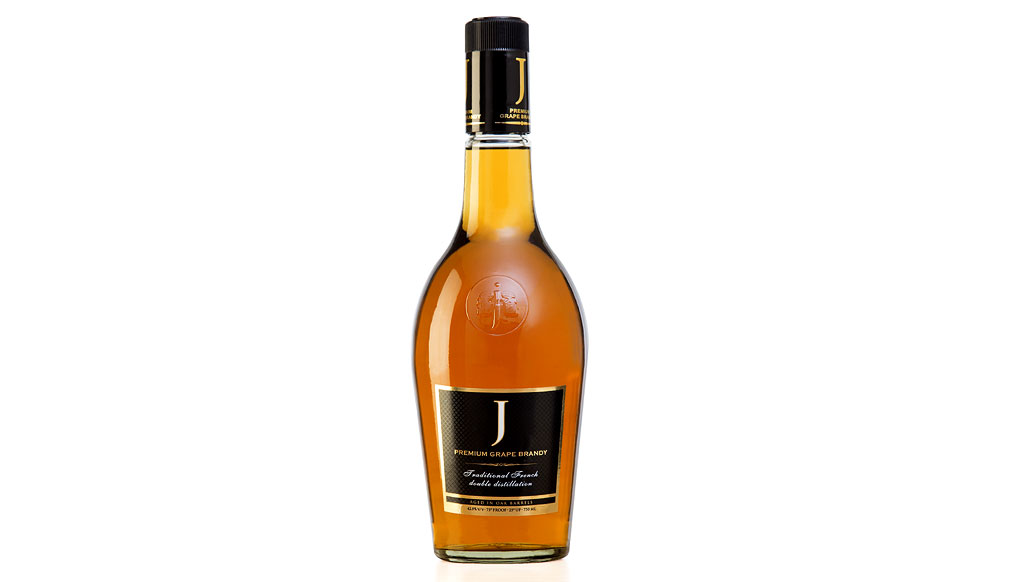
Sula Vineyards has announced the launch of J – a Cognac-style brandy great also as a base for a wide variety of cocktails. Being the second handcrafted premium spirit from the ‘House of Sula’ – J is made using grapes from Nashik Valley. The grape brandy is aged in small French oak barrels which impart a smooth and distinctive taste, also giving J a spectrum of aromas and a complex character of a Cognac-style brandy.J is double distilled in small batches using small alembic copper pot stills, resulting in an exceptionally smooth liquor and a distinct character. It is golden in colour with developed notes of dried fruits, vanilla, tobacco and honey. J comes packaged in a bottle design inspired from the mid-19th century, a style known as ‘standard fifth’ or ‘lettered brandy’ with embossing. The bottle’s slender design, broad masculine shoulders and long neck makes it stand apart. The unique design of the Fabrizio cap which is tamper proof, also ensures a smooth flow of the liquid from the bottle, tilted in any direction. While JANUS is a 100% premium grape spirit, J is a made of 50% premium grape spirit blended with other premium spirit.

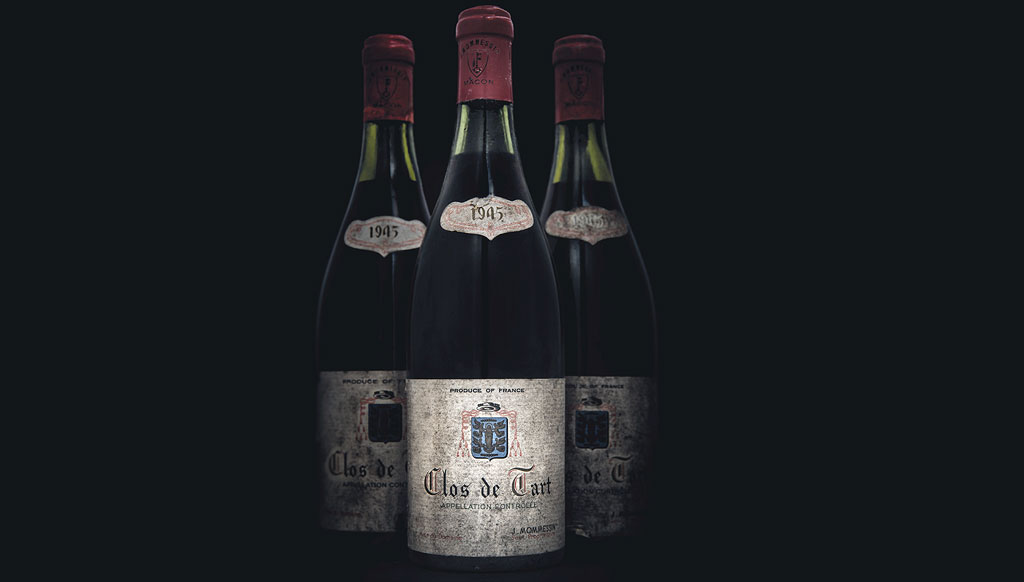
On Thursday October 20th, Christie’s London will present a landmark auction of Fine and Rare wines: The Avery Family Cellar. The Averys made their name over 6 generations, running their eponymous fine wine business in Bristol – founded in 1793 and continuing to the present day. John Avery MW was a well-known pioneer for importing numerous wines of Australia, New Zealand, South Africa and the USA. A wide range of these rarities feature in the auction. However the oldest and deepest sale selections emanate from ultra-traditional regions of Bordeaux and Burgundy where Averys frequently bottled their own selected barrels and cuvees well into the 1970s. A wide selection of Bordeaux back to 1875 Lafite and Burgundy from 1923 Richebourg onwards, is complimented by smaller selections from Champagne, Rhone and Vintage Port regions. Selected highlights from the 900 lot auction include five bottles of Clos de Tart 1945, eleven bottles of Château Latour 1945, five bottles of Château Mouton-Rothschild 1945, extensive vintages of Penfolds Grange, cases of Pétrus 1990 and Château Ch eval-Blanc 1982 alongside bottles of Château Lafleur 1971.

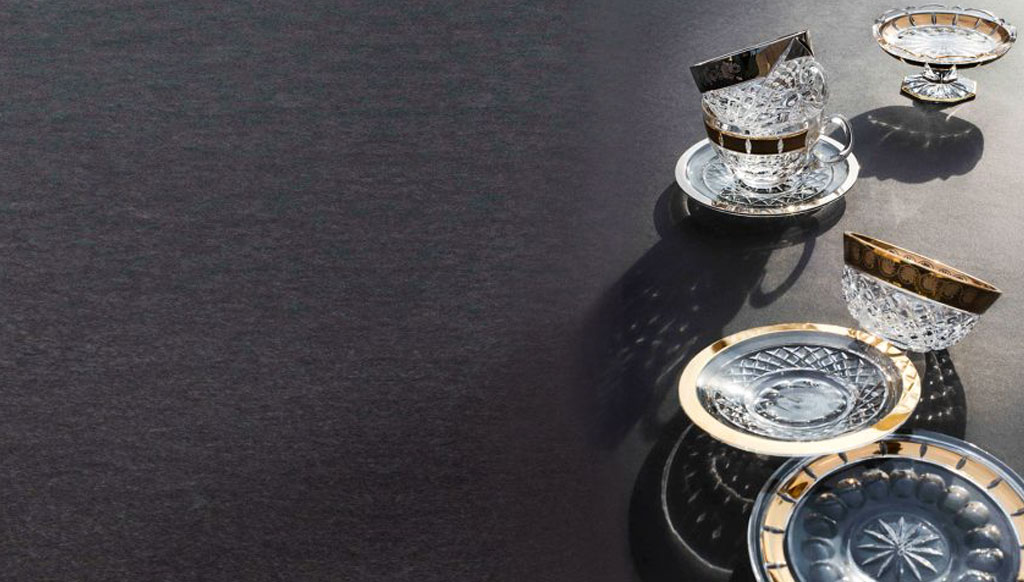
From fashion and spaces to jewellery and weddings, Rohit Bal is one of India’s most versatile designers. And now he has made his foray into crystalware, through a candescent collection of tableware and ornamental objects made by master artisans from the Czech Republic and Slovakia. Manufactured in 24 per cent hand-cut lead crystal—reputedly the best quality in the world—the collection includes goblets, vases, tea sets, platters, salvers and urns. Rimmed in 24-carat gold and pure platinum, and featuring Bal’s signature lotus and peacock motifs, these are items worthy of an heirloom from one of the country’s most celebrated maximalists.

The Maharajas’ Express, the uber- luxurious train owned and operated by Indian Railway Catering and Tourism Corporation (IRCTC), has just received the 2016 Seven Star Luxury Hospitality and Lifestyle Awards at Marbella in Spain.  Already established among the world’s most luxurious trains, Maharajas’ Express was presented the “Signum Virtutis”, the seal of Excellence, from the Seven Star Luxury Hospitality and Lifestyle Awards at an impressive function held at the Villa Padierna Hotel in Marbella. The award was received by IRCTC Chairman and Managing Director Dr A K Manocha in the ‘Seven Star Experience Sector’. The train, which began its inaugural journey in 2010, has been the recipient of the coveted Leading Luxury Train of the World Award for four consecutive years, and is in the league of leading luxury trains of the world, including the Royal Scotsman and the Eastern and Oriental Express.

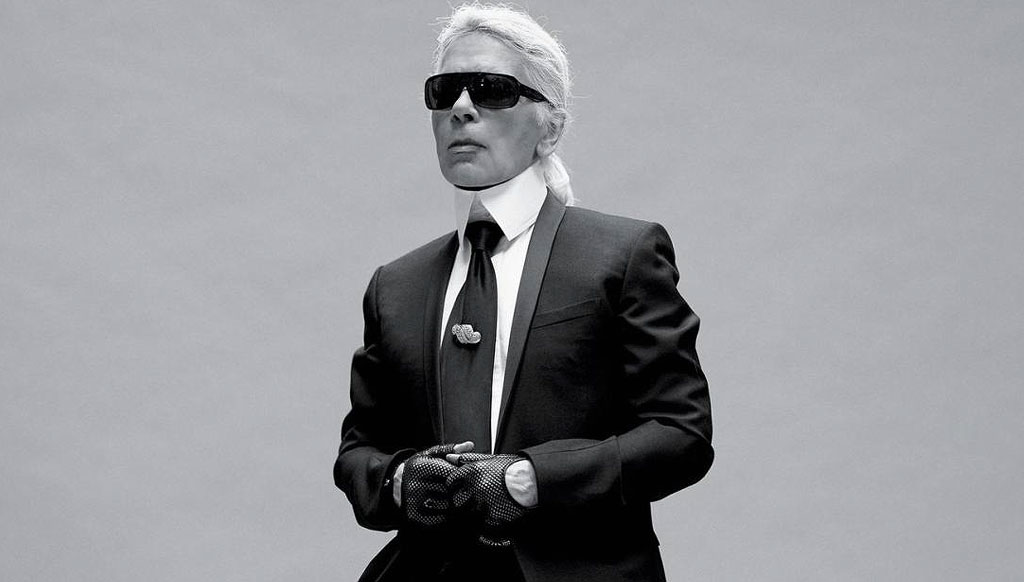
The Karl Lagerfeld Group has entered into an exclusive, long-term license agreement with Brandmark Collective B.V. and this partnership is expected to create hotels, residential properties, restaurants and private clubs. Each of these properties will feature Lagerfeld’s signature aesthetic as well as his dedication to personal touches, creating a unique product. The first property to benefit from the Karl treatment is a six star hotel in Macau that is slated to open as early as next year.