While fans of Formula 1 gear up for the Monaco Grand Prix—held May 26 to 29—car collectors the world over will be racing to the RM Sotheby’s Monaco auction on May 14. Tracing the automotive industry’s technological advancements in design and performance, masterworks from the world’s leading marques will cross the block—many for the first time.

1965 Alfa Romeo Giulia Tubolare Zagato
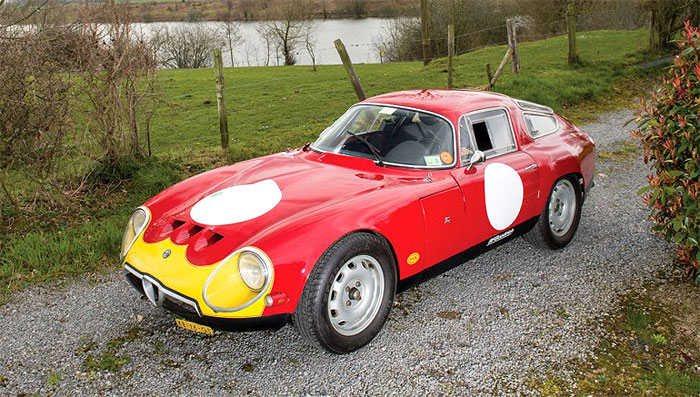
ZAGATO ZIP | This beautiful berlinetta is named so for its lightweight tubular chassis and Zagato-contsructed aluminium body

A beautiful berlinetta, the Alfa Romeo Giulia Tubolare Zagato is named for its lightweight tubular chassis and the Zagato-constructed aluminum body. At 1,455 pounds (including its 1.5-liter Giulia engine), the coupe was designed for competition and can reach speeds of up to 133 mph. The model finished second in its premiere race—the Coppa FISA in 1963—and won its class in numerous others the following year, including the 12 Hours of Sebring, the 24 Hours of Le Mans, the Tour de France, and the Coupe des Alpes.

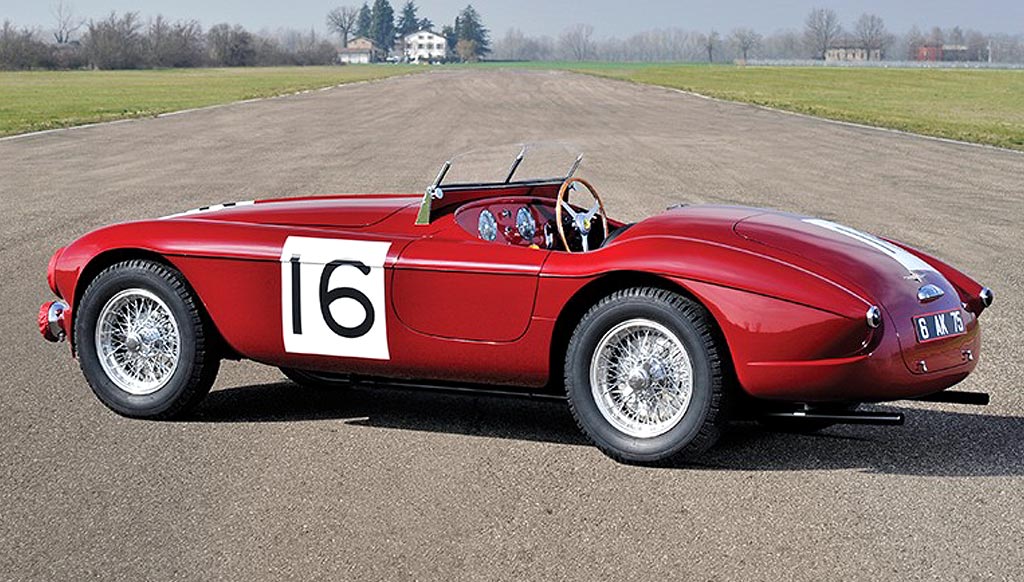
Of the 101 examples built, Chassis No. 750039 was first sold in 1965 to Angelo Pelatelli, who drove it to multiple first- and second-in-class wins. It was piloted next by Pier Luigi Vasile of the Squadra Piloti Senesi racing team before he too passed it on. For the past 33 years, the car has been with the same individual and has been entered in several vintage rallies such as the Coppa d’Italia and Targa Florio. A new collector will be expected to pay up to $1.4 million to make it their own.

1930 Alfa Romeo 6C 1750 Gran Sport Spider
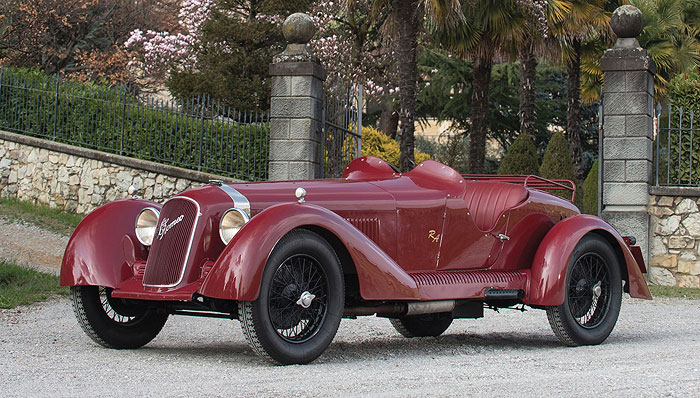
ROAD RULER | This car won both the Tourist Trophy and Mille Miglia in 1930

Hired by Enzo Ferrari, Alfa Romeo’s team manager at the time, engineer Vittorio Jano first developed the marque’s 6C series—a tourer equipped with a 1.5-liter, 6-cylinder engine—in 1926. By 1930, the car came with a bolstered 1.75-liter engine and the option of a shorter wheelbase along with alloy superchargers and intake manifolds—a combination that created the 6C 1750 Gran Sport Spider. Equipped with a Roots supercharger as a standard feature, the roadster rocketed with 85 hp and won both the Tourist Trophy and Mille Miglia that same year. Chassis No. 8513048 was sold to professor Mario Ferraguti, who entered it in the Mille Miglia in 1931, 1933, and 1936.
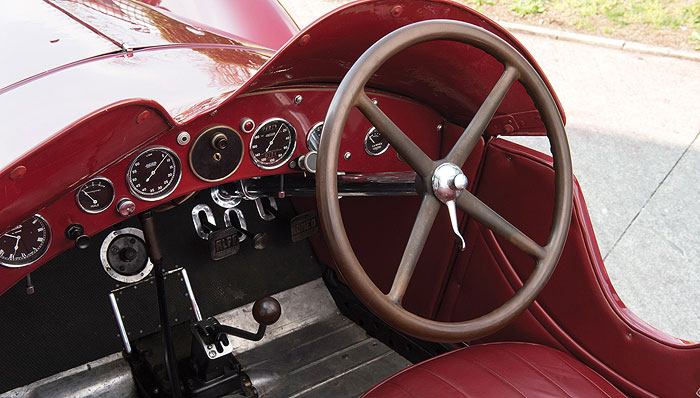
MILLION DOLLAR BABY | This rare Alfa Romeo is valued at up to $1.4 million.

The only race he finished was in ’33, when the car had been modified to run on an alternative fuel source (produced from coal or wood) known as gasogeno. Ferraguti completed the course with an average speed of 31 mph as opposed to the winning rate of 67.8 mph. Restored back to its original factory specifications and in the Count Agusta Collection, the rare Alfa Romeo is valued at up to $1.4 million.

1988 Porsche 959 “Komfort” Stage II
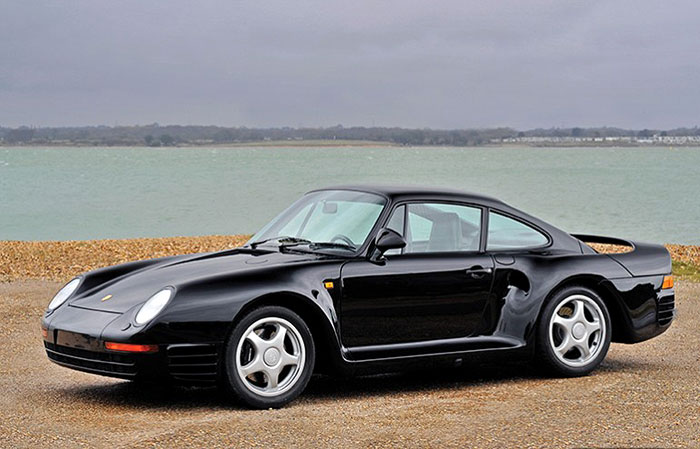
TURBOCHAGED | This baby was the fastest production car of the day due to its 585 hp, twin-turbocharged 6-cylinder engine that brought it first place in the 1986 Paris-Dakar Rally

Designed and developed to compete in the Fédération Internationale de l’Automobile (FIA) Group B World Rally Championship, the Porsche 959 featured top-tier technology, including adjustable suspension, all-wheel drive, tire-pressure sensors, and power-assisted disc brakes. Despite the FIA’s Group B category being eliminated in 1986, Porsche continued with a road version originally planned to meet homologation requirements. The result was the fastest production car of the day due to its 585 hp, twin-turbocharged 6-cylinder engine that allowed a maximum speed of 197 mph—power that would propel it to first place in the 1986 Paris-Dakar Rally. Of the 329 examples made, the car at auction (with the “Komfort,” or street trim, as opposed to the sport package) is believed to be the only one that came in black with matching interior. During the course of ownership, it was given Stage-2 specification by the Porsche Classic Centre in Stuttgart, Germany—a designation that included a boost of almost another 100 hp. With only about 5,900 miles on the odometer, the prized Porsche is estimated to demand a price of up to $1.4 million.

1955 Mercedes-Benz 300 SL Gullwing
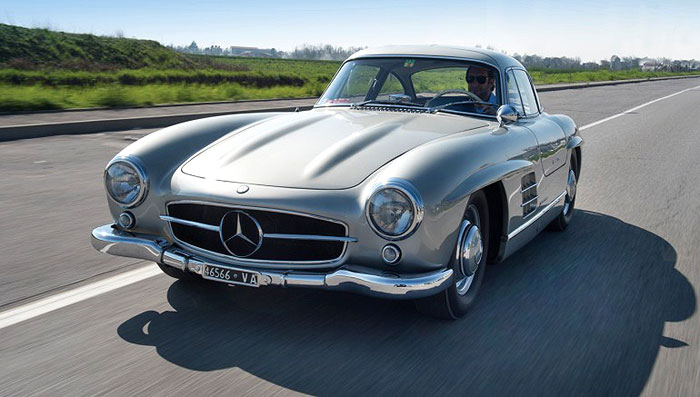
SPORT LIGHT | The SL speedster weighed a mere 182 pounds, but had a 215 hp 3-liter OHC straight-6 engine that gave it a top speed of 161 mph, going from zero to 60 in 8 seconds

Built for the U.S. market, the Mercedes-Benz 300 SL Gullwing was a production model based on one of the German marque’s most successful racecars. The latter was victorious at Le Mans, Nürburgring, La Carrera Panamericana, and, most memorably, with Stirling Moss behind the wheel to set the course record for the Mille Miglia in 1955.  The “sport light” (SL) speedster had a body of welded tubular-steel that weighed a mere 182 pounds. But gravitas was given by its 215 hp, 3-liter OHC straight-6 engine (with fuel injection) that gave it a top speed of 161 mph and the ability to accelerate from zero to 60 in 8 seconds. And cruising comfort was enhanced by its fully independent suspension. Most notable, however, was its distinctive design, including the “birdcage” frame and namesake doors.
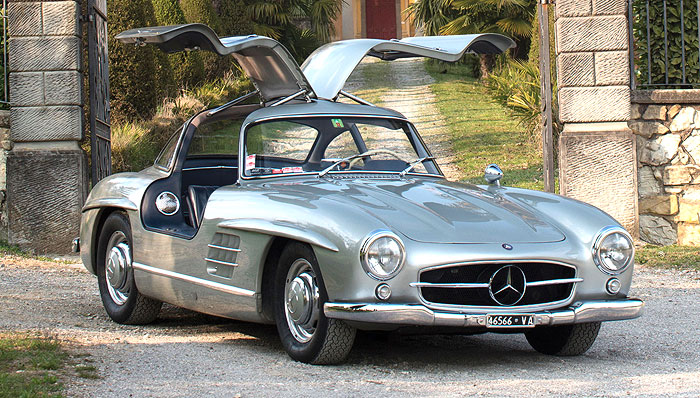
RARE BEAUTY | This special car has forever been in the care of Italy’s Agusta family—a name synonymous with aircraft and performance motorcycles

What makes Chassis No. 5500799 stand out even more is the fact that, since it left the showroom, it has been in the care of Italy’s Agusta family—a name synonymous with aircraft and performance motorcycles. Maintained in its original metallic silver with dark blue interior, the car will change possession for the first time for a price expected to peak at $1.5 million.

2008 Peugeot 908 HDi FAP Le Mans Prototype
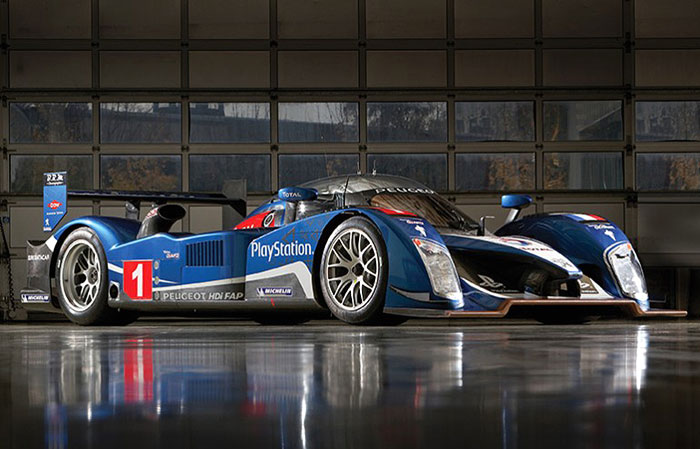
RACE ACE | Along with winning the very first race it entered, this hot shot also clinched the Petit Le Mans and the 1000 Kilometres of Algarve races

An environmentally conscious competitor, the Peugeot 908 HDi FAP Le Mans Prototype made a fast mark in motorsport when it won the first race it entered. Firing its monocoque chassis forward is a diesel-powered V-12 engine that contains an exhaust particulate filter for cleaner emissions. After a second-place performance at Le Mans, Chassis No. 05 went on to win at the Petit Le Mans and the 1000 Kilometres of Algarve races as well as garner two additional second-place finishes, three pole positions, and four fastest lap times before it was retired by the Peugeot team. The victorious vehicle is estimated to sell for up to $1.8 million.

1948 Tucker 48
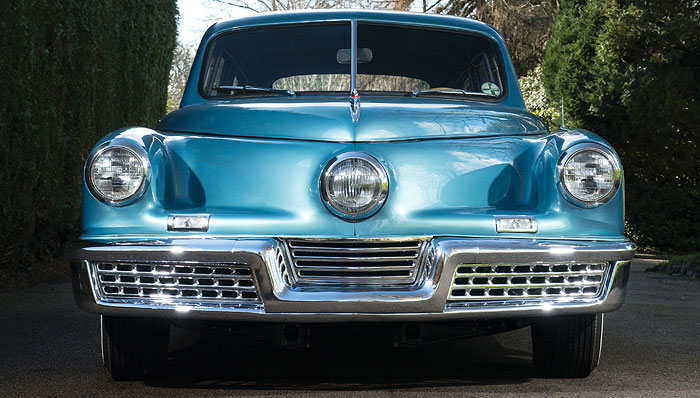
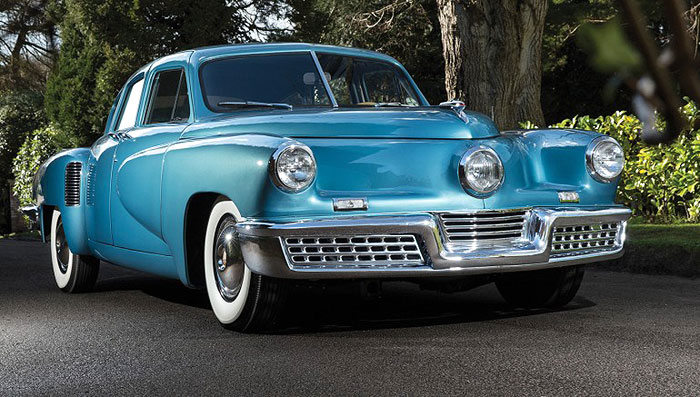
TENACIOUS TUCKER | Representing the vanguard of safety in its day, this car was the dream of automaker Preston Thomas Tucker—but ironically landed him into an investigation of fraud

A testament to tenacity, the Tucker 48 is the realization of automaker Preston Thomas Tucker’s vision of a vehicle that represented the vanguard of safety in its day. With a body designed by Alex Tremulis, the model features a windshield that ejects outward on impact, a third headlight (centrally mounted) that turns with the front wheels, and expanded space under the dash for a passenger to tuck into in case of a crash. Under the hood is a modified Franklin O-335 flat-6 aircraft engine generating 166 hp. Due to the duration it took Tucker to develop his dream machine, the U.S. Securities and Exchange Commission became suspect of potential fraud in deference to investors, which led to an investigation and eventual charges. By the time he was cleared of any wrongdoing, Tucker’s business had tanked, but not before his employees volunteered their own time to finish building the prototype and 50 production cars. After being sold at the company’s bankruptcy auction, Chassis No. 1049 (the last complete car built at the factory) had a starring role in Nick Jenin’s exhibition The Fabulous Tuckers—a traveling road show that played on the defunct marque’s notoriety. Attention followed with its next owner, Gene Zimmerman, who included the car in his Automobilorama museum in Harrisburg, Pennsylvania, until 1978. When a comprehensive four-year restoration was completed in 2007, the singular sedan was sold to a British collector and became the only one of its kind in Europe. There, it has won Best in Class at the 2008 Goodwood Festival of Speed Concours d’Elegance, among other accolades. The tony Tucker carries an estimated value of up to $2.1 million.
tucker-48

(Source: www.robbreport.com)

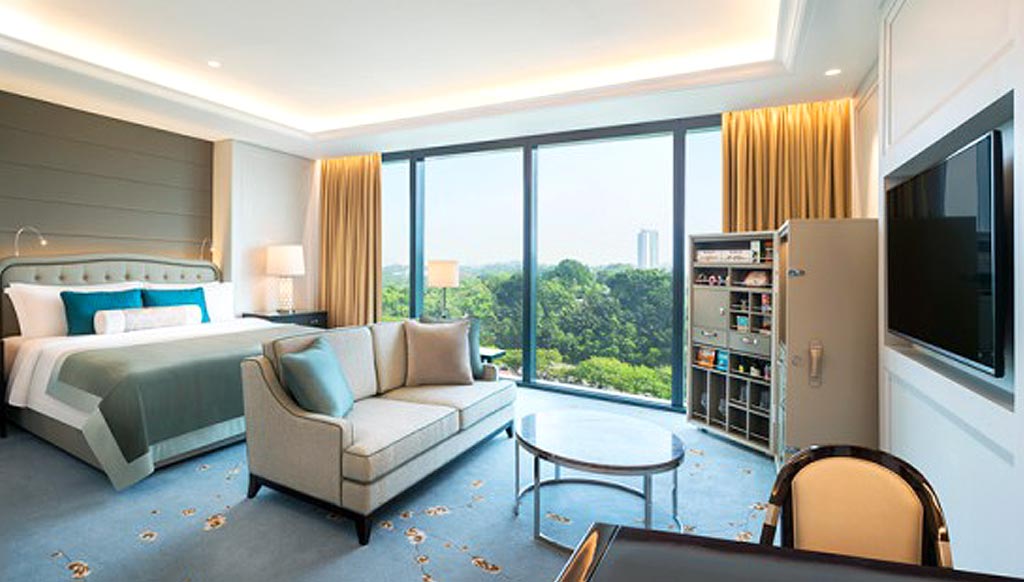
Kuala Lumpur, Malaysia, has finally got its very own St Regis hotel, providing a new standard of luxury for guests. Located in the Sentral Precinct, otherwise known as KL Sentral, the hotel offers 208 rooms and suites ranging from 678 to 4,000 square feet, from vanilla guestrooms all the way up to the opulent Royal Suite. In terms of dining, St. Regis aims to satisfy a wide range of tastes, with a choice of six restaurants and bar spaces, as well as menus from three-Michelin-starred chef Takashi Saito from the Sushi Saito. The rooms all offer the same standard of services that the St Regis brand is famous for. Each room will offer walk-in wardrobes, butler services and complementary daily unpacking, pressing and an in-room coffee and tea service. The Royal Suite, in particular, comes with private elevator access, leading directly into a suite featuring an outdoor terrace, a show kitchen, a massage room, and a gym.

(Source: www.luxuo.com)

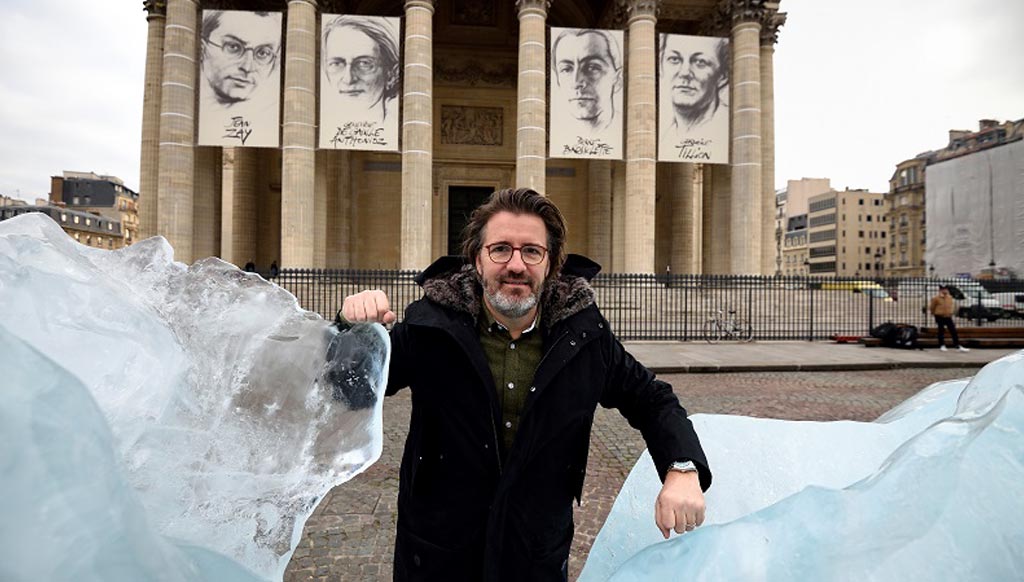
Treading the same ground as Anish Kapoor, Danish artist Olafur Eliasson plans to place his own project over at the Palace of Versailles in France. Kapoor’s sculpture, located outside the palace, was informally and provocatively dubbed the ‘Queen’s vagina’ (after he described it as “very sexual”) and had been the target of anti-Semitic vandalism in the past. Eliasson, though seems to be unfazed by that, and said that he wanted to “make dreams come true” with “an incredibly high” fountain in its gardens. Eliasson is famous for his 10-story urban waterfalls, and also creating a ‘giant sunset’ in the Tate Modern. His work is largely focused on tailoring the elements and the environment. Having the same idea here, Eliasson is also planning to go beyond just installing a fountain by transforming two groves in the palace gardens with an ‘enchanted fog’ – a place to fool around and play.  As a part of preparation, Eliasson roamed around the palace in the dark at night to get a feel for the location, exploring secret doors and hidden corridors. He noted he was creating a few installations within the palace as well, but some so subtle that they may not be noticed by the guests. Even with the Kapoor controversy, Versailles director Catherine Pegard noted that contemporary art had become a major draw to the palace and had produced some “exhilarating” results.

(Source: www.luxuo.com)

Starwood has announced the signing of Aloft Seoul Myeongdong, the second Aloft hotel in Seoul, South Korea. Owned by Shin Chang Co., Ltd., the new-build hotel—slated to open in February 2017— will enliven the local hospitality landscape with its design-led initiatives, tech-forward amenities and buzzing social scene. Located at 104 Myeongdong in the Jung-gu sub-district, Aloft Seoul Myeongdong is ideally situated in the heart of the major shopping district and tourist destination. Aloft Seoul Myeongdong will feature 223 loft-inspired guestrooms with the brand’s signature offerings, such as an ultra-comfortable plush signature bed, custom amenities, as well as fast and free WiFi throughout the property. The hotel will also offer an all-day dining restaurant; Re:fuel, a 24-hour grab & go for light meals; the brand’s signature w xyz bar, the go-to hangout with a fun-loving social vibe; and a well-equipped Re:charge gym. Aloft Seoul Myeongdong will join a dynamic Starwood portfolio of eight operating hotels and two properties in the pipeline in Korea – under the Aloft, Sheraton, W Hotels, Westin and Four Points by Sheraton brands.

(Source: www.theluxuryeditor.com)

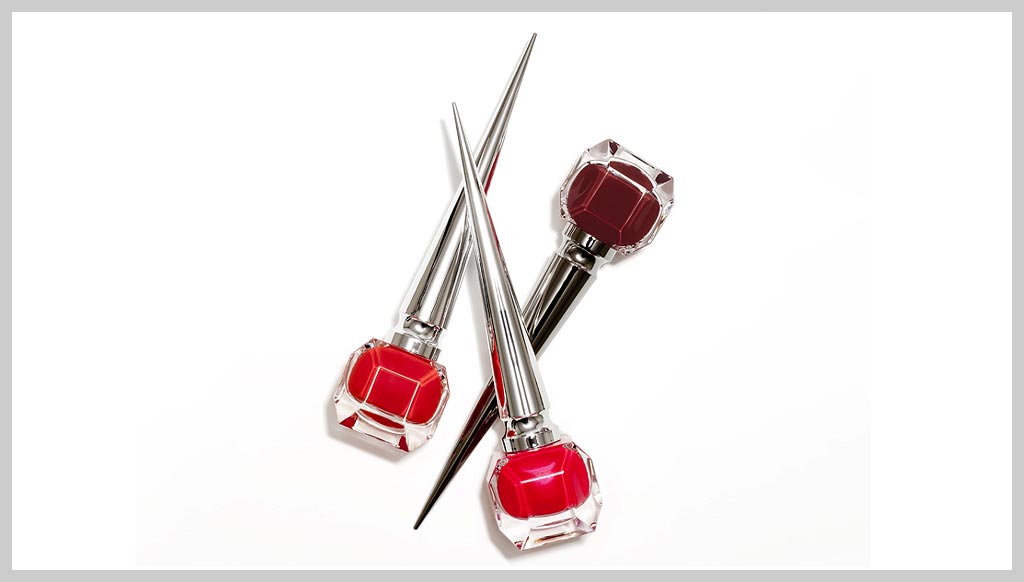
From shoes to nail polishes, Christian Louboutin is painting the town red once again with his trademark. The luxury shoe designer is bringing a new trio name “The Neo Reds” to his range of nail color shades for the new season. One coat is all that is needed for that glossy coat, thanks to the highly pigmented formula. For a little shine, fans of the designer nail polishes can don a peony red with a subtle sparkle named “Jazzy Doll” after Louboutin’s leather sandals. The “Lady Peep” is a deep raspberry that is named after the popular peep-toe stiletto. Those in favour of a brighter shade of red can try the “EdgyPopi”. The preppy and flirty orange-red is the right amount of colour one would need. The polishes are longwearing and chip resistant as well as free of toluene, formaldehyde and DBP. Christian Louboutin first broke into the beauty industry in 2014 with a nail polish collection, but cemented his influence on the market last September when he released a lipstick line that riffed on his iconic red shade. The line’s star piece, “The Rouge Louboutin” lipstick, packaged in luxurious black, silver and gold casing, was accompanied by 35 more hues, packaged in gold casing and priced at $90. The Jazzy Doll, Lady Peep and EdgyPopi shades will be available from June in selected stores and on Christian Louboutin’s website for $50.

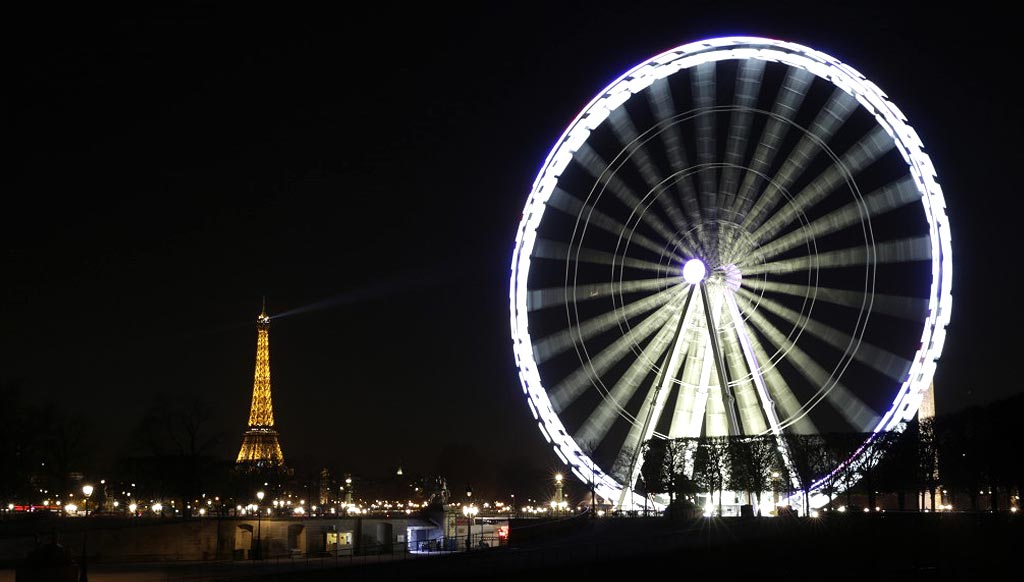
If you are in Paris later this month and are seeking out a special treat, seek out the Ferris Wheel in Paris’ Place de la Concorde, which will turn into a pop-up restaurant for one night only May 19. Organized as part of this year’s S.Pellegrino Young Chef competition, which as the name suggests looks for the world’s most talented up-and-coming chefs, diners can step aboard in a first for the French capital’s “Grande Roue.” Normally, the “Grande Roue” in Paris’s Place de la Concorde is a fun way of taking in the city’s sights that’s especially popular during the winter holiday season. Now, for the first time, the city’s ferris wheel is set to become a pop-up restaurant. Around 400 lucky diners will take a seat in one of the 48 cabins for dinner sittings at 7pm and 9:30pm. We can only imagine how this might work and that very uncertainty means the experience could be a very special one indeed. The pop-up will be serving dishes cooked by the French finalist in the S.Pellegrino Young Chef competition, who will be selected at a country-wide semi-final May 9. Cabin companions will be served an amuse-bouche, followed by a starter, the chef’s signature dish and a dessert. The finalist will be accompanied in the kitchen by the triple Michelin-starred chef Yannick Alléno. The chef, based at the Pavillon Ledoyen restaurant in Paris, is one of the jury members who will help select the French finalist, before coaching them for the final. The pair of chefs will be stepping into a pop-up kitchen installed at the foot of the wheel especially for the occasion. Anyone hoping to enjoy this unique culinary experience, taking diners over 70 meters above ground, will need to book quickly. Reservations can be made online at www.finedininglovers.fr (in French) and places are allocated on a first come, first served basis. Note that bookings must be made for two people. The final of the S.Pellegrino Young Chef competition will be held October 15 in Milan, Italy.

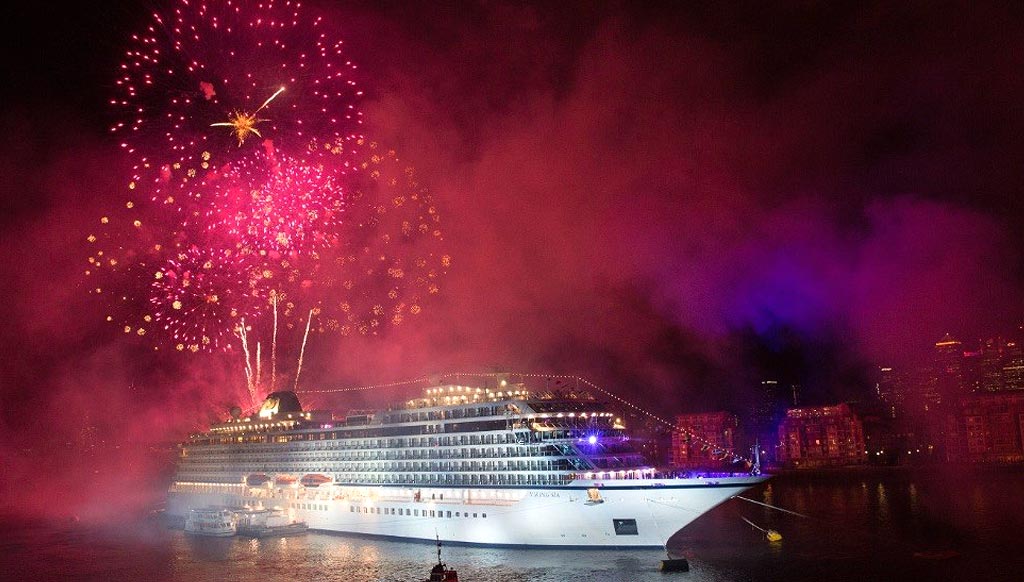
Viking Ocean Cruises, the first entirely new cruise line in a decade, has officially welcomed its second ship, Viking Sea. Italian shipbuilders Fincantieri built the new ship. Viking Sea made its debut at the grand party, pictured above, on the Thames River in Greenwich, London, May 5. This follows the launch of the cruise company’s first ship Viking Star, less than a year ago and signals the growth of Viking Ocean Cruises, cementing the reputation of cruise industry’s most recent arrival. Able to accommodate up to 930 guests and weighing 47,800-tons, the Viking Sea is officially the largest ship ever launched in London, but only the second of six ocean cruise ships currently planned for the fleet. The third and fourth ships, Viking Sky and Viking Sun are under construction and will be delivered in early 2017 and late 2017, respectively. The two remaining yet-to-be-named ships will be delivered in 2018 and 2020. Commenting on the launch, Torstein Hagen, Chairman of Viking Cruises said the company looks forward to bringing more guests to London this spring and in future years, via the launches of both ships. “Our ships are built for exploration; they are vessels that help our guests spend more time immersed in and surrounded by their destination. With the arrival of our second ship – and with four more sister ships on the way – we are focused on introducing travelers to the Viking way of destination-centered cruising, a unique style that was inspired by our success on the rivers.”

Using a hairdryer is a quick and easy fix for dreadful wet hair right out the shower, but its high temperatures often run the risk of causing heat damage to your precious locks. The alternative of air drying your wet hair instead is often hailed “the healthier option”, but it’s a lengthy, uncomfortable process that can take up to hours, and that’s where Dyson engineers come in. Indeed, the new Dyson Supersonic™ Intelligent hair dryer is a reinvention of the humble hair dryer, set to redefine the way you dry your hair, making for a quick and painless process. Featuring a quick, controlled airflow with precise engineering for optimal balance in the hand, the intelligent hair dryer also uses Dyson’s patented Air Multiplier™ technology which enables a thrice-magnified volume of air coming out from the hair dryer. Accelerated over an annular aperture, air sucked into the motor is released as a jet of air that is three times as strong. The cutting-edge hair dryer is also quieter than other hair dryers despite the strength of its airflow, significantly lighter, and uses an intelligent control that adjusts temperatures accordingly to protect the hair from heat damage. Temperature is measured by a glass bead thermistor 20 times a second, where a microprocessor intelligently maneuvers the patented heating element fittingly. The making of the Dyson Supersonic includes a bespoke, ultra-modern Hair Laboratory devoted to understanding the science of hair, where Dyson engineers studied the nuances of the hair. Over 1010 miles of different, actual human hair have been tested over the four lengthy years developing the intelligent hair dryer.

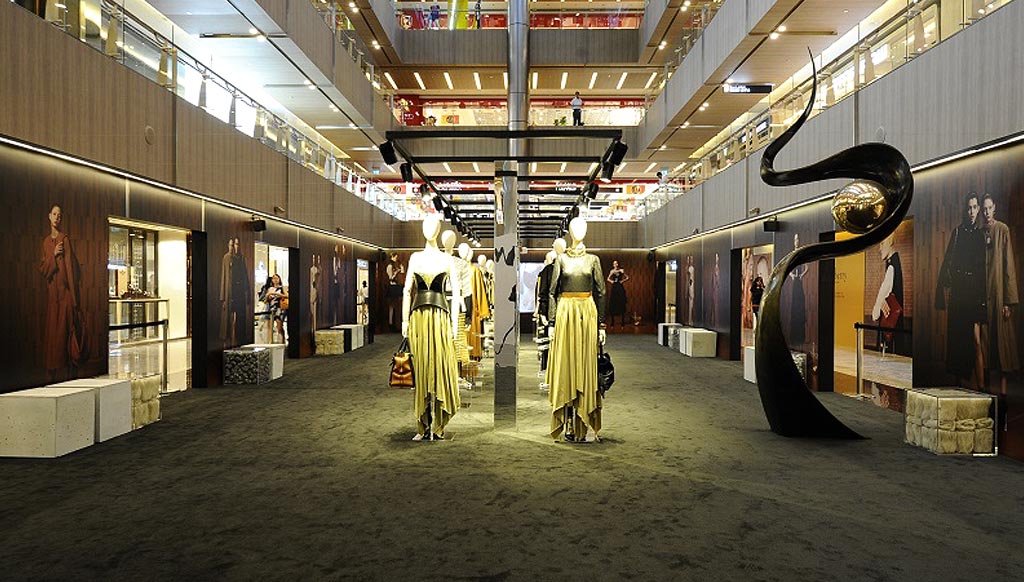
Luxury fashion house Loewe opened with its newly designed Casa Loewe in the heart of Singapore with a resounding bang, kicking things off by showcasing its Fall Winter 2016 collection right in Paragon Mall. This was the first look at the collection since its debut at Paris Fashion Week, and it was combined with a cocktail reception for VIPs and media from the region. Also present at the event was Loewe’s Creative Director Jonathan Anderson. The Casa Loewe stands as a spacious boutique with gleaming black Marquina marble on the façade. Notable inside the store are the showcase of Loewe’s signature bags, as well as a special emerald green canopy overhead. This canopy was a reinterpretation of architect Javier Carvajal’s 1959 piece – first designed for the Loewe flagship store in Madrid. The exhibition, displayed in the center of the mall, was flanked by images from Publication No. 10 under the creative direction of M&M (Paris), styled by Benjamin Bruno and photographed by Jamie Hawkesworth at the Maison de L’Unesco the day before the fashion show in Paris set the space for the exhibition. “The opening of Casa Loewe in Paragon not only presents the brand’s modern identity, but with Singapore’s growth and emergence as a gateway for other South East Asian markets, also strengthens its presence in the region” said Anderson. Indeed, with other stores like Boucheron also viewing the region as an important market, this could be the start of a new era of luxury for Singapore, and Southeast Asia as a whole.

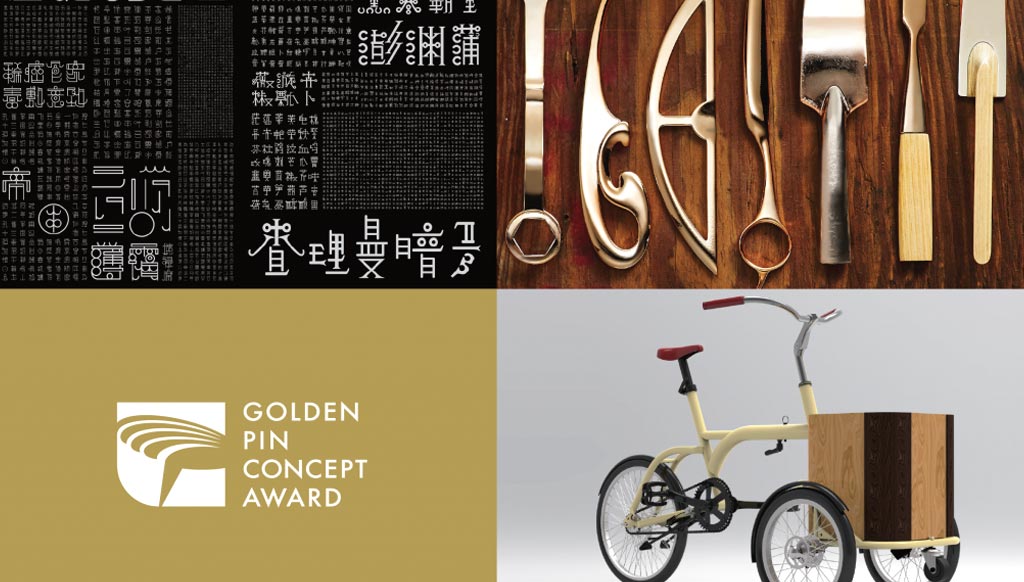
As the longest-running design award that recognizes products created with the Chinese-speaking market in mind, the annual Golden Pin Concept Award (GPCDA) is known to be a gauge for leading design in the community. The GPCDA 2016 has launched its international call for entries, posing a distinct challenge to designers around the world. International designers in product, visual communications, packaging, and spatial design are encouraged to submit innovative design concepts inspired by philosophical, ideological, and cultural ideas from huaren (Chinese-speaking) communities. For those designers interested in entering Chinese-speaking markets, the GPCDA offers an opportunity to test concepts, build a reputation, and take home one of three cash prizes valued at NT$300,000 (approx. $9,800) or a prestigious Design Mark. The deadline for 2016 entries is June 15.