For those subscribing to the adage time is money, owning a private jet is a necessity and not a luxury. It not only means more comfort but also increases productivity. The slowdown and resultant stalling of investments had hit sale of private jets. But now with the economy gaining steam the demand for private business jets is expected to soar again.

The roll call of the elite club of those with their own jets reads like India Inc’s who’s who — Ambanis, Tatas, Ruias, and Jindals to name a few. But before your ambitions take wings, The Luxe Café would advise you to run a thorough check to avoid getting short changed.

Blockquote Border

To start with ask yourself whether you are one of the frequent flier who deserves to own a jet. Besides the purchasing cost, a private plane has hidden costs such as maintenance, salaries and parking.

Blockquote Border

First up on the list are your requirements. To start with ask yourself whether you are one of the frequent flier who deserves to own a jet. Besides the purchasing cost, a private plane has hidden costs such as maintenance, salaries and parking. The global ballpark figure used to justify ownership of a jet is 350-400 hours of flight time per year.  Indians are more royal and prefer the convenience of owning a jet though they may be spending less time in the air than the above benchmark.
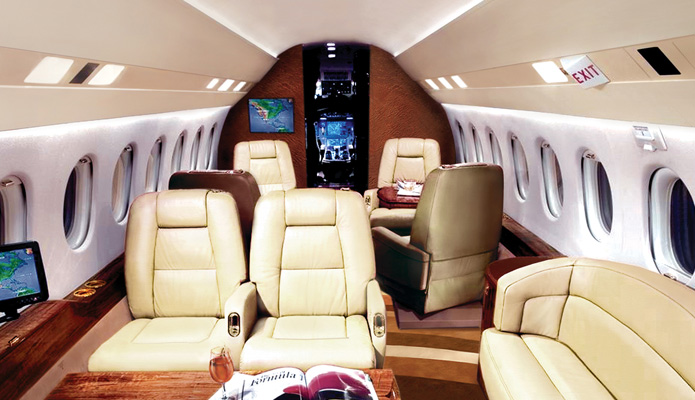
With the economy gaining steam, the demand for private business jets is expected to soar again

Besides the utility factor, also check out the availability of airstrips as well as the parking slots in the airports you wish to fly to and fro.

Other variables which will weigh on in your decision making include: the distances and the number of hours you expect to fly in a month and how deep are your pockets. The choice between buying an old and a new aircraft will finally depending on your finances. Remember aircraft are not considered an asset in India as per RBI regulations, which makes aircraft financing more difficult.

Blockquote Border

Once you have decided to buy a jet, the next step is to find an experienced independent expert.

Blockquote Border

Once you have decided to buy a jet, the next step is to find the right match. You should talk to an experienced independent expert. Remember a wrong advice can be disastrous. For example, a pilot would not be the right advisor as he would not have flown all the available options and could have his own agenda. Also, don’t let glossy advertisements influence your decision. Use the ads to make an informed choice. The expert will be with you for at least 3 months and cost anything upwards of Rs 4.5 lakh. The next step would be to shop around.

“Once your requirements are worked out, and you understand the capability of the aircraft and performance levels, get in touch with 2-3 sales representatives of the models and see where you get the best price that should include clearance of documents, supply of pilots, maintenance contracts amongst others,” advises Group Captain Bali, Secretary of the Business Aviation Operators Association.
Blockquote Border

Hire an aircraft management company or a consultant. They will not only coordinate the purchase but also keep your plane ship shape afterwards, of course for a fee.

Blockquote Border

Purchasing a jet is not like buying a Mercedes or BMW, where you can walk into a showroom and pick the one you like. In any case, you should not do it yourself. Hire an aircraft management company or a consultant. They will not only coordinate the purchase but also keep your plane ship shape afterwards, of course for a fee.

Arrow Aircraft, for instance, is a sales representative of Beechcraft and Gulfstream. The OEM, Embraer is known for helping clients buy and maintain Embraer jets including the smaller Phenoms. Then there are companies such as K-Air and Empire Aviation.

Make sure the jet you are buying meets the latest DGCA norms. Also, it would be a good idea to remember that financiers have their own internal rating based on residual value after certain years. Check with an expert to find the jet’s resale value.
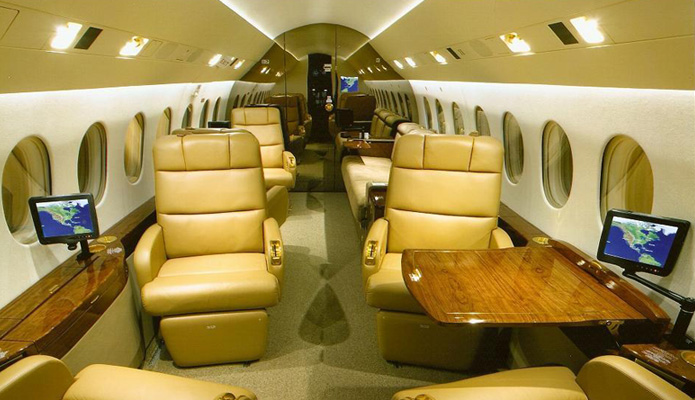
Remember to specify the cabin interiors and layout. Photo by Taj Air

Once you have made your choice, remember to specify cabin interiors and layout. For example, you can choose to have the galley in front or aft; the size of television screens, quality of leather on chairs, internet access, headphones, and bath – but all these will come at a price.

If you are a globetrotter, it is essential to check on the support network to take care of your maintenance and clearance issues.
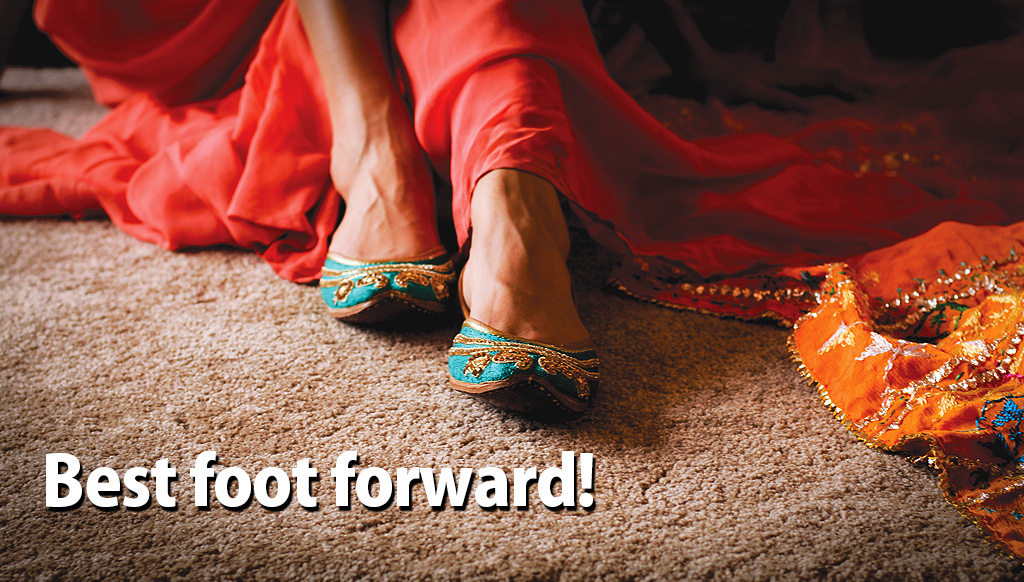
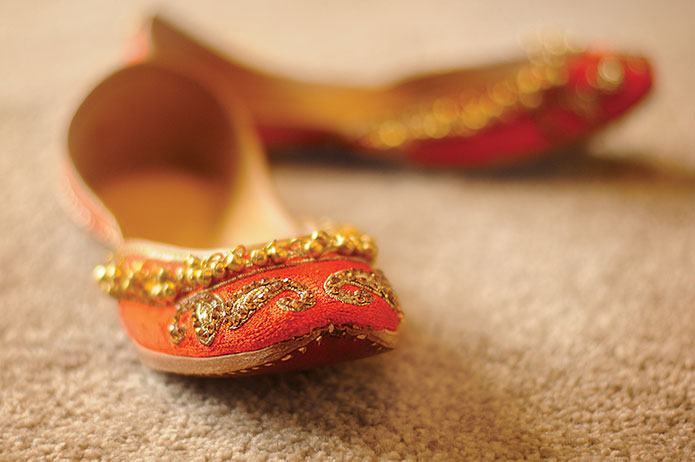
Pretty feet call for prettier foot gear. Taking the baton forward for this, are two young ladies of royal lineage — Malvika Kaur Jind along with her sister in law Shirin Mann Sangha, re-creating the fabled Punjabi juttis in colours and designs that pop out in all their resplendence. Needledust boasts of limited edition handcrafted juttis with intricate designs, embroidery, embellishments and carrying a vintage allure that none can miss. While they promise to brighten up the shoe closets, these juttis are sure to add a bit of luxe touch to foot fashion on an everyday basis.

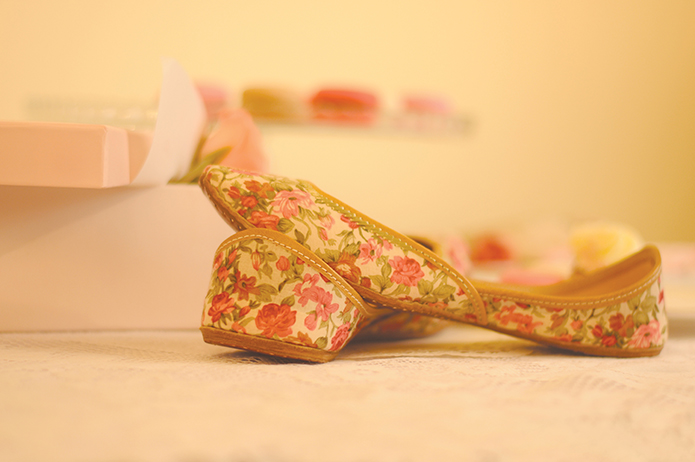
Juttis in soft pastels blending into fluorescent pinks and vintage minimalism.
Juttis in soft pastels blending into fluorescent pinks and vintage minimalism

Replete with heritage in their form but with a modern vibe and contemporary design, Needledust has juttis in soft pastels blending into fluorescent pinks and vintage minimalism even as the rich detailing gives these, a traditional attire for the feet, a sparkling new appeal.

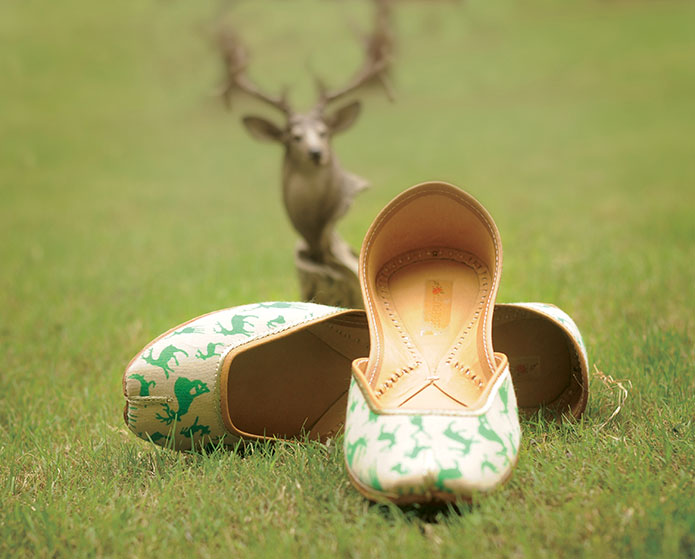
 Handcrafted by some of India’s finest artisans, Needledust’s line of bespoke juttis is made of genuine leather.
Handcrafted by some of India’s finest artisans, Needledust’s line of bespoke juttis is made of genuine leather

Painstakingly handcrafted by some of India’s finest artisans, Needledust’s line of bespoke juttis is made of genuine leather which is given to taking the form of your feet while staying cushy and comfortably soft around them. Needlework is then done on the juttis with Resham (Silk) threads in vibrant colours as each jutti is hand-sewn to perfection.

The front covering area of each jutti is about 2 and a half inches.
The front covering area of each jutti is about 2 and a half inches

Another unique trait of Needledust  jutti is that they are all ‘chotta panja’ (panja is the area that covers the fingers of your feet) with a front covering area about 2 and a half inches. Historically, when Indian ladies stayed behind the veil, they could only reveal their feet, and the then shoemakers made ‘chotta panja’ juttis for the royal ladies as it made their feet look dainty and beautiful. Steeped into the culture of yore, the brand Needledust combines the charm of old school artisanal craft highlighting the magic of the curved needle, while working with some of the country’s best talents to produce gorgeously designed pieces of royal fashion, infusing them with today’s sensibilities.

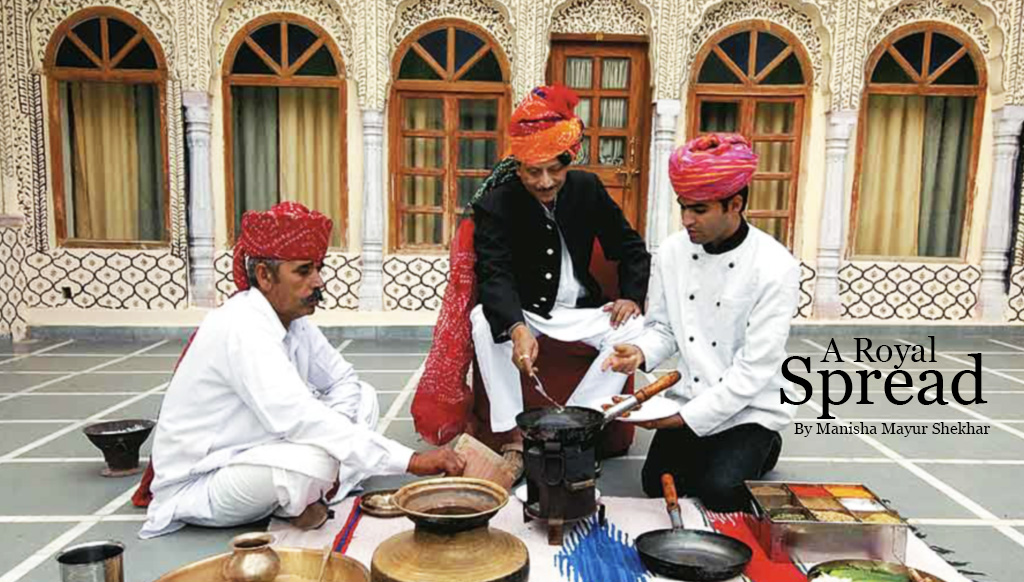
Royalty has always fascinated the masses. The hands which once wielded the sword are now merrily chopping and cutting with the kitchen knives. The blue-blooded are revealing the secrets of the royal kitchens guarded tenaciously over the generations. Some are doing it for the love of food because, after all, nothing gives more pleasure than watching another person enjoy your cooking. Others are simply spilling the beans because they need the money. Whatever be the cause ultimately it is a reason for the gourmet and the gourmand to rejoice and enjoy a royal meal. The Luxe Café caught up with some of the royal food lovers for ingredients to spice up your dinner table.

Tikarani Shailaja Katoch of Lambagraon-Kangra on Royal Sailana Cuisine

Tikarani Shailaja Katoch

Signature dish: Dilip Shahi. It is named after my great grandfather the Late Maharaja Digvijay Singh of Sailana. He was a legendary gourmet, a lavish host and an indefatigable culinary chronicler.

The dish is mutton prepared with just green chilies and a hint of coriander powder. It is flavoured but not spicy.

Royal Ingredients: Every dish has a signature ingredient which makes it different than the other. The family enjoys the delicacies prepared strictly according to the recipes researched, collected and standardised by the late Maharaja Digvijay Singh of Sailana.

Recipes which haven’t changed: Traditional and heritage recipes are so original and delicious that they haven’t changed at all. Everybody loves them for the authenticity. For example, Jungli maans, Banjara gosht which have attained cult classic status thanks to my father’s infectious enthusiasm.


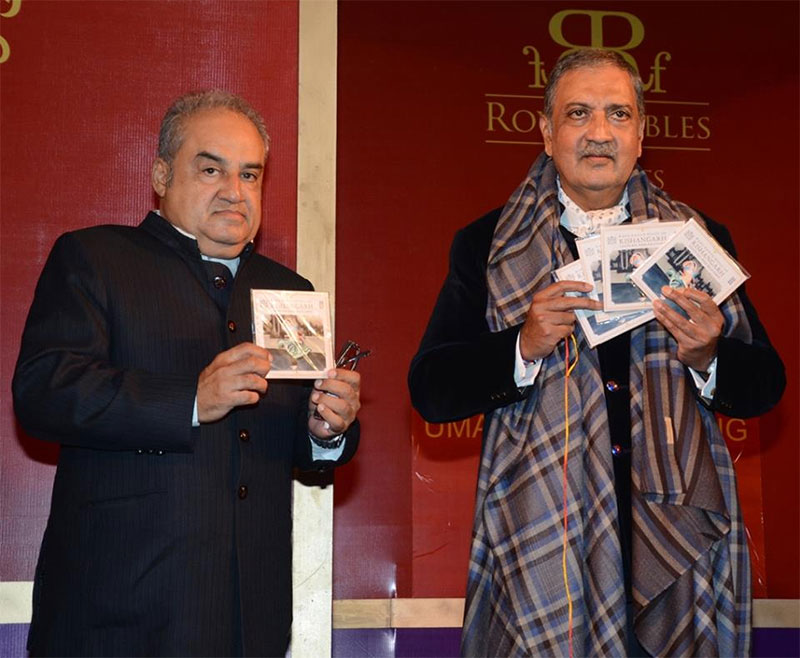
HH Maharaja Brajraj Singh of Kishangarh on Kishangarh Cuisine

HH Maharaja Brajraj Singh.
HH Maharaja Brajraj Singh

Signature dish: It is Meat ka Achar Kishangarh style, whose specialty are the condiments.

The Royal Ingredient: Mostly saffron.

Recipes that haven’t changed till date: All these recipes are unchanged till date. They were originally conceived in Kishangarh using special masalas of the region.

Rajkumar Kartikeya Raje of Sandur and Rajkuwrani Ambika Raje of Sandur on the Sandur Cuisine

Blockquote Border

“Recipes have remained the same for hundreds of years and have not been changed even a bit,” says Rajkumar Kartikeya
Raje of Sandur.

Blockquote Border

Signature dish: All game meat. The specialty is it can be preserved for over a month.

Royal Ingredients: Common Indian ingredients are used and hence it is easy to cook.

Recipes which haven’t changed: Recipes have remained the same for hundreds of years and have not been changed even a bit.

Maharashtra has a long coastline and people living along the coast have developed their very own seafood recipes such as prawn pulao and fish coconut rasa. The Dal is a very unusual and wholesome recipe from the house of Sandur. The akki (rice) rotis are staple rotis eaten in coastal Karnataka and goes well with the fish rasa. The apricot sweet is a well-known Hyderabadi recipe made in our kitchens for years now, and is served with whipped cream.

Nawab Kaazim Ali Khan of Rampur on Royal Rampur Cuisine

Nawab Kaazim Ali Khan.
Nawab Kaazim Ali Khan

Signature dish: There is no one signature dish. Royal Rampur cuisine had a number of unusual and unique recipes each in rice, mutton, chicken, fish, vegetables, breads and desserts. According to me, the signature dishes in each of the categories are: Pullau Yakhni Badam (Rice), Do-Pyazaa Nargisi (Mutton), Qorma Joaza Murgh (Chicken), Panjatan Mahee (Fish), Zersarmani Paneer (Vegetables), Naan Takhtaan (Breads) and Halwaa Sohan Magzi (Dessert).

Royal Ingredients: White elaichi, bhuna besan, dakhni mirch, adrak, lassan, dhania, saunf, peepal, kevra, kapasi colour, maawa, mewa, roasted chana, chironjee, imli, pudina and of course cooking medium is essentially desi ghee to get the right flavour and essence.

Recipes which haven’t changed: Almost all recipes of Royal Rampur are the same but there are hardly any cooks who now can make them. The cooks who were in the palace kitchens never passed on their expertise to their children as they feared that their children may replace them and they were afraid of being unemployed in their old age. Therefore, the art of cooking kind of passed away with that generation of chefs. Also with the end of Princely states, the lifestyle and diet of the royalty changed. Another interesting point is that there were no forms of measurements in the good old days. For example, the measures were chutki-bhar or chattak etc. So it ultimately depended on the cook to get the taste and flavour of the recipe right.

“Luxury is not a logo. It is how fantastically something makes you feel from inside,” says one of the country’s foremost designers, Tarun Tahiliani. In this short film by The Luxe Café, the designer reveals what the new Indian bride is wearing . He talks about experimentation with the new colours, the bridal trends and his new collection—the Modern Mughals. Take a look.

Thirteen may be unlucky for some but not for Harsh Singh and family–the great grand children of Thakur Chhatra Singh of Nimaj, and certainly not for wildlife enthusiasts or those planning to discover rural Rajasthan. The family has set up tented camp site with 13 camps atop the Chhatra Sagar, a more than 100-year-old reservoir named after their great grandfather. It takes about two and a half hours from Jodhpur to reach this beautiful green oasis.

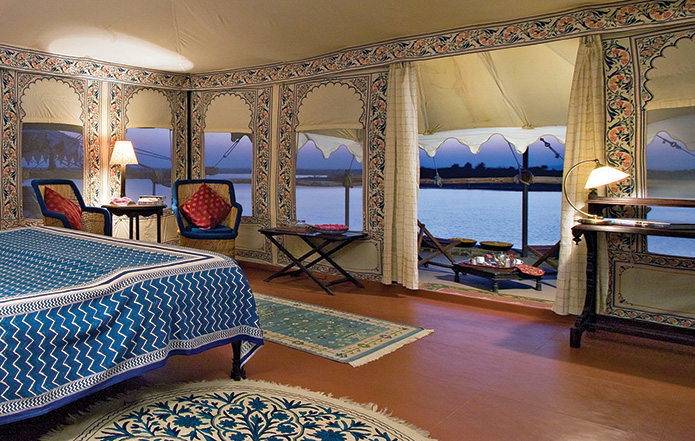
Beautiful interiors of the tent

The camp site entertains visitors only from October till March. You can choose from 11 traditional Rajasthani tents on the dam and 2 atop of the hill. Every tent has comfortable beds, attached bathroom and a sitting area. The fans will keep you cool during summers and heaters were keep you warm during winters. The local geyser is perennial source of hot water.

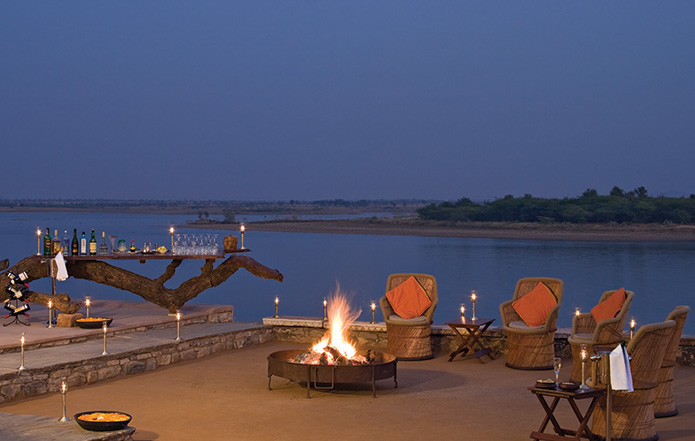
By the Campfire one eats the best traditional Rajasthani food

The Singhs are hands-on whether it is managing the daily affairs of the camp or organising bird-watching trips, tours to adjoining villages or even walks in surrounding fields. The traditional Rajasthani cuisine cooked using old family recipes includes traditional items such as laal maas and saangri, and uses vegetables mostly grown in the fields around the camp. Harsh’s wife Shrinidhi supervises the cooking. The camp also offers cooking sessions conducted by the beautiful ladies of the house.

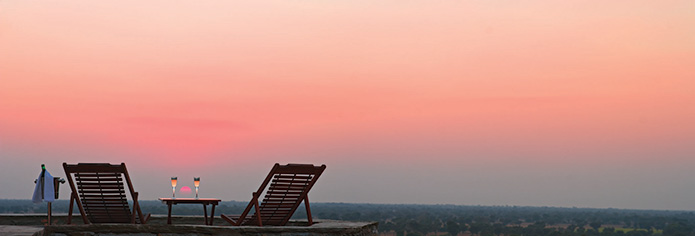
Private Sundowners
Private Sundowners

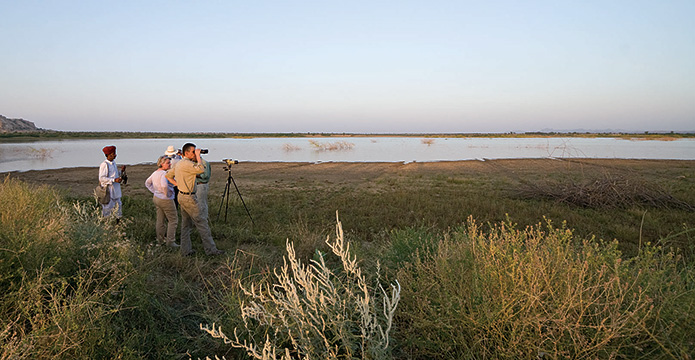
The family is like an encyclopedia about the place, its tradition and the rural lifestyle. Those wanting to know all about rural Rajasthan can visit local temples, nearby Bishnoi villages and tribal settlements in the Todgarh-Raoli Sanctuary.   Bird walks in the evening are must. The wetland, the dense forest, open farms have made Chhatra Sagar a paradise for birds. It boasts of more than 200 species of resident and migratory birds and you can watch them from almost anywhere on the camp.

BIrd walks in the evening are must
Bird walks in the evening are must

After spending the day watching birds, taking nature walks around the lake and the surrounding countryside or enjoying the complimentary jeep safari, dining can be as special as you want it to be  whether it is in the tent overlooking the lake or by the campfire, under the stars. Wifi internet access ensures you can enjoy your solitude without being cut off from the world on the banks of this picture-postcard lake.

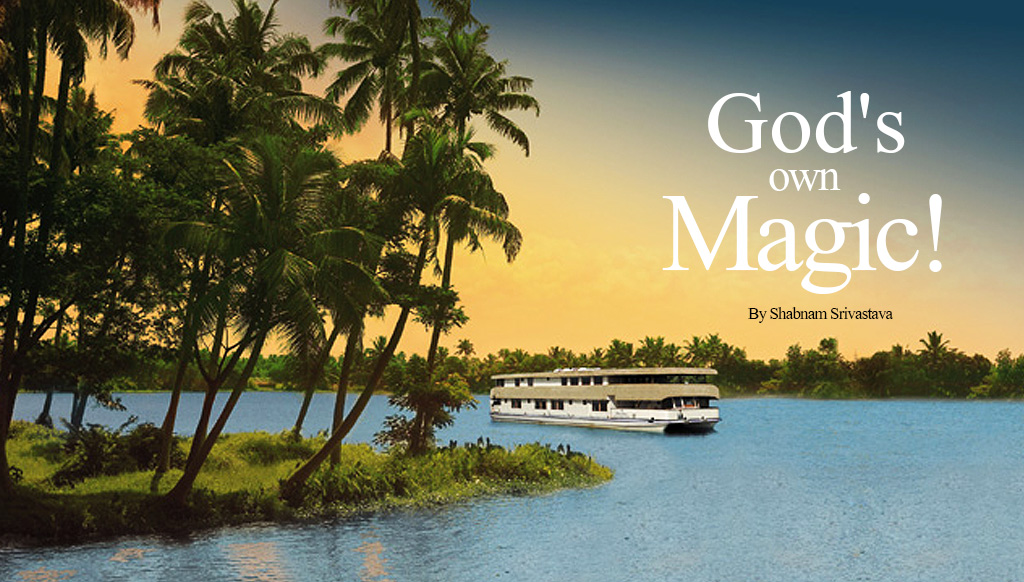
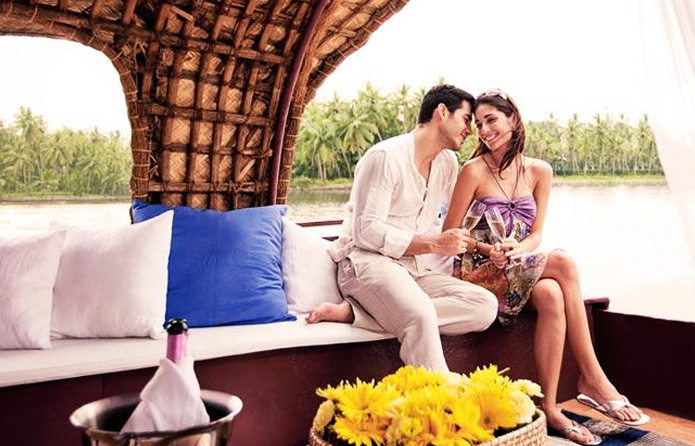
Traversing the intricately networked backwaters of Kerala in a traditional thatched Kerala houseboat is a quintessential Kerala experience. The houseboats are huge, slow moving barges and are a modernised version of the kettuvallams of olden times which were used for transport largely. Literally meaning ‘boats tied with knots’, the houseboats are artisanal works involving elaborate handiwork from the traditional experts who are now dwindling in numbers.

The endless expanse of calm waters fringed by lush green, that surrounds the houseboats, allows you to get away from the chaos of the city and to escape into the rustic charms of Kerala, a life beyond the seen. Imagine a trek back into time and a largely untouched space which moves at its own pace and has its own intrinsic rhythm of life, where vegetable-laden boats row across to a customer’s house, where fishermen cast bait under open skies and where hordes of ducks just swim by leisurely.

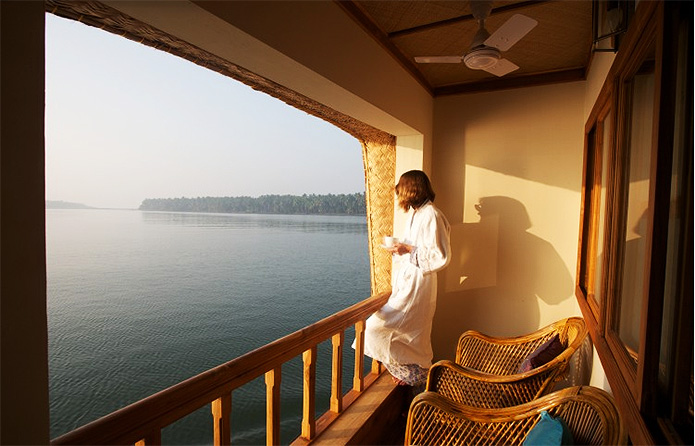
View from a guest cabin at Motor Vessel Vrinda

At some point in history the kettuvallams also transformed into living spaces for the local royalty. And now there are houseboats with all the conveniences in place, with plush wooden interiors and private decks. Many resorts and luxury hotels also have their own houseboats. The options to pick from are endless, but few selected ones hold their own with unparalleled luxury on offer. One such is the Oberoi Motor Vessel – Vrinda.

Vrinda takes its guests on a two night or a three night journey through the waterways and leisurely meanders through a series of picture-book pretty canals and lakes. The cruiser’s well-appointed interiors come replete with timber flooring and house eight tastefully done-up Deluxe Cabins with king size beds, large picture windows overlooking the lake, and private en-suite bathrooms with shower. The beautiful beast of a motor vessel, Vrinda, will offer you all the amenities of a star holiday even on water, like an upper deck with a lounge and bar offering a pictureque view, a uniquely crafted international and South Indian menu, and entertainment options like TV, DVD fitted in the rooms.

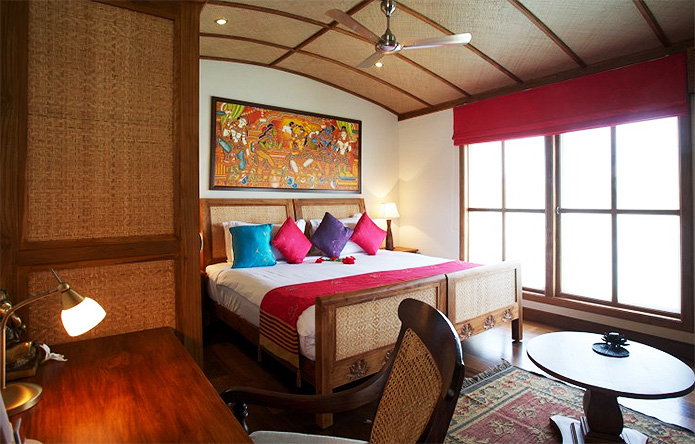
The Lotus, Kerala rooms combine the heritage and the modern amenities

Then there is Lotus Kerala which puts itself forward as an ‘imaginative new interpretation of the traditional Kerala houseboat’ combining the heritage and the modern amenities. It has two light-filled, airy and cheerful rooms – Sukhima [Happiness] and Lalima [Beauty] with teak floors, handmade teak furniture and en-suite bathrooms fitted with a bathtub and shower.

A private sit-out verandah to lounge in and relax at The Lotus, Kerala

And the buck does not stop here, as each room has its own large glass observation window with insect proof screens to look out and dream, murals to decorate the walls for you to gaze at, and a private sit-out verandah to lounge in and relax. You can soak in the rays at the sundeck with an al-fresco dining area, book an exclusive Yoga session or Ayurveda massage therapy, and in general, settle in more comfortably with the help the house-staff and your personal chef. What more could you wish for in a retreat?

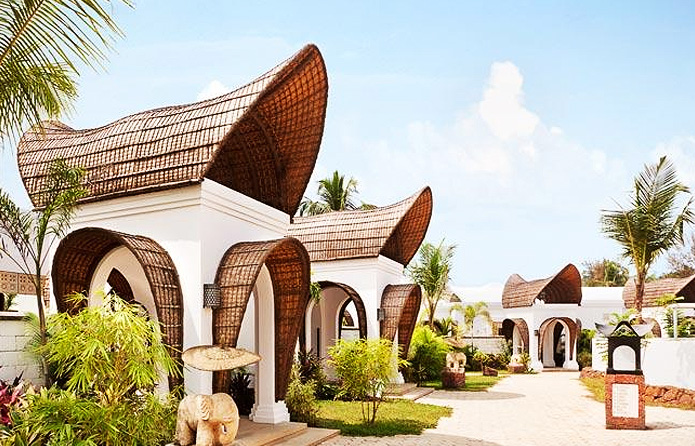
Vivanta by Taj–Bekal, Kerala, has 71 laterite lined villas and rooms inspired by the design of the Kettuvallam houseboat.
Vivanta by Taj–Bekal, Kerala, has 71 laterite lined villas and rooms inspired by the design of the Kettuvallam houseboat

Moving a little further inland is Vivanta by Taj–Bekal with its 71 laterite lined villas and rooms inspired by the design of the Kettuvallam houseboat and with motifs woven in Balinese design. Another haven of relaxation and refreshment, this property has its individual courtyard spaces, private plunge pools, rain showers, soak-tubs and the Jiva Grande Spa to indulge the spa addict among you.

Private boating experience at Vivanta by Taj–Bekal

Should you long for the backwaters, you will find it running across the property as seamlessly as the Kappil beach shoreline touches the manicured lawns and landscaped gardens. The adventurers can also amp it up by taking up some boating, rowing, kayaking, fishing, trekking or just packing a picnic basket for a jaunt to the spice plantations and historic forts surrounding the property. So, you can relish the joys of both land and water at the same time in this luxurious hideout.

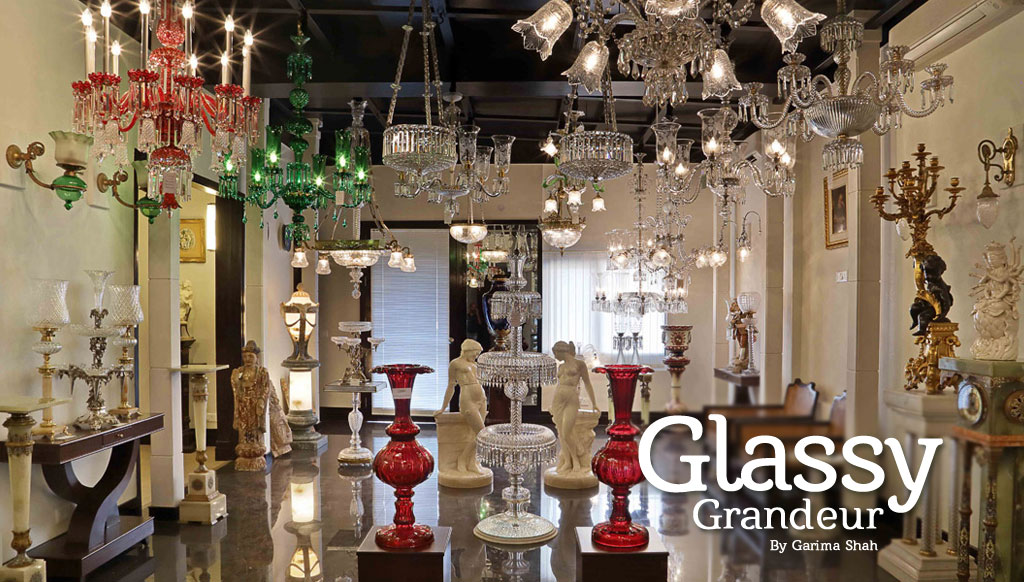
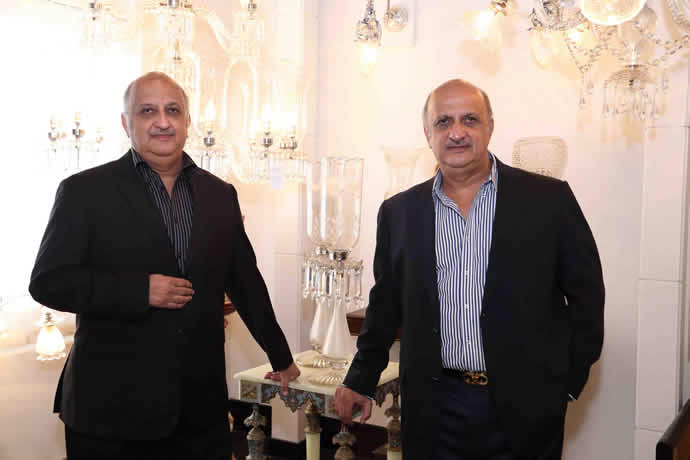
“Luxury is regency, it’s classic,” say Dinsha and Munchi Shroff, turning towards the elaborate chandeliers around them. The brothers are also known as ‘Osler twins’ for being one of the largest collectors of F&C Crystal chandeliers.

Osler Twins | Dinsha and Munchi Shroff

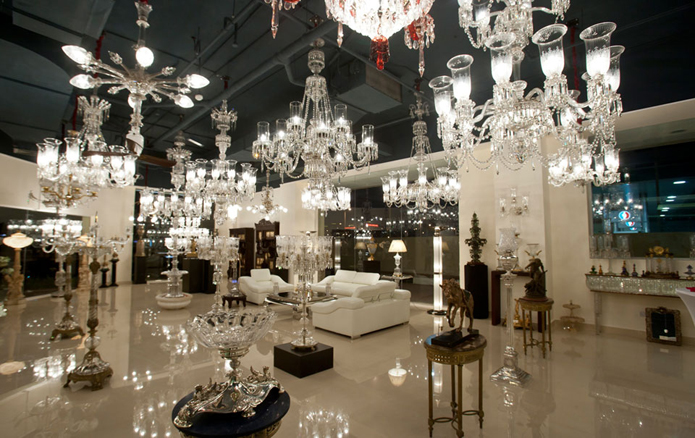
Owners of the Royal Treasures gallery in Dubai and The Ancestry Antiques Gallery in Mumbai and New Delhi, the twins handpick the 19th-century Osler masterpieces from owners, carefully restoring them. They are extremely passionate about what they do. Here, Munchi Shroff talks to The Luxe Café on the sidelines of the opening of their new store Ancestry in the capital :

The Luxe Café: How did it all start?
It initially started with porcelain but when we actually bought one Osler chandelier, which also featured a fountain from a leading Mumbai family, the chandelier got sold within three days at double the price. It was then, we realized the worth of an Osler and that’s how we got into the business. The price of an Osler goes up at a faster rate compared go any other artifact including porcelain. So, it came out to be a profitable business proposition for us.

Royal Treasures Antiques, Dubai.
Royal Treasures Antiques, Dubai

From where all do you collect the Osler masterpieces?
We source these masterpieces from across the world. London is one of my favourite cities for antiques.
What kind of collection do you have in India?
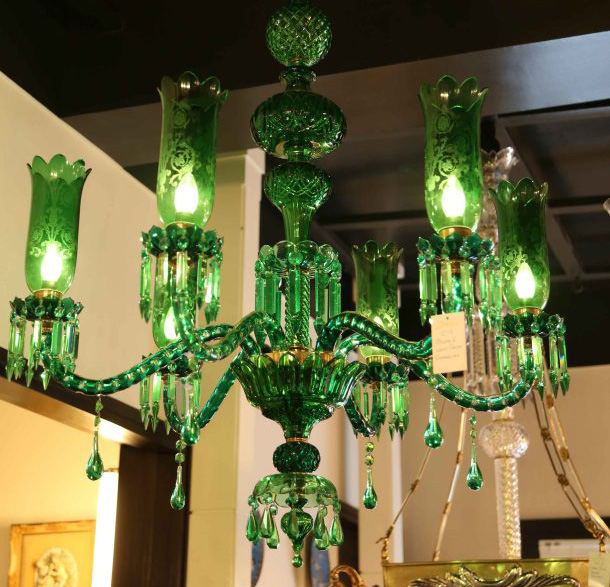
Quite a lot in fact, but not as much as we have in Royal Treasures Gallery in Dubai. One of our largest chandeliers is ten feet tall. Ancestry in Mumbai deals in Osler and Baccarat chandeliers including other crystal artifacts. We also sell artwork from the Orient and Europe. Apart from these, we do have colored chandeliers that are unique because of their rarity. Creating them was definitely not easy.

GREEN ERA | The colored chandeliers are unique because of their rarity.
GREEN ERA | The colored chandeliers are unique because of their rarity

And what if someone in India wants to buy an Osler piece from Dubai?
You can but we don’t take the risk of transporting it to India. You have to do it on your own.

Besides Osler, what is your most prized piece at Delhi store?
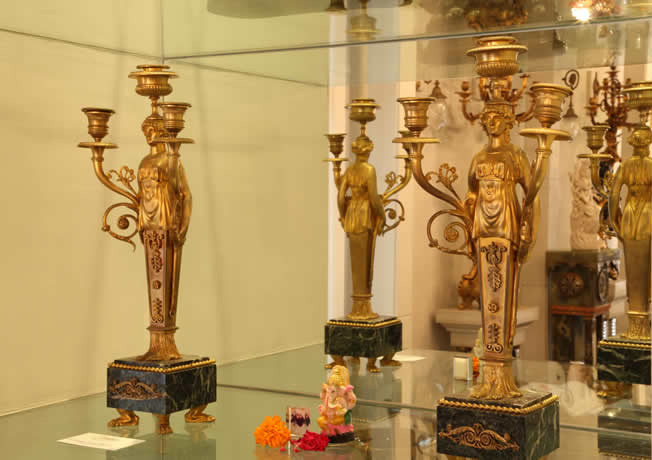
The French Empire candelabras. These ones are the real things from Napoleon’s era.

French Empire Candelabras.
French Empire Candelabras

You also have Baccarat chandeliers at the Ancestry but you have not talked about it much?
Baccarat is popular. But if we talk of Osler, the crystal factory got shut in 1920. So most of the chandeliers are at least one hundred years old and rare.

Which antiques give a good return on investment?
One should invest in crystal, not ceramics.

F and C Osler of Birmingham, London was founded in 1807 by master craftsman Thomas Osler and his two sons Follet and Clartson. The firm gained fame by creating spectacular crystal chandeliers, fountains, mostly for buyers in the Indian sub-continent. The maharajas of India in the mid-19th century were the main patrons of the factory, and almost all the leading palaces of India flaunted Oslers’ handiworks. F&C closed down in 1920. The stunning masterpieces that are no longer in production, have since become the most sought-after crystals in the world.

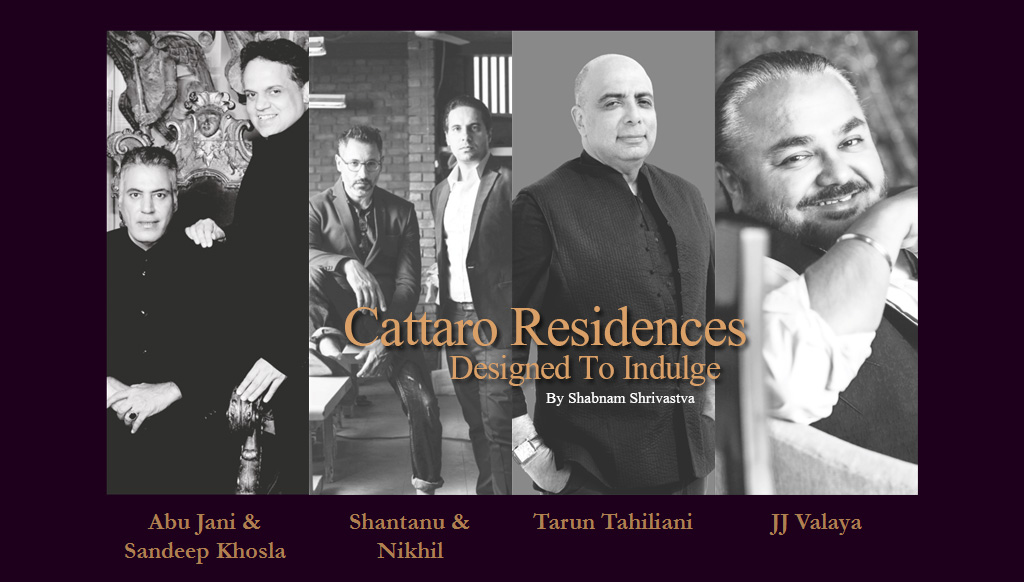
Indian fashion couturiers and luxury housing project, Cattaro, have joined hands to roll out India’s bespoke designer residences in Gurgaon. Couturiers  JJ Vallaya, Tarun Tahiliani, Shantanu & Nikhil and Abu Jani-Sandeep Khosla are working together to offer a mix of art and design in these bespoke homes.
While the designers Shantanu-Nikhil, JJ Valaya and Abu-Sandeep will design and style the 84 boutique homes of Cattaro,  Tarun Tahiliani, will add a touch of class to the common areas of the designer project. With such leading names in tow, the project will be a landmark on Gurgaon’s landscape.
Cattaro promises to be an island of luxury with its own  sky lounge,  business centre, multi-cuisine cafe, state-of-the-art fitness centre, swimming pool, salon, spa  and  with complete access to the clubhouse. The residents would also be entitled for the world-class concierge services to spoil them further with all the choices. So, whether it’s booking for a vacation or any special service, it will be taken care of by the concierge.
Located in sector 70, this 24-storey building  is  surrounded by the Aravalli hills and is at a very close distance to the three world-class golf courses. It is a whole lifestyle that Cattaro envisages for its discerning residents and not just homes. With the idea of residences becoming so much more than just brick-and-mortar structures and with the definition of luxury coming to include more custom and exclusive features, Cattaro residences are going to be not only an uber cool address but also well-deserved cocoon of tailor-made conveniences for the jet-setters.
So if buying a designer home has been on your mind for quite some time,  Cattaro could be a perfect bet for it.

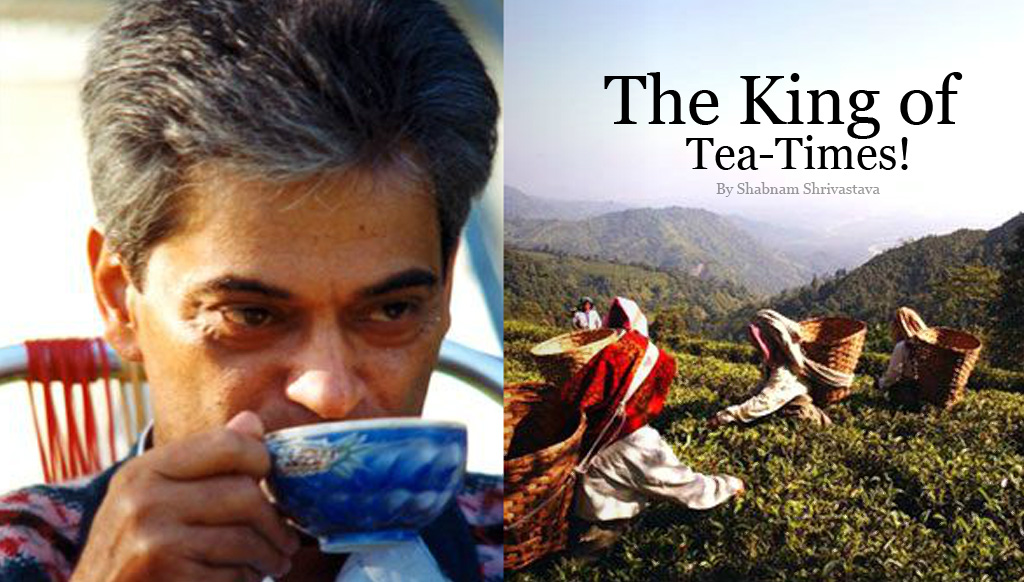
Luxury teas and tea blends have become a popular dining accompaniment even as premiere café’s and tea-rooms are becoming the favourite haunts of the well-heeled, much-travelled tea-snobs and wellness-enthusiasts alike. In India, no mention of fabled tea brands is complete without the mention of the iconic Makaibari tea estate, located in Kurseong, the land of the white orchids in Darjeeling. Pioneering in many aspects, Makaibari is known to house the world’s first tea factory, and its legacy dates back to 1859.

Makaibari is known to house the world's first tea factory, and its legacy dates back to 1859.
Makaibari is known to house the world’s first tea factory, and its legacy dates back to 1859

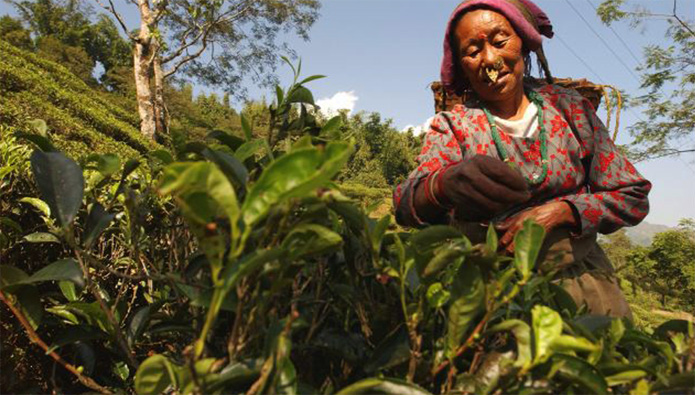
Verdant green landscape flirting close with the cloud-laden horizons make Makaibari a scenic extravaganza, not atypical of lush tea plantations which transport you back into time and nature. What adds to its singular charm is the rich bio-trope with tea bushes co-existing with the diverse flora and fauna, encouraged by the much-talked-about sustainable biodynamic farming practices championed by the inimitable ‘Rajah of Makaibari’, Swaraj Kumar Banerjee. This tea plantation is a must-have stopover for the global traveller, the environmentalist, the ornithologist and the urban eco tourist, for whom there are quaint home-stays, run by the Makaibari locals, providing an authentic experience of tea-estate living. Blockquote Border

Interestingly, Makaibari Tea was also the official tea partner at Beijing Olympics in 2008 and was served again at the 2014 FIFA World Cup.

Blockquote Border So much for beauty, now for the flavour itself that the name stands for! With its single estate tea reflecting the pure essence of this iconic plantation, Makaibari has been recognized as one of the finest tea gardens in the world commanding highest prices at tea auctions for some of its brands, like the Silver Tips. Fourth generation planter, Mr Rajah Banerjee, says, “The passion is to make the specific personality of Makaibari reflect in a cup anywhere you drink it in the world. Darjeeling tea is not an industry. It’s a handicraft, a very specialized art”. Interestingly, Makaibari Tea was also the official tea partner at Beijing Olympics in 2008 and was served again at the 2014 FIFA World Cup. Blockquote Border

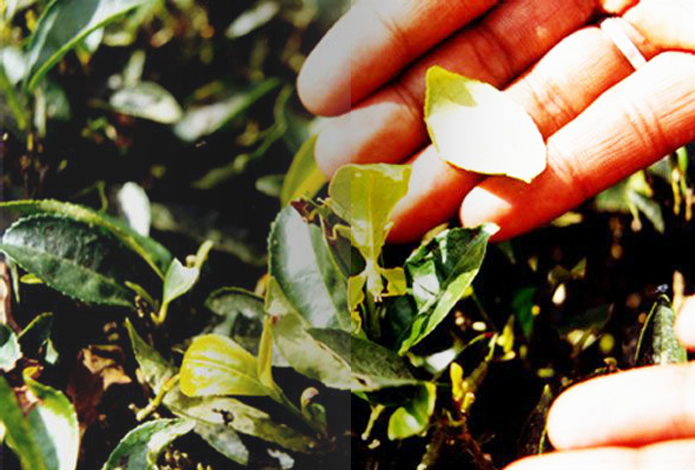
Makaibari has some its own exotic varieties of tea like the Makaibari Tea Treasures collection, comprising the First Flush Vintage, second flush muscatel, the Silver Green, the white tea or Bai Mu Dan.

Blockquote Border To bring the tea enthusiasts a real peek into the world of Makaibari and its chai, we have here a short te`te-a te`te that The Luxe Café held with the resident ‘King’ of this tea estate, Rajah Banerjee.

The Luxe Café: Could you please tell us about the Makaibari signature tea—Silver Tips Imperial, which is apparently the most expensive tea ever sold?
My great grandfather Girish Chandra Banerjee established Makaibari in 1859. Prior to Makaibari, only hand-made teas were available from China and Japan. What has carried us through harsh times is the magic that this special area has. The diversity of flora and fauna, is unmatched elsewhere. The tea is the surplus of this essence that has created Brand Darjeeling globally. Realising this, successive generations of Banerjee’s continued honing their passion for the perfect tea, till I got lucky. However, though the Silver Tips is a peak, we at Makaibari feel that there are more pinnacles to scale. Indeed, the Silver Tips Imperial is a benchmark for others in the industry to emulate, and it is the symbol for the pursuit of excellence.

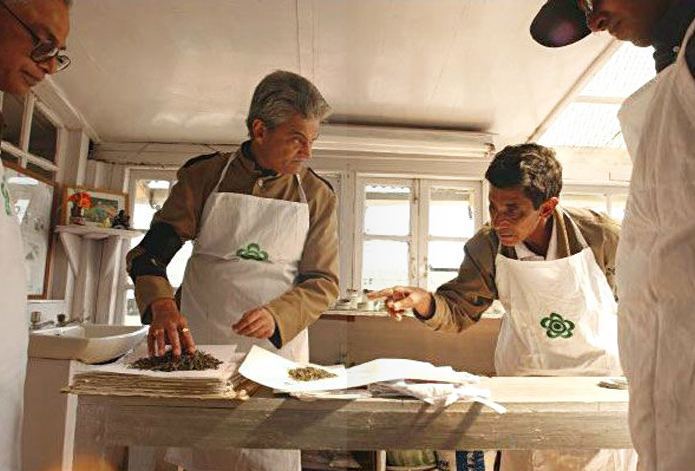
Fourth generation planter, Banerjee working at the tea estate.
Fourth generation planter, Banerjee working at the tea estate

As a fourth generation ‘tea planter’ steering ahead this iconic estate, could you please share your expert insights on some exclusive varieties of tea?
Makaibari tea is a single estate, bio-dynamically grown ‘magical Himalayan herb’ which has some its own exotic varieties like the Makaibari Tea Treasures collection, comprising the First Flush Vintage, second flush muscatel, the Silver Green, the white tea or Bai Mu Dan.

Blockquote Border

“I still contend that being a trainee tea taster in an old established tea broking house at Kolkata is the best learning ground for the nuances of tea tasting,” Banerjee says.

Blockquote Border With tea becoming ‘trendy’ in the recent times, what is your take on the trend of tea sommeliers? Are there any national/international names you’d recommend?
What a delight that tea is gaining popularity amongst the young and trendy, as opposed to being a stuffy old maid’s drink in my generation! This has spawned many tea institutes which educate one on source of origin, and offer a gateway to tea being a great career option futuristically. I still contend that being a trainee tea taster in an old established tea broking house at Kolkata is the best learning ground for the nuances of tea tasting. This could be further honed by working at tea-houses in China, Japan, U.K, to acquire the holistic fullness of learning about the other varieties of tea. Keeping this in mind, Makaibari is contemplating a Tea Institute to bring in all these aspects under one roof, replete with tea masters from famous regions.

Makaibari has been recognized as one of the finest tea gardens in the world commanding highest prices at tea auctions for some of its brands, like the Silver Tips.
Makaibari has been recognized as one of the finest tea gardens in the world commanding highest prices at tea auctions for some of its brands, like the Silver Tips

Tea drinking is an experience enhanced by the accessories—silverware, china etc. Would you have any personal brand favourites in terms of such tea-time accoutrements?
My preferences is always for the exquisite bone china tea sets, which are simple, elegant and transport a tea buff to the realms of their dream world with every sip of the Makaibari tea.

Blockquote Border

“The wondrous part of tasting any Makaibari treasure is the retention of the delicate aftertaste in the palate for at least a half hour after a sip.”

Blockquote Border Makaibari is the ultimate brand for a connoisseur of Darjeeling tea. How can one distinguish this authentic tea, in terms of texture, taste, aroma, and colour?
The parameters of tea-tasting and wine are absolutely similar. A single sip of any of the Makaibari Tea Treasures, imparts a soft genteel aroma of peaches, grape or mango stein, following the seasonal subtleties. The wondrous part of tasting any Makaibari treasure is the retention of the delicate aftertaste in the palate for at least a half hour after a sip.

Time Magazine featured Makaibari Teas as one of Asia’s top ten produces, not only for its flavour but also for the working practices behind it. Given that you introduced many of these practices, what would you have to say about sustainability and luxury?
The world is marching on borrowed time, as the world is focussed solely for improving the ‘flavour’ in the balance sheet. Makaiabri offers one a window to pursue the holistic flavour of life by growing and participating and contributing positively to the environment. The last bit is the ultimate luxury.