Aston Martin recently revealed their most ambitious car yet, the AM-RB 001 hypercar, created in collaboration with Red Bull. Yes, we know that’s a robotic name for a car that looks spectacularly alluring, but quell your fears for this is just a working name, and the final one would be more conducive to “rolling off the tongue.”

The AM-RB 001 will be a road going car that has the capability of being raced to extreme limits on the track. While there’s no word on the specifics of just how fast it will be able to go on a track, what is known is that it will house a naturally aspirated V12 engine and have a 1:1 power-to-weight ratio. To make the ratio possible, they’ve installed a massive engine into a car built entirely around a carbon fiber structure, making the shell of the car as light as can be. As for its transmission, Aston Martin notes that it’s a brand new one designed by Red Bull Advanced Technologies and Adrian Newey, Red Bull Racing’s Chief Technical Officer and the world’s most successful F1 designer. The new suspension of the car was also designed with Newey’s help.

A massive engine has been installed in this car built entirely around a carbon fiber structure, the shell being as light as possible

Adrian Newey reportedly declared it his long-harboured desire to design a road car. “The formation of Red Bull Advanced Technologies brought me a step closer to realising that ambition, but I believed we should work with an automotive manufacturer. Aston Martin was at the top of my list. I knew Red Bull Racing had the ability to handle the pure performance aspects, but Aston Martin’s experience of making beautiful, fast and comfortable GT cars is of great benefit to the project. I’ve always been adamant that the AM-RB 001 should be a true road car that’s also capable of extreme performance on track, and this means it really has to be a car of two characters.”

Only 99-150 examples of this supercar will ever be produced, including prototypes and track- only examples

Only 99-150 examples of this extremely limited edition supercar will ever be produced, including the prototypes and 25 track-only examples. In the Facebook Live unveiling of the car, it was noted that it would be priced between £2-3 million. But even with all the moolah at your disposal, you’d still have to wait till 2018 to get your hands on it —that’s when Aston Martin will start delivering the goods. Oh well, all good things to those who wait!
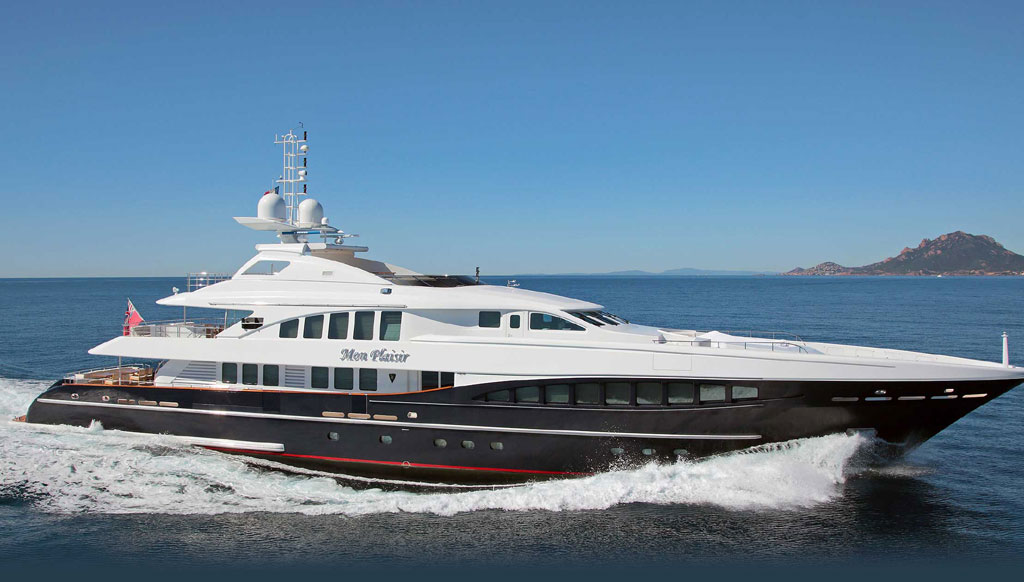
Here’s another beauty of a yacht from SuperYachtsMonaco, to spend time with this summer. Mon Plaisir is a family orientated yacht that has had no expense spared on her clean, fresh interior and the attention to detail is immaculate with its hardware and panel trimmings. Available to charter in the Western Mediterranean, the yacht’s captain promises to take you to some of the most original and exciting destinations She accommodates up to 10 guests in a master cabin, 2 VIP and 2 twin cabins. Powered by MTU engines with a cruising speed of 12 knots and top speed of 15 knots, the yacht comes equipped with a Novurania Customline 6.5m tender, two SeaDoos, Zodiac Rescue tender, water skis, wake board, snorkeling gear, fins and fishing equipment. You can cruise around in this baby at €195,000 per week—or go the whole splashy way and purchase Mon Plaisir for €21,500,000.

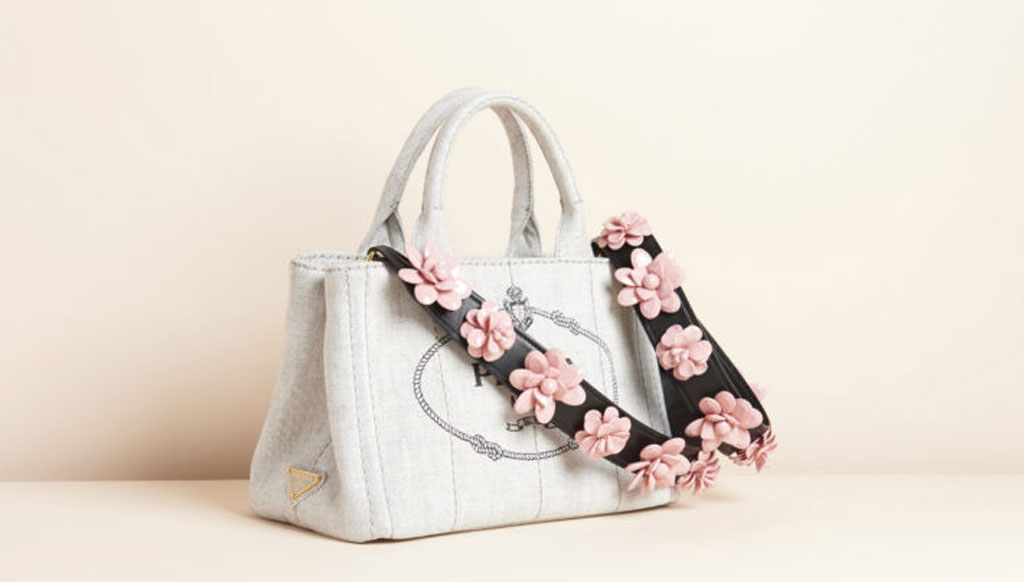
The Devil wears Prada— so these strappy sweethearts are sure to tempt! The Prada Shoulder Straps collection is sure to be the latest, hippest addition to your wardrobe, the quirkiest accessory for that designer bag. Take your pick from buttery soft calfskin, durable saffiano or chic Nastro leather and pair them up with the iconic Prada Galleria, Giardiniera and Double bags—and voila, you have a definitive winner there! Its bold 3D floral embellishments, all craft with crystals, plexiglass and resin or leather are definite statement-makers, quirky and eye catching. Well, what are you waiting for?

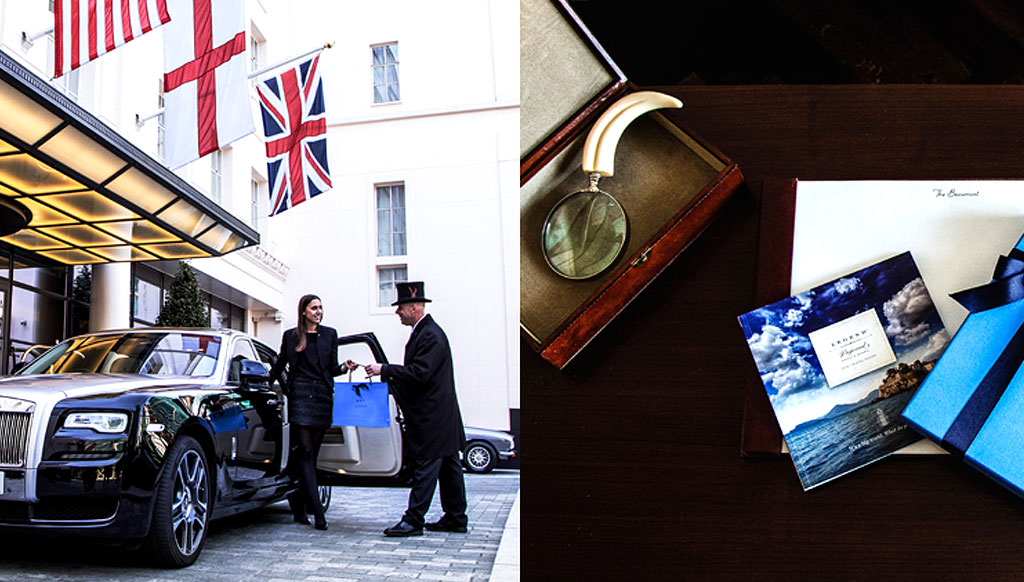
Preferred Hotels & Resorts, the world’s largest independent hotel brand, has collaborated with Rolls-Royce Motor Cars London and Smythson of Bond Street, two iconic British luxury brands, to offer London-bound travellers a first-class experience and a stress- free, sophisticated way to navigate the city. Combining the finest accommodation with perks worthy of royalty, the Rolls-Royce London Suites Programme enables guests booking a suite for two nights or more at three of Preferred Hotels&Resorts’ finest Central London properties – The Beaumont Hotel, The Wellesley and ME London – to enjoy private use of a chauffeur-driven Rolls-Royce Ghost with the exclusive added gift of a Smythson Panama leather currency case to take home. The Rolls-Royce London Suites Programme includes a chauffeur-driven Rolls-Royce Ghost for up to three hours, a Smythson Panama currency case which can be personalised with initials at any of the brand’s boutiques, complimentary daily breakfast for two throughout the guest’s stay, a special VIP amenity from the guest’s selected hotel such as evening cocktails for two at The Beaumont Hotel, The Wellesley, or ME London. The Programme is valid from now until 4 November 2016. Reservations can be made at www.preferredhotels.com/rollsroyce

French fashion house Chanel is delving into the dominant properties of red as it launches its first cosmetic collection designed by global creative makeup and color designer Lucia Pica. A favorite hue of brand founder Gabrielle “Coco” Chanel, red served as the muse for Pica’s Le Rouge Collection N°1, giving lipstick, nailpolish and eyeshadow added depth and intensity. This collection reflects a modernization of a house code, enabling Pica to leave her mark while keeping within the boundaries Chanel consumers are familiar with. Pica also created an abstract film showcasing the dynamic power of red. The film opens with an out-of-focus shot of flowers wet with dew spread on a surface, and then captures the shape of hands moving behind a backlit piece of red fabric. It continues with shots of everything from wavy red hair to the glistening seeds of a pomegranate. Both the intrinsically beautiful and the seemingly mundane served as inspiration, as the film shows a tire laden with red dust sending clouds into the air as it rolls, or a red plastic bag’s flight. That’s quite some creative inspiration.

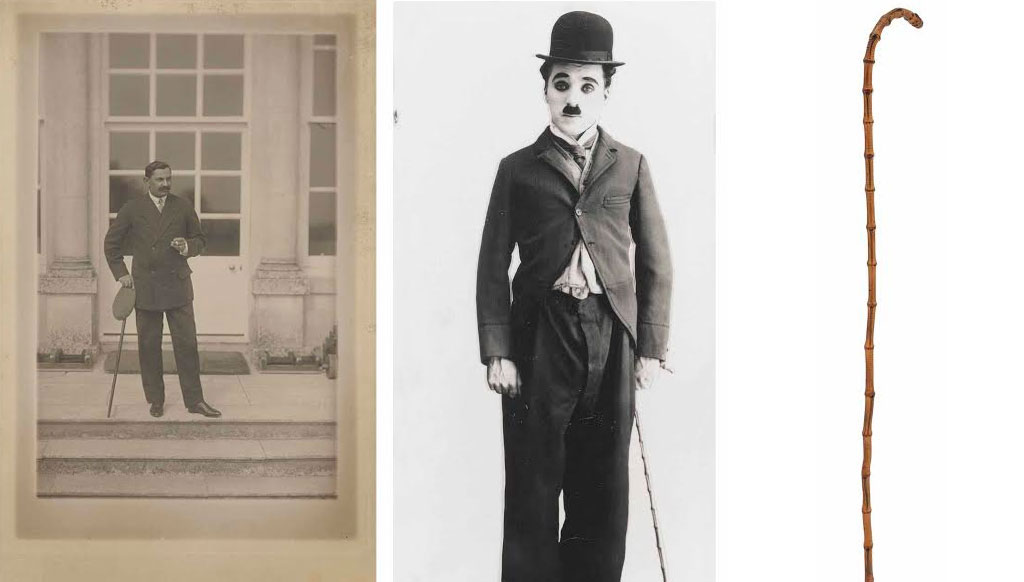
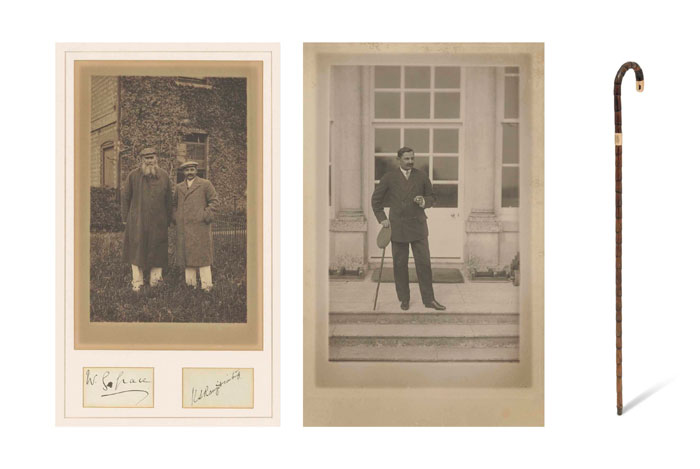
There’s always something fascinating to reach out for in the world of Christie’s auctions. But you couldn’t have imagined something as mundane as the cane to assume so much artistic value. But then, these canes on auction aren’t just any canes—they belong to two major superstars from their respective fields. Feast your eyes on the cane that counts.

CRICKETER CANE | A palm wood cane with 9ct. rose gold band, engraved ‘KSR’ and with impressed ‘f’ hallmark for 1901, rose gold mount on tip of handle, length 840mm. With 6 framed photographs

Kumar Shri RanjitSinhji (1872-1933)

Ranjitsinhji was the first Indian superstar in the history of cricket. Having learned to play at the prestigious Rajkumar College, Rajkot, he became the first Indian to earn a cricket blue, playing 9 matches for Cambridge University in 1893. Supremely style conscious, he also became the first undergraduate to drive a car through Cambridge. Ranji introduced the leg glance into cricket, and in partnership with C.B Fry dazzled as a batsman for Sussex, also proving a useful change-bowler and competent slip. Between 1895 and 1904 he was never outside the top five in the county averages, compiling a total of fourteen double centuries. In 1896 he performed the unprecedented feat of scoring two centuries against Yorskshire on the same day.

He scored 62 and 154 not out in his first Test, appeared in four Test series for England against Australia, and led a tour to North America in 1899. In 1907 he became jam sahib of the small Indian state of Nawanagar. This took his life back to India and away from the game. His accession had long been a matter of hope rather than certainty, as he was not a direct heir. However, this cane is a wonderful example of the princely style he adopted after coming to England. Light and perfectly weighted, the magical cane was a symbol of the power he might one day assume; it was an opulent fashion accessory for a man who batted in futtering silk shirts and cared deeply about appearances; and above all it was something to swing joyfully very like his bat. This is a palm wood cane with 9ct. rose gold band, engraved ‘KSR’ and with impressed ‘f’ hallmark for 1901, rose gold mount on tip of handle, length 840mm. Comes with 6 framed photographs, too.

Estimate: 3,000-5,000

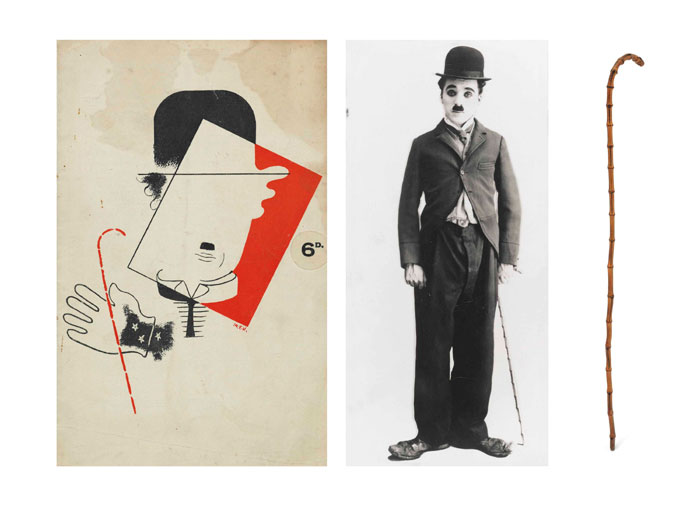
CANE OF IMMORTALITY | Charlie’s Whangee cane, 82cm, mounted in contemporary black-painted wood frame with applied figure of a spanner at the corners and white metal display plaque

Sir Charles Spencer Chaplin [‘Charlie’] (1889-1977)

Whereas K.S. Ranjitsinhji’s cane (lot 236) was a mark of his opulence, Charlie Chaplin’s cane was important as his only remaining possession. Maurice Bessy writes: ‘The character of Charlie is not a comic character. His shabby clothes are those of a man who is down on his luck. The cane is a mark of snobbishness. It is the sole remaining personal possession of this unfortunate fellow, and that is why he flourishes it with such pride’ (Charlie Chaplin, London, 1985, p.29). It is a  Whangee cane, 82cm. in length  with some chips, and slight wear to base, mounted in a contemporary black-painted wood frame with applied figure of a spanner at the corners, and with a white metal display plaque engraved: ‘Presented to the Tivoli Cinema London UK Modern Times 1936’ (red ‘velvet’ case lining renewed, later cardboard backing). The present cane is sold with the Tivoli Magazine Programme (London, 1936) presenting Modern Times, front wrapper with design of Chaplin with cane and in bowler hat; also sold with a non-vintage photograph of Chaplin in tramp costume.

Estimate: 6,000-9,000

Here’s an unapologetically lavish toy for the guy that has it all. This 18k yellow and white gold chess set is carefully set with black and yellow-golden diamonds adorning the board. For the record, it has 4,874 black and yellow-golden diamonds, weighing in at 125.50 carats, and is crafted out of more than 1.2 kilograms of 18k solid gold. And the craftsmanship embedded in it goes a step further: it the painstaking labour of thirty master craftsmen who clocked in 4,500 hours of dedicated craftsmanship. And it’s all yours for the price of $370,000. And if that’s not enough, you can pick up a few solid gold toothpicks and solid gold dice on the way too. Now that’s life king-size.

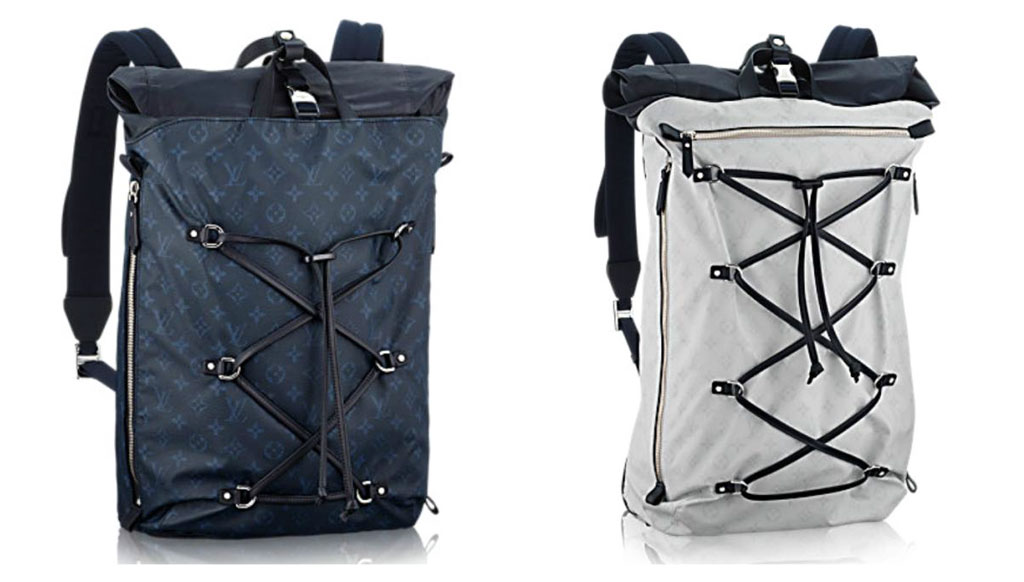
Travel light and in style. With a functional design and an urban aesthetic, these Ultralight backpacks from Louis Vuitton are a must have for the wardrobe of the breezing traveller. Available in regular and XL sizes the bag itself is ultralight while offering enough storage space for all your travel essentials. So you don’t have to worry about either long trips or even hiking expeditions. Made from Monogram Ultralight canvas the backpacks are available in two colours: cobalt blue and white. For extra style, the bags flaunt textile lining, cowhide trim and silver hardware. There’s an inner zipped iPad pocket too along with 2 double flat pockets or the outside lateral pockets. The bags can even be folded up and stored inside an inner nylon pouch. The XL version, available only in white, is priced at $7,150 while the regular size costs $2,810.

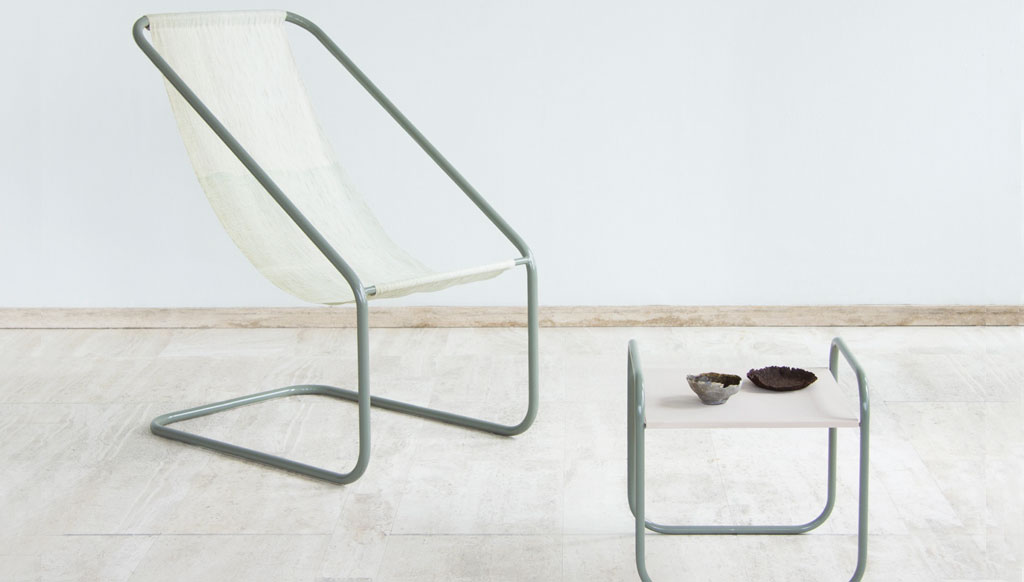
Of all things that you can list for the making of new age, eco-conscious furniture, seaweed would be the last. And yet, Dutch designer Nienke Hoogvliet has used precisely that for her furniture collection that highlights the possibilities of seaweed. The Sea Me collection features a seat made from fabric that has been woven by hand using seaweed yarn, among other items dyed or finished with the algae. The fabric on the seat, which Hoogvliet has spent the last two years developing, is created using cellulose extracted from kelp. It has similar properties to that of viscose – a compound used in synthetic textiles – but with much softer fibres. Hoogvliet also used seaweed to dye the fabric, with different types creating different colours. The chair and table are supported by a simple, bent tubular steel framework in a soft grey-green. She used leftover materials from furniture production to create a pair of bioplastic bowls made from 100 per cent seaweed. Hoogvliet first experimented with algae yarn in a rug which featured strands of kelp that had been wrapped and knotted around a fishing net. The designer believes that people in the future could actually create and live in houses made entirely of seaweed too! And before you dismiss that idea as too outlandish, chew on this: architecture studio Vandkunsten is already putting her ideas to test by stuffing seaweed into netted bags and using it as cladding for a timber-framed holiday home on a Danish island.