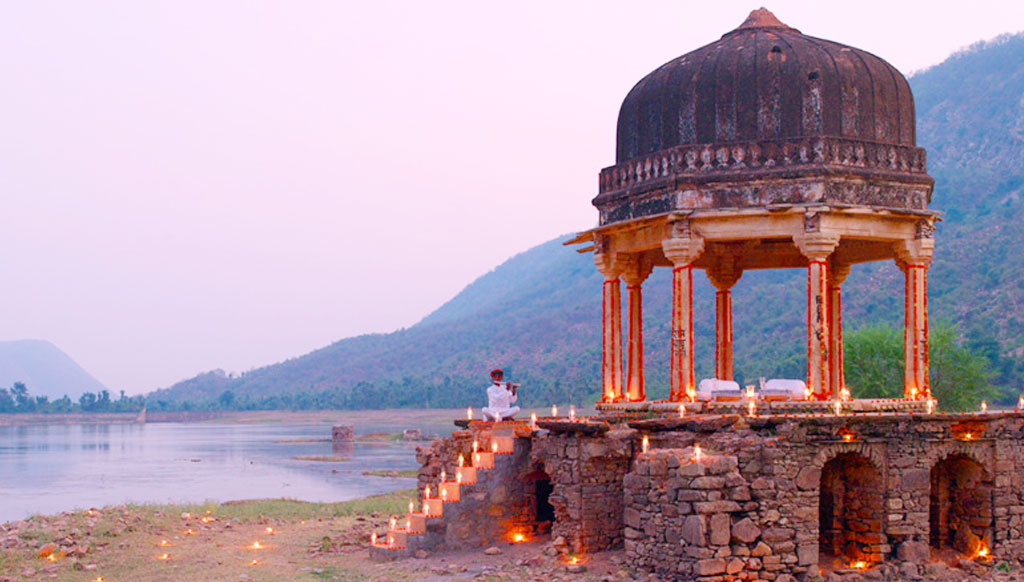
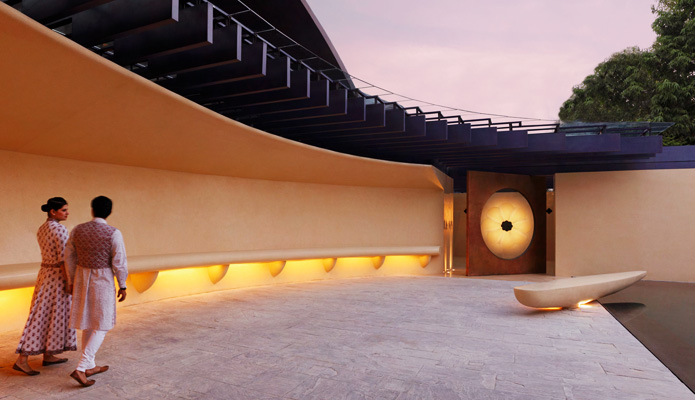
ROYAL RETREAT | Set in a landscape worth exploring, Amanbagh allows one to go back in time with private dining laid out by the lake
The serene resort of Amanbagh lies in the middle of the Golden Triangle of Jaipur, Delhi and Agra. This verdant oasis of palm, fruit and eucalyptus trees stands amidst the Aravalli hills. It was the hunting lodge of Maharaja Jai Singh of Alwar who stayed here during his trips to hunt big game in the forests of Sariska. Amanbagh, with 24 haveli suites and 16 pool pavilions, has the palatial grandeur of the Mughal era. The five-hour drive from Delhi gets bumpy towards the end but dipping energy levels soar at the sight of the resort.
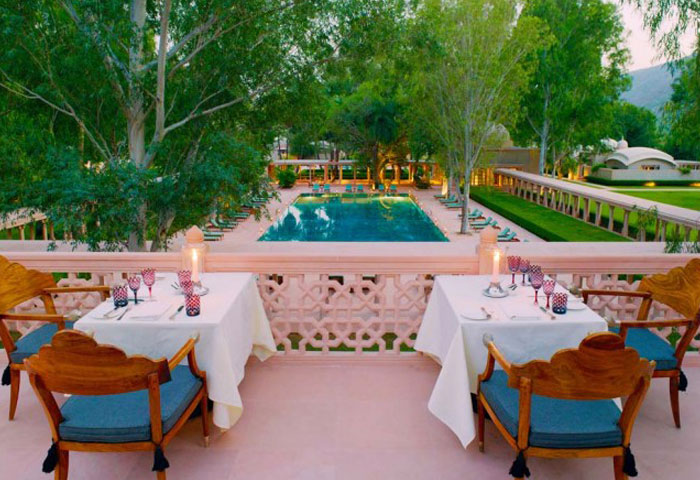
SPRAWL IN STYLE | At Amanbagh’s gorgeous courtyard pool, you are cocooned amidst beauty
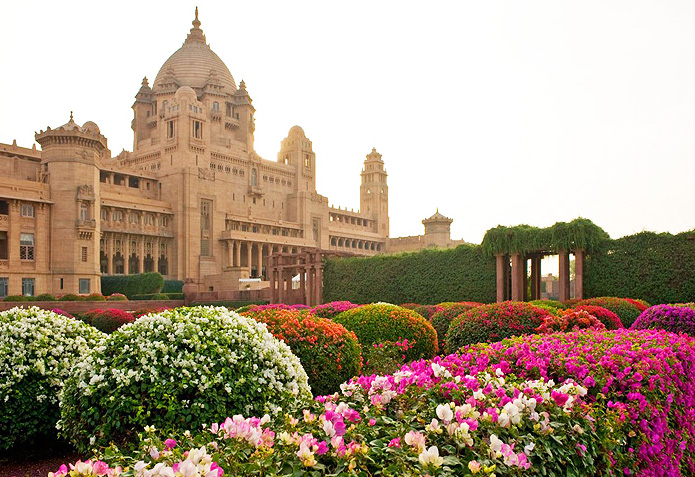
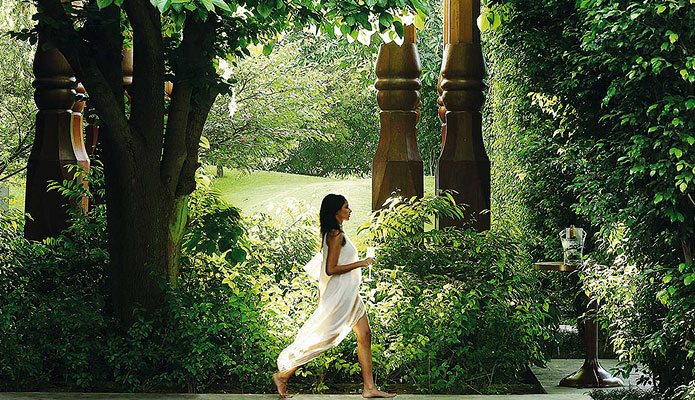
You are welcomed by Rajasthani women clad in orange sarees at the entrance. While one ties a thread around your wrist, the other sings a welcome song in Sanskrit. Thereafter, you are escorted to your villa. The three-level building designed by Paris-based American Ed Tuttle is a fusion of old and modern architecture. The reception area and the inner courtyard with high ceilings, large verandas with sandstone marble and graceful columns look regal in the lush surroundings. The swimming pool in the middle of the garden stands out like a blue gemstone in a sea of emeralds.
“The swimming pool in the middle of the garden stands out like a blue gemstone in a sea of emeralds.”
The reception leads to a raised terrace which has a library whose reading porch offers breath-taking views of the mountains and the garden. The boutique, library, restaurant and the bar are located in the main building.
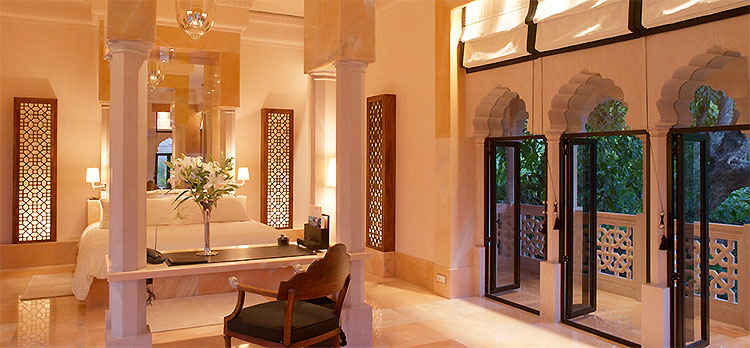
CRAFTED FOR LOVE | The Terrace Haveli Suite has stairways leading to tall doors and spacious interiors
The restaurant complements the elaborate yet minimalist interior. The seating flows out into the terrace, which overlooks the swimming pool. Dining outdoors is one of the best experiences at Amanbagh. Live performances in the evening include a unique collection of traditional Rajasthani music. You can have a private dinner outside the resort by the lake or enjoy your drinks as the sitar plays in the background. Follow it up with the fabulous cuisine arranged by the resort.Among the quartet of courtyard, garden, terrace and pool pavilion suites, the terrace and the pool pavilion suites are preferred. Some like the terrace for a better view, while others go for the pool pavilion for its sheer grandeur.
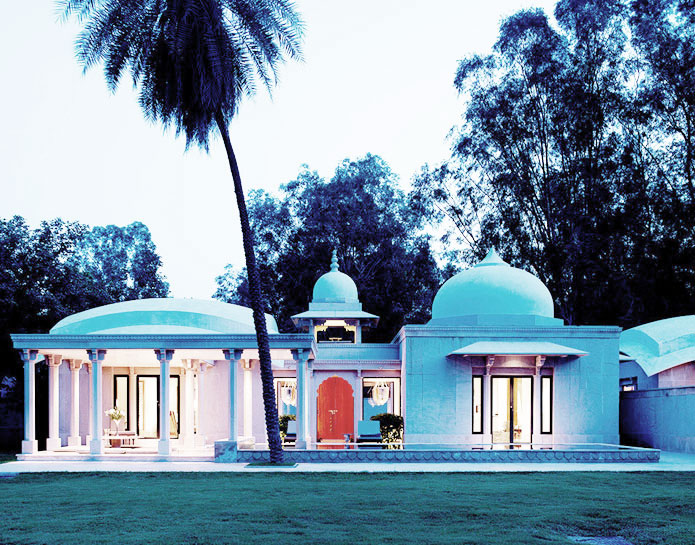
ROYALLY RESPLENDENT | The Pool Pavilion suite, with its own private swimming pool, opens into a lovely garden courtyard
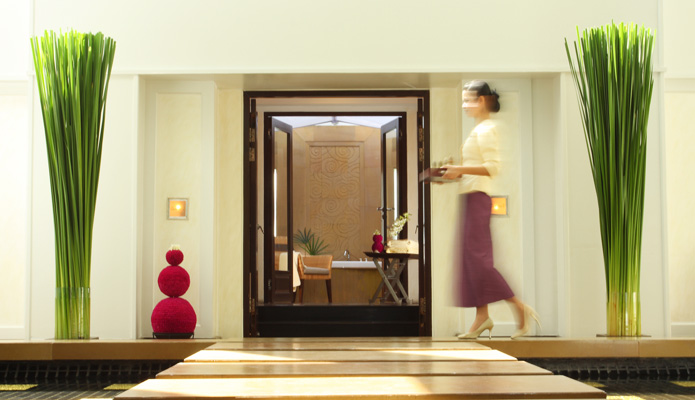
The pool pavilion at the resort’s periphery starts with a private walled courtyard making its way to the foyer passageway. The foyer overlooks the garden and private pool. On the left of the foyer is a well-furnished bathroom suite while on the right is the grand bedroom with a domed ceiling above the king-sized bed. The suite’s bathroom has a green bathtub carved out of just one block of marble. The dome above it allows natural light to flow in.
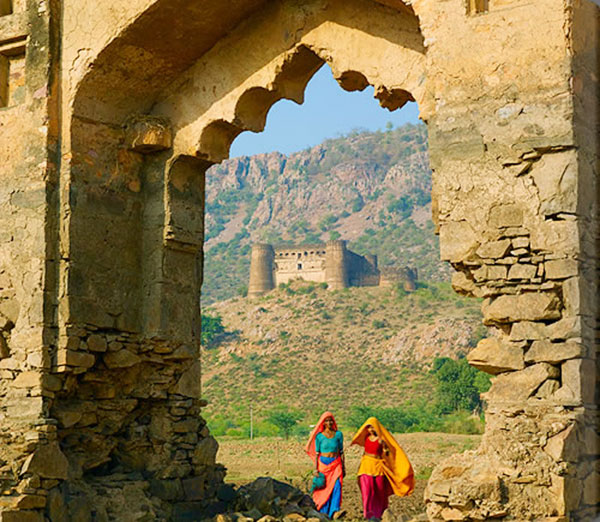
CALL OF THE WILD | Excursions on a cultural trail within a 30km radius of Amanbagh include visits to the Ajabgarh Fort & Temple, recalling a lost era
Amanbagh has something for everyone. The picturesque surroundings are a photographer’s delight. The Meenas, a small community known for its colourful dresses and jewellery, reside near the resort. Those wanting to experience local culture can explore these villages in the hills on a jeep. As far as outdoor activities go, the resort provides horse rides, camel polo and shikara boat trips. Early morning walks to the surrounding villages are also extremely popular. It is a trip, which will leave you invigorated and you would want to come back again to enjoy the serenity of nature.
Pool Pavilion starts at USD 1,492.70 / Night
Terrace Haveli Suite starts at USD 1,168.20 / Night
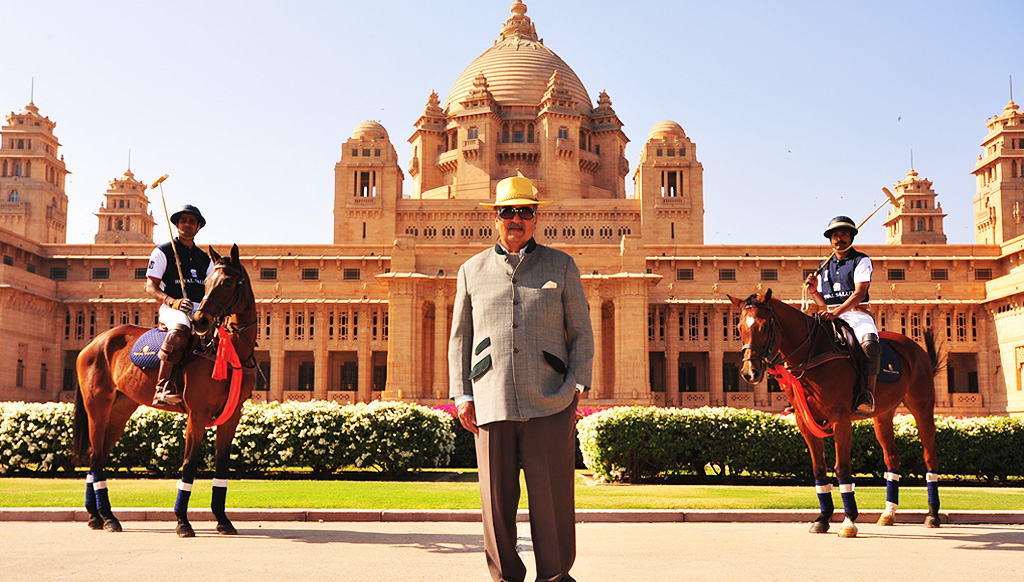
TRADITIONAL FLAVOUR | Gaj Singh who has converted his great palaces into world class properties prefers the more traditional type of hotels and the old homes that have been converted
One of the few maharajas to have managed the transition into modernity, Gaj Singh II of Jodhpur is a rare case study of entrepreneurial brilliance. Not only has Singh converted his great palaces into world class properties—Umaid Bhawan is one of the best hotels in the world while Mehrangarh Fort has turned into an internationally acclaimed museum—he has also carved out a niche for himself in the global art and fashion scene. With his flair for heritage, luxury and travel, it is a treat when the king sits down to narrate a story. Here, he takes time out exclusively for The Luxe Café to talk about his memorable travel experiences.
The Luxe Café: What places do you like to travel to? Exotic places, historical sites and game parks, in Africa, in wide open spaces where there are very few people and more animals—back to nature. That gives me a sense of peace and I feel more relaxed.
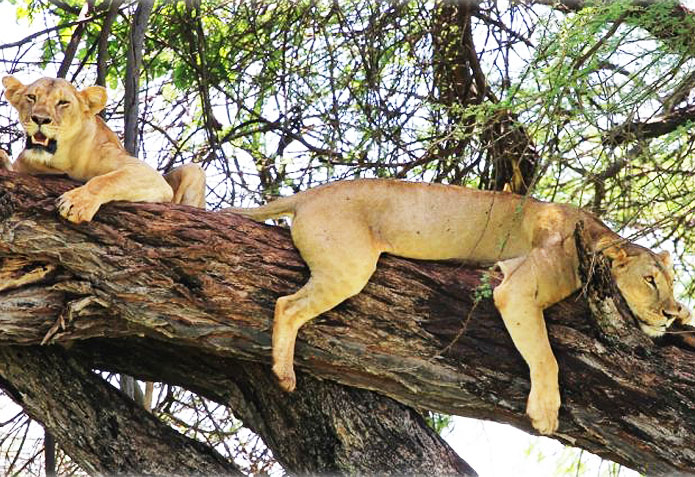
The Maharaja prefers to travel to wide open spaces where there are very few people and more animals—back to nature. Photo courtsey: Elsa’s Kopje, Kenya
The most beautiful place you have been to so far?
The Masai Maara Park in Kenya—it’s like being back to the beginning of creation.
Share with us some interesting experiences you have had while travelling? I think in my earlier days, when I went to England as a school boy, people were intrigued about India and all they wanted to know about is tigers and how many wives I had and I used to fool around and make tall stories but I guess, people are now more aware of India and they want to revisit us. People have some strange ideas about our country and I tell them unless you visit and see India for itself, the variety and complexity of India won’t be understood. I always try to make it a point to talk to people and tell them about our country.
Umaid Bhawan Palace in all its splendour
You live in one of India’s best heritage properties—The Umaid Bhawan Palace. While travelling, what do you look for in a hotel? I think decor is important. There are 2 types of Hotels—traditional / heritage and the ones which are very modern with all amenities. I prefer the more traditional type of hotels and the old homes that have been converted. Second is the service. It’s the old world type of service which I go for and which, in some places, is going out of style. In most hotels, service is always a problem. You don’t get that personal touch which is very important.
What about food? What do you like to eat when travelling? While travelling, I like to try the cuisine of different places, but I particularly like sea food because in Rajasthan, you don’t get to have so much of it. When I go to Mumbai, I enjoy sea food very much and of course in England and France.
“To me, luxury is free time, listening to good music, going out in wide open spaces, being with friends and havinga good drink.”
Any favorite fine dining restaurant? The Wasabi at Taj for Japanese food is one of my perennial favorites. It is exotic so you can’t have it all the time.
What is that one luxury you can’t do without while travelling? A good drink at the end of the day.
Any drink in particular? I like good wines, all kinds of French and Italian wines. Though there are no favourite ones as such. When I go and meet friends in Europe, they are very particular to show off their best wines which they get from various vineyards. As a regular, I like to have scotch, preferably Black Label but then there are more exotic brands like Blue Label and then there are malts, whiskies, which I like but not on a regular basis.
What is luxury to you? Luxury is what makes you feel comfortable, elated. To me, luxury is free time, listening to good music, going out in wide open spaces, being with friends and having a good drink.
These sweetened spirits with various flavours, oils and extracts deserve pride of place in your bar. From cocktail concoctions to tremendously delicious experience with depth and dimension to sweet and nutty flavour to pure pleasure from Africa to classic French liqueur to Italian masterpiece, they will all give you a reason to say cheers. The Luxe Café uncorks eight of the best for you–Chambord, St George Nola, Rivulet Pecan, Lejay Creme de Cassis, Amarula, Cedilla de Kuyper, Cointreau and Molinari. Each sip will bring a different and unique experience for your palate and senses. Bottoms up!
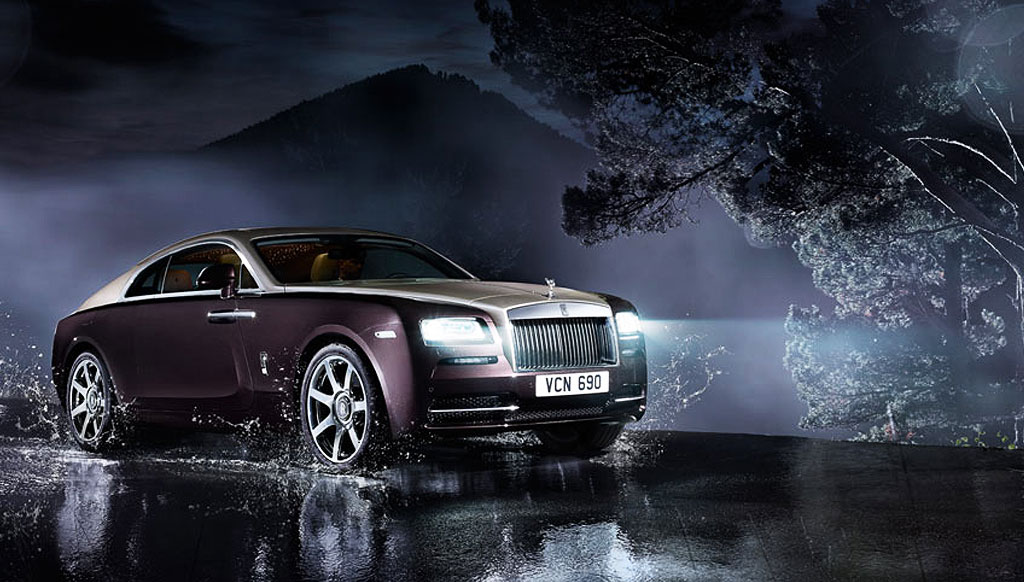
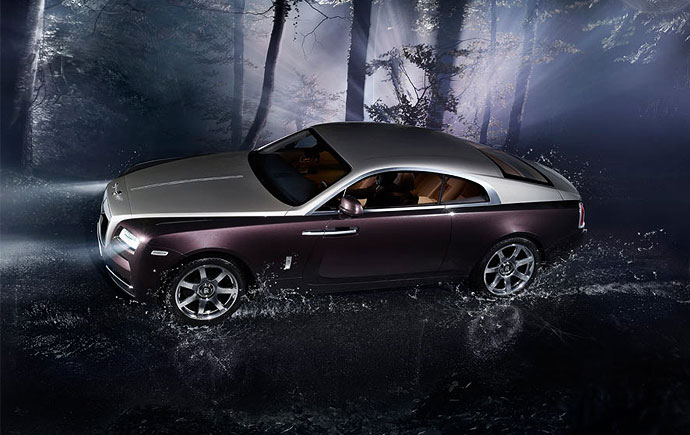
ELEGANCE & POWER | The Wraith exudes elegance and beauty of a leopard, a black panther or a tiger and their striking masculinity and power waiting to spring into action
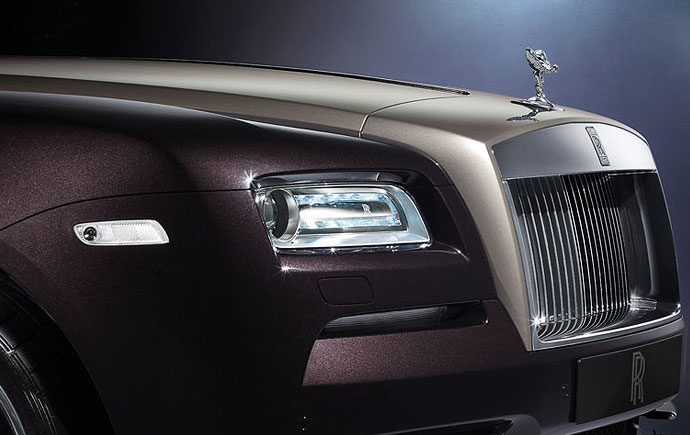
When you look at Wraith it echoes the creation of close resemblance to that of nature’s finest and most powerful creations. It exudes the exterior elegance and beauty of a leopard, a black panther or a tiger and their striking masculinity and power waiting to spring into action.
The Wraith is not about striking a balance it’s about pushing the boundaries of car making. Everything about this car be it design, engineering, elegance, beauty, refinement and luxury are on the threshold point of the finest imagination of car making turned into reality.
Wraith is the most boldest expression of Rolls-Royce yet
India’s love affair with Rolls-Royce Motor Cars dates back more than 100 years, described as one of the world’s longest relationships with one automobile manufacturer. Over a period of five decades, Maharajas and princes have purchased over 840 unique Rolls-Royce motor cars.
Wraith is the most powerful, dynamic Rolls-Royce in history, its twin-turbo V12 engine develops 624 BHP, 800 Nm are available to driver from 1,500 rpm and 0-60 mph is achieved
in 4.4 seconds
The 21st century wealthy Indians, a new generation of confident gentlemen and women want to taste the power of putting their right foot to experience the velocity of 640 horse powered engine and taking the adventure into their own hands rather than taking the back seat. It is a car that draws superlatives, it is a machine whose starting point is luxury, refinement and quality, but with a character that exudes power, style, drama.
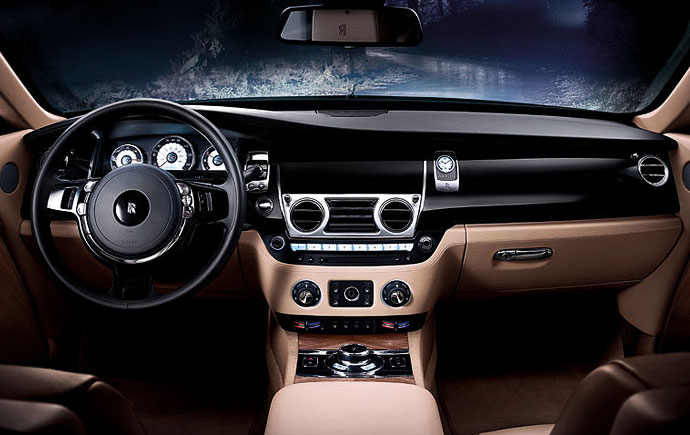
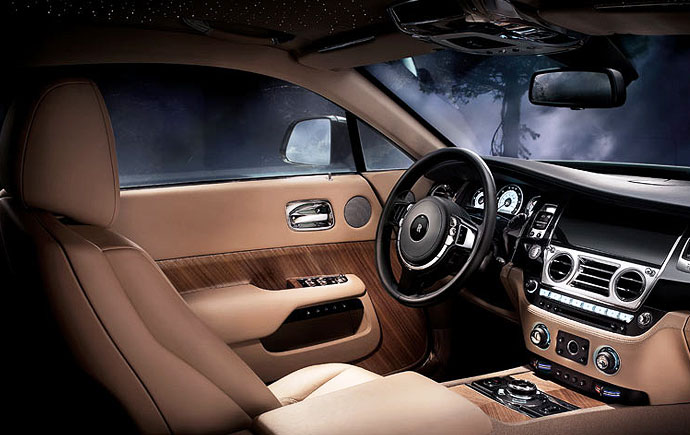
Wraith’s coach doors open to present a warm, harmonious space furnished with every luxury accoutrement you’d expect in a Rolls-Royce
Wraith is the most powerful, dynamic Rolls-Royce in history, its twin-turbo V12 engine develops 624 BHP / 465kW, 800 Nm are available to driver from 1,500 rpm and 0-60 mph is achieved in 4.4 seconds (0-62 in 4.6 seconds). This abundant power is delivered effortlessly with the introduction of Satellite Aided Transmission* – a technology that utilises GPS mapping data technology to allow the car to see beyond what the driver sees. Anticipating the driver’s next move based on current location and driving style, always ensuring the most appropriate gear is selected for the terrain ahead.
The eye is immediately drawn to an elegant sweep of tactile wood that exquisitely furnishes the car’s lower hull
Wraith’s coach doors open to present a warm, harmonious space furnished with every luxury accoutrement you’d expect in a Rolls-Royce. The eye is immediately drawn to an elegant sweep of tactile wood that exquisitely furnishes the car’s lower hull. Beyond this, starlight headliner completes the glamour and further enhances Wraith’s luxurious atmosphere.
When Wraith passes by, the world stands still, including the black panther
The excitement of drama is expressed in the most beautiful sweeping lines of the fastback. Taught lines, a wider rear track and muscular haunches evoke a sense of dynamic potential, akin to a black panther, poised to pounce. Wraith is a picture of urgent anticipation. Frameless coach doors impart a sense of theatre and occasion whilst ensuring effortless entry and egress. The name Wraith complements the noir character of the car – a never still entity that cannot be corralled. When Wraith passes by, the world stands still, including the black panther.
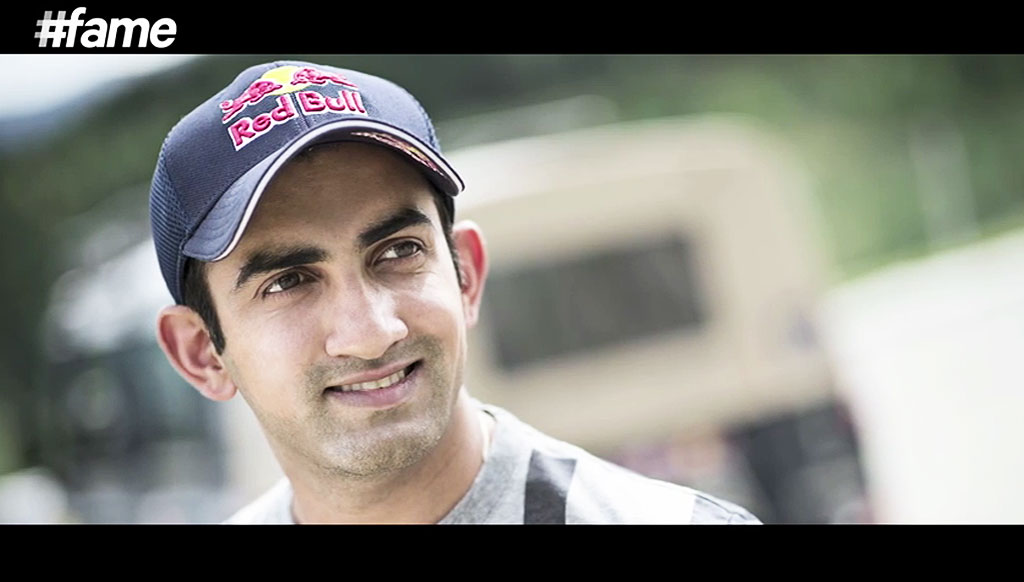
One of Indian cricket’s most prolific opening batsmen disagrees with his friends who call him an Armani boy. He says it is a just a coincidence that his wardrobe is full of Armani and that he mostly ends up picking up the brand. The southpaw loves to dress up in black, white, blue and grey. Timing is key to his success on the field. Off the field, he is “emotional” about timepieces. He is not one of those who keeps changing watches in short spans. Gauti is not fussy about brands but his better half is the fashion freak who makes her own decisions. The Delhi and ex-India captain confesses his love for Australia and says it’s the only place besides India where he could settle down.
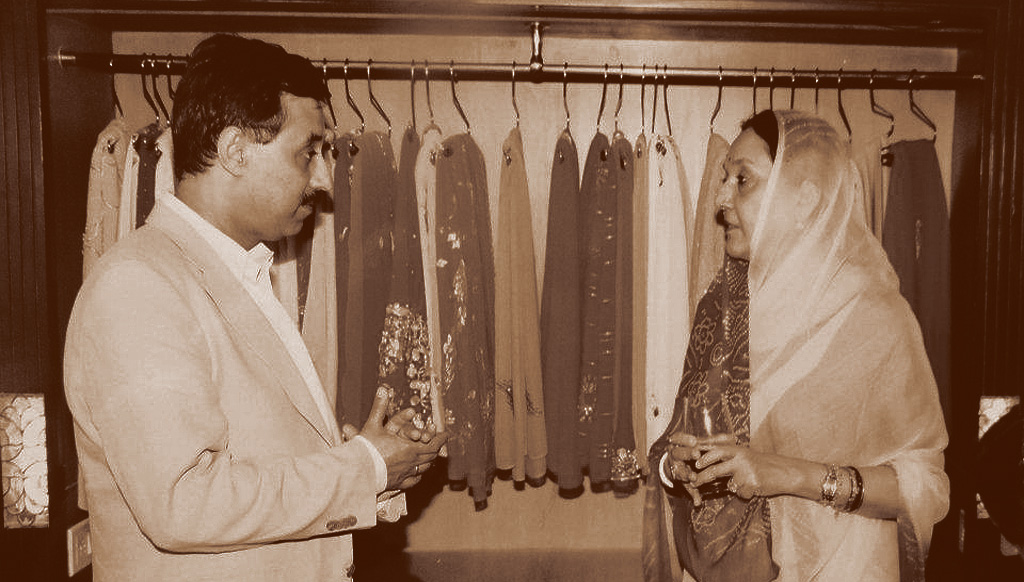
A ROYAL CHOICE | Her Highness Rajmata Padmini Devi of Jaipur at Rukhmani
In their modest showroom in Civil Lines in Jaipur, Vineeta Singh, Sunita Panwar and Bindu Chandela keep themselves busy by weaving unique sartorial splendours. Recently, Nita Ambani, the better half of business tycoon Mukesh Ambani, came calling on them to sample their treasured masterpieces.
A georgette shawl bought by Neeta Ambani
“Mrs Ambani picked up a Rs 68,000 shawl made of georgette and chiffons,” says Vineeta. “It took us around six months to create the shawl since the work on it was very delicate.”
Vineeta, Sunita and Bindu, all siblings, are exponents of chiffon sarees and wedding trousseau. They are founders of Rukhmani, where, interestingly, the who’s who of the country drop in more than often to buy something unique—something they wouldn’t necessarily get in a run-of-the-mill luxury store.
“It started as a hobby and still is,” Bindu says. “We have never thought of expanding. We are quite happy with just one store. People from all over the world come here though we have never advertised.”
The store is named after their grandmother Rukhmani. Its clientele includes some very loyal customers such as Princess Diya Kumari of Jaipur, Rajyashree Kumari Bikaner and Yuvrani Chitrangada of Kashmir, as well as Bollywood residents Kangana Ranaut and Zarine Khan.
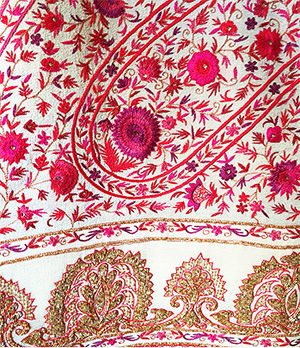
Demand soars during the wedding season. Customers prefer buying heavy pieces for weddings and receptions. “People like us for our bridal wear. They love our made-to-order Poshaks (a Rajathani outfit). Traditional designs such as peacocks, birds and paisleys are most popular,” Vineeta says.
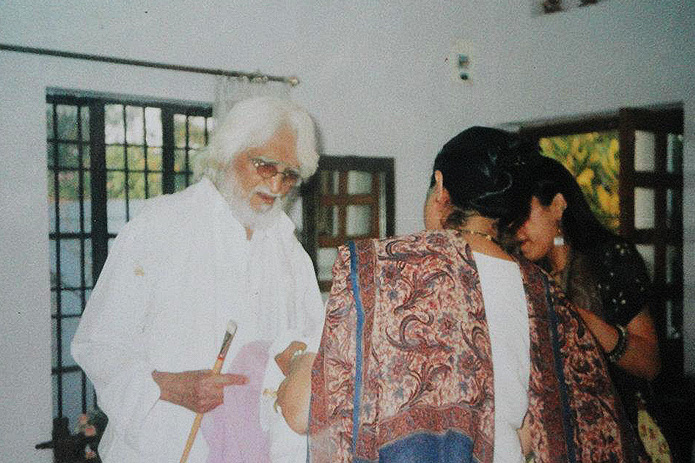
Late M. F. Husain visited Rukhmani store years back to order a saree for his film, Meenakshi
Each made-to-order Poshak takes around three months to complete. Some of them are made from pure gold and silver threads on satin, tissue and silk.
In summers, people prefer shaded chiffons in pastels with delicate work on them. Small motifs, Zardozi and sequin work are quite popular for casual occasions.
Rukhmani owes its birth to a salesman in Johri Bazaar, the sisters say. “Whenever there would be a wedding in the family, our relatives would take Vineeta along for selecting their trousseau. She would go to Ranas in Johri Bazaar every second month to shop for our relatives. One day, a salesman asked her why she doesn’t start creating her own designs,” says Chandela.
Bindu, Sunita and Vineeta started selling sarees from their home in 1996. “We were neighbours and our husbands were in the travel business, so we thought of doing something together. Our first saree was bought by Mrs Dutt, wife of the erstwhile principal of Mayo College, Ajmer,” says Bindu.
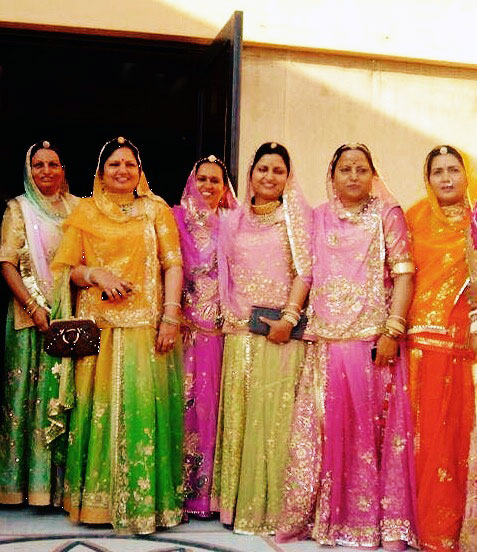
Rukhmani founders, Vineeta (first from left), Bindu (third from right) and Sunita (second from right) at a family wedding, wearing Rukhmani Poshaks
It was the word-of-mouth publicity that helped the sisters create a brand and in just two years they managed to open a store in Jaipur. “Today, owning a Rukhmani saree is a status symbol in the Rajput gharanas,” she says.
Rukhmani’s beautiful designs are inspired by paintings and flowers. Traditional designs such as peacocks, birds and paisleys are the most popular.
Rukhmani has 20 craftsmen at present. While they talk about their own favorites, the sisters say that they love working on tissue and a lot of colour combinations. Red and gold are their favourites. But sometimes, they prefer three different colours for lehnga, blouse and odhni.
Vinita’s beautiful designs are inspired by paintings and flowers. “I have been travelling a lot since my childhood. I get to see a lot of things which draw my attention to the finer details,” she says.
For the sisters, real luxury is in quality and craftsmanship. “That’s what we stand for,” says Chandela.
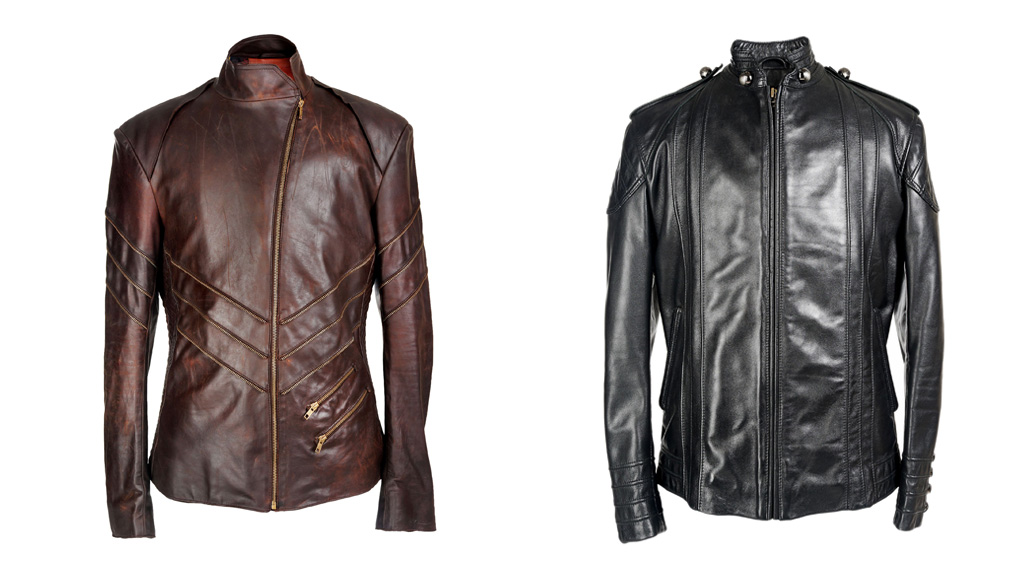
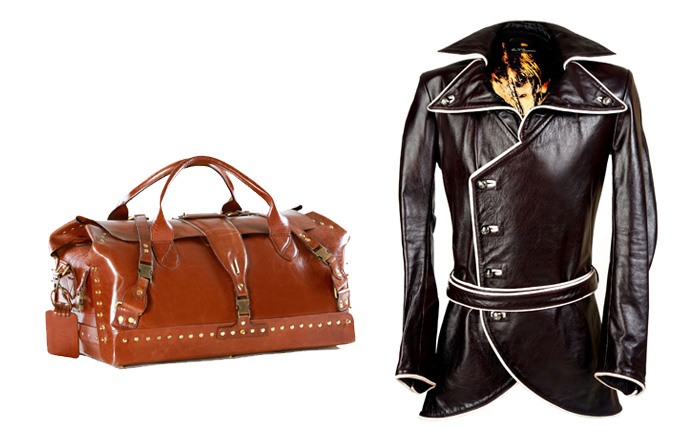
BIKERS’ BESPOKE | Leather jackets, Biker’s Black and Tan Rugged from The V Renaissance
The V Renaissance, bespoke art and luxury studio based out of New Delhi, showcased their couture leather collection in association with Indian Motor cycle at a fashion gala at The Indian Luxury Expo 2015 at DLF Emporio, New Delhi. The fashion show was a perfect blend of finesse and machismo that exuberated class and panache at every level. The models on the Indian Motorcycles sashayed on the ramp sporting classy leather jackets by The V Renaissance. The collection consisting of trench coats, leather jackets, biker jackets and helmets were showcased on the red carpet that kept the audience riveted.
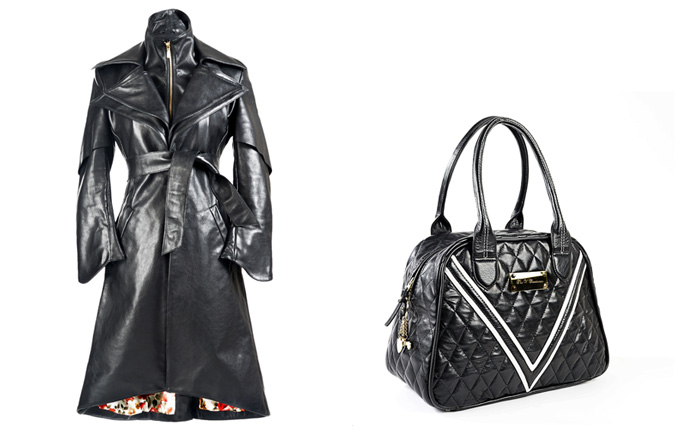
DIVA IN LEATHER | Bomber’s trench coat paired with the Ms V Ebony tote
The V Renaissance studio is an amalgamation of all things creative and inspired, be it framed, or in furniture, in accessories or art, in pocket squares or new-age leather helmets. Designed, directed and created by a team led by Vipul Amar and Harsheen K. Arora, The V renaissance products are expressions of their patrons’ true self, crafted with care that signifies a truly luxe brand. Their leather creations, be it jackets or bags, are tailor-made and open to customisation varying from design, size, colour, length, leather, trimmings, belt, collar, pocket, button and lining. Attention to detail is the guiding principle which ensures that each final piece is created after the dummy prototype is also a perfect one. Every crease, seam, fold is put right in place on genuine leather of your choice before the piece gets the stamp of approval. Such meticulous approach only betters the quality of grade one, full grained imported leather which is used in their leather line which fashionistas and bikers swear by.
A WEEKEND OF ADVENTURE | Trip out in Baron’s No.3 jacket paired with the Illusionist Weekend Safari duffel
We have here Harsheen Arora, psychologist and Creative Director at TVR, sharing wish us some insights on TVR leather goods, what all sets them apart and how best you can team them to up the style quotient.
Read on:
How are your leather jackets created? What is their life cycle and what sets them apart from other bespoke leather brands?
The four step process to creating a one-off The V Renaissance leather jacket:
Inspiration | Vipul (artist) and Harsheen (psychologist) meet with the client and understand their needs, wants and personality. We start sketching.
Define | Once the sketches are defined and each little piece has been given its dimension, we start making the mock in Leatherite.
Resources | Once the mock is finalized we work on bringing together all the resources like the leather, accessories, embossing dyes and more.
Work | Once every detail of the jacket has been worked out we craft the final piece at The V Renaissance Atelier.
At The V Renaissance the personal sessions with the client are the most crucial. Here with Harsheen’s expertise as a psychologist, we make sure that the minutest details of the jackets reflect exactly who the client is and what s/he wants.
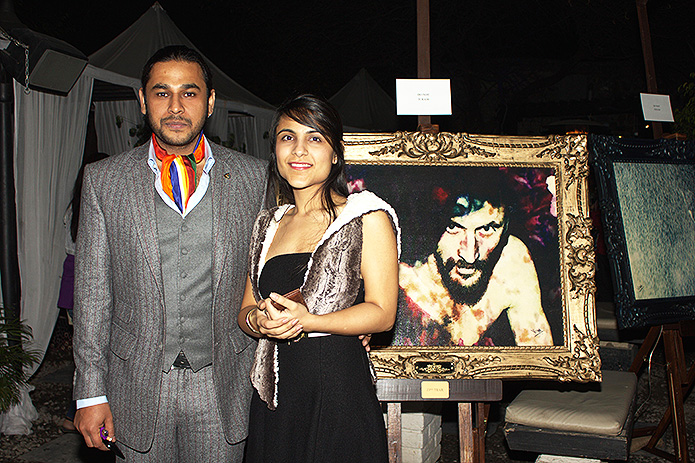
VIPUL AMAR & HARSHEEN ARORA | The creative duo propelling ahead The V Renaissance
What are the details that the consumer looks for in your leather jackets? What sort of detailing works best?
As we are a bespoke brand each client will look for details based on their needs. For instance, if we are designing a jacket for a biker/rider their needs and detailing will vary from someone who needs to make a fashion statement.
To give you some examples – we have had clients personalize the lining of their jacket with a photograph of who they are and their passions. We plan a photo-shoot with the client where Vipul shoots them while Harsheen speaks to them and brings out their true self in front of the camera.
There have been clients who want to customize their pockets for different articles they like to carry with them – lighter, pen, lip-gloss, phone and the like.Then there is the embossing of initials, names, tattoos.
We believe that every individual is unique and we try to do justice to their uniqueness while designing a jacket for them.
TWO TO TANGO | Brothers in arm, the Tango Gold and Red jackets with exquisite surface detailing
Which are the most expensive leather jackets in your collection?
The ready to buy collection ranges from fifty thousand to two lakh rupees.
The Rugged No. 5 is for One Lakh Forty Seven Thousand only. The leather used to make this jacket is imported from Italy and then especially treated with natural ingredients at The V Renaissance. The special feature of this leather is that it will change colour where it stretches and then goes back to the original. The more you wear it the better it gets.
How does one identify the traits that signify handmade leather goods of finest quality?
The quality and the kind of leather used, the stitching of the product, the accessories used, the design elements and the detailing of the product contribute to its quality quotient.
Tell us more about your range of bespoke leather goods for the trendy bikers?
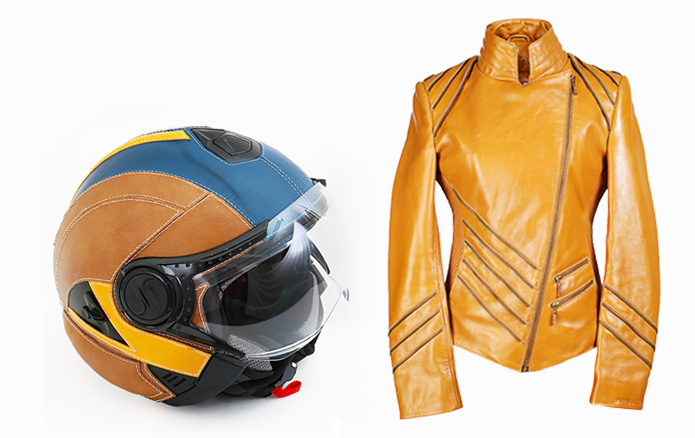
Our Leatherhead collection is especially designed for the bikers. Here we have customized leather bags keeping the needs of a biker in mind.
Then there are the customized leather helmets. We have a ready to buy range or the biker can pick a helmet, give us their old one, show us their bike, we understand their biker personality and personalize their helmet with leather keeping all things in mind.
What are the accessories that go well with leather jackets for those who want to dress it up?
The kind of leather jacket and the occasion both will define the kind of accessories that can be used to dress it up.
For a rugged jacket one may accessorize using watches, wrist bands, boots, belt, junk jewelry.
For a classy formal look one may accessorize with scarves, hats, formal shoes, or high heels, fine jewelry.
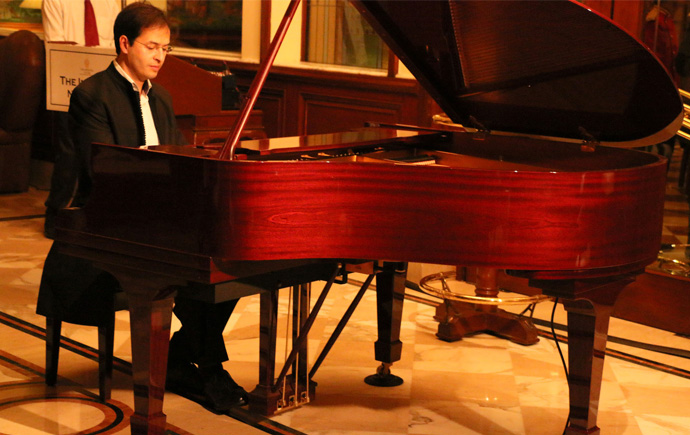
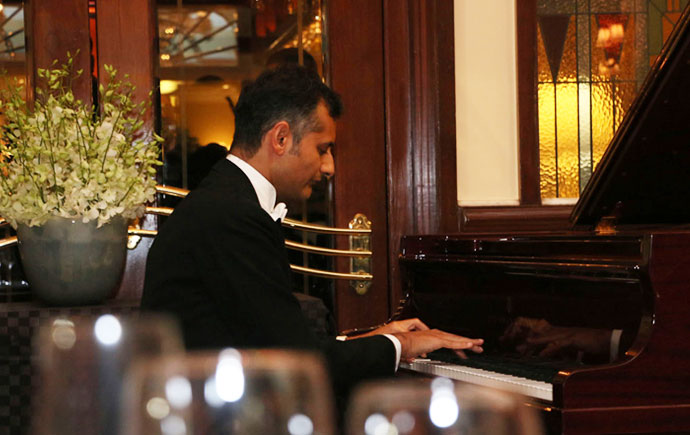
MAESTRO AT WORK | Karl Lutchmayer working his magic on the grand Steinway
Nat King Cole, famous African-American jazz-pianist, had said, “When I perform it is like sitting down at my piano and telling fairy stories.” The association of something quint essentially romantic such as fairy stories with an instrument like the piano is no mean chance but an accepted part of popular culture. And to own a piano has taken on new meanings with the pianoforte holding its own as part of a sophisticated interiors scheme, and with a resident virtuoso to throw in, there is cultural nostalgia at its best.
IN DIALOGUE WITH THE PIANO | Marouan Benabdallah mesmerising the audience at Nostalgia
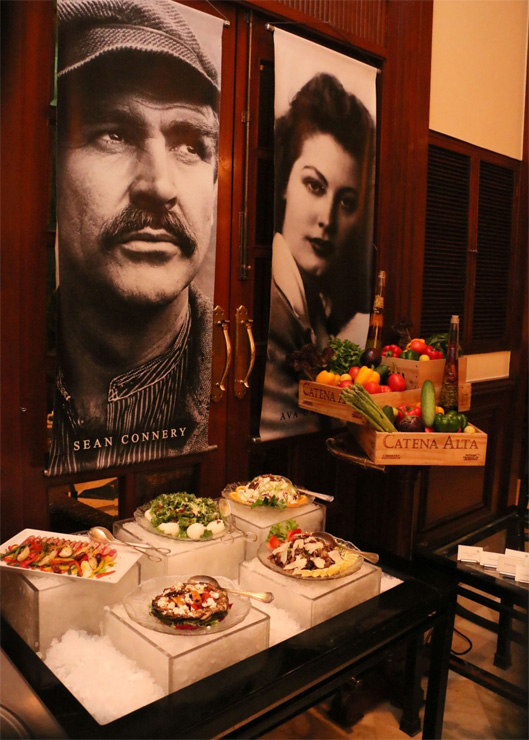
Speaking of nostalgia, there is New Delhi’s landmark hotel, The Imperial’s Classic European restaurant, Nostalgia at 1911 Brasserie, which also houses the unique Piano club on Steinway [the first of its kind to arrive in Delhi]. This concept restaurant is a one-off in Delhi for those who love their vintage European fare on fine china plates, and some good music to set it off with. The idea behind the Piano club at Nostalgia,is to give space to concerts and performances with unique artists promoting the live music heritage of the hotel. The evening in March 2013, when the Piano club was launched, saw an evocative piano recital by the noted Moroccan Hungarian Pianist, Marouan Benabdallah. Speaking on the occasion was Mr.Vijay Wanchoo, Sr. Executive Vice President and GM at The Imperial, who further outlined the purposeof The Piano club as the city’s very own site for “luxe and unique live concerts on Steinway” which will “put into form sit-down live concerts lending an ecstatic aura and matching the repertoire as well as the legacy of the hotel. Since the restaurant serves classic European recipes and is filled with the old world ambience, these one-of its-kind live concerts will surely make the experience larger than life.”
A VINTAGE AFFAIR | Classic European Buffet spread at Nostalgia, 1911 Brasserie
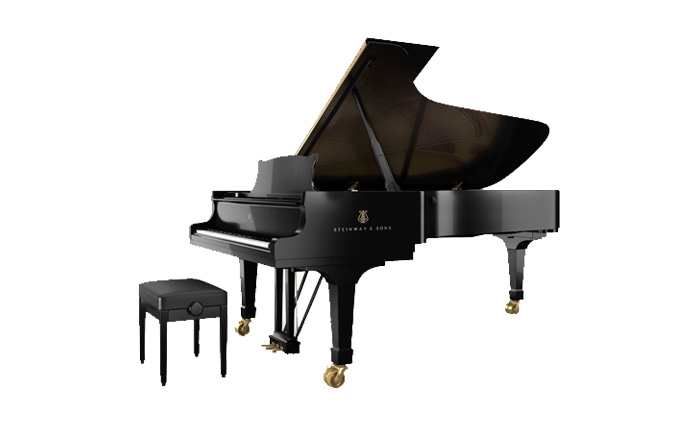
With the piano finding its celebrated spot in The Imperial’s elegant interiors, which speak of a grandeur that belonged to an age bygone, the piano in India has also seen a rise in the number of music enthusiasts, young and old, learning their ways around the instrument or just attending concerts featuring it. Delhi can’t be the only cultural capital of India, but sure is the halting ground for travelling artists and troupes who are eagerly awaited by the city’s eclectic crowd. What started in Italy in 1709 in the harpsichord maker, Bartolomeo Cristofori’s shop, has found its way to homes and hearts of the artistically inclined, with music conservatories and schools dedicating divisions to its study and dissemination, and piano clubs and societies taking it a notch closer to the discerning audiences. Among piano brands available in the market today, the one leading is Steinway & Sons, a time-honoured American German name in piano construction, is world-renowned for their grand and upright pianos of the highest quality favoured by musicians across the world. Having developed more than 125 patents, the company is considered to be the founder of modern piano construction and holds a royal warrant by appointment to Queen Elizabeth II. Each Steinway grand piano is a unique master piece produced from the best materials by the hands of craftsmen representing a legacy which started as long back as in 1853.
BLACK BEAUTY | A Steinway concert grand in all its regalia
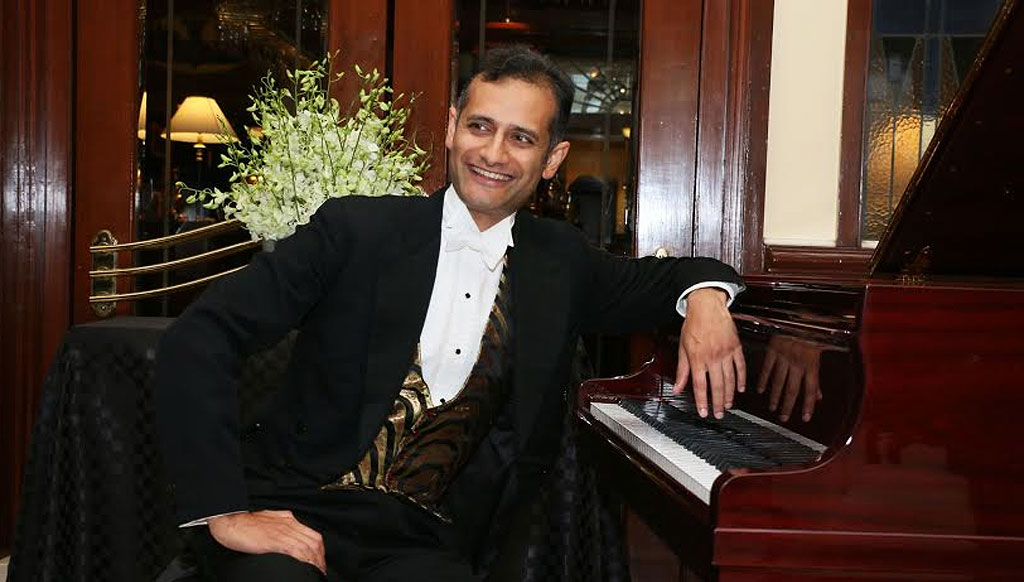
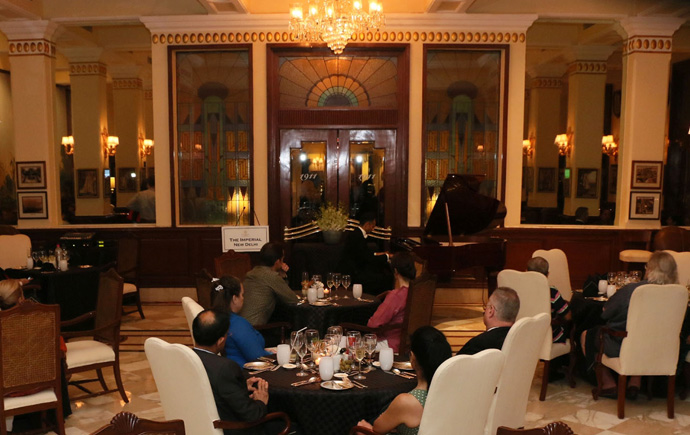
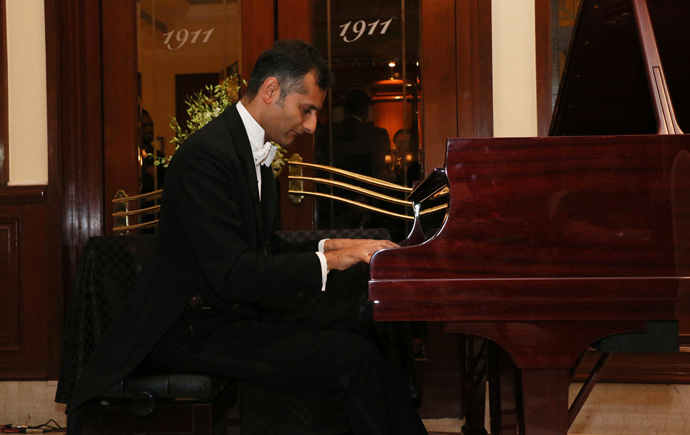
Commemorating the 3rd anniversary of Nostalgia at 1911 Brasserie, the Piano clubwas stage to a bedazzling performance on the grand Steinway by Karl Lutchmayer- the world renowned conversational pianist. It was an evening of unabashed virtuosity which regaled the city’s music loversas the renowned concert pianist worked his magic recreating the scintillating pianism of Liszt to the vibrant rhythms of Bartók, the heroism of Chopin and the dazzling finger work of Ravel. Leaving the audiences hungry for more, the artfully attired pianist is a great addition to the artistic legacy of the Piano club where more such concerts are anticipated.
IN RAPTURES | A captivated audience at the Piano club
A Steinway Artist, Karl Lutchmayer performs across the globe, and also holds an academic professorship at Trinity College of Music, London. He is a regular guest lecturer at conservatoires around the world, including the Juilliard and Manhattan Schools in New York and the Mehli Mehta Foundation in India, his family home. With his works garnering critical acclaim and invitations coming for him to tour continents furthering the cause of piano & music, Karl Lutchmayer resides in London, where he indulges his other passion – classic cars – with a collection which includes a 1968 Triumph Spitfire, and his new pride and joy, a 1965 E-Type Jaguar.
PIANO CLUB | At The Imperial – Karl Lutchmayer performing on the Steinway at Nostalgia, 1911 Brasserie
Here we have the travelling piano guru answering a few essentials about the how, where and what of pianos for those who love to tune in right. Read on:
What is so special about the Steinway piano? What is the legacy that adds to the aura of owing a Steinway?
The Steinway is at the same time a part of history and the last word in innovation. When they were first created in the 19th century, their combination of traditional craftsmanship and modern technology put them decades ahead of the competition, and each succeeding decade Steinway has kept up with the latest technology, with more original patents than, I believe, any other instrument maker. And yet, at the same time, each instrument is a handmade, unique instrument. In today’s world how many items can you think of that are hand built and take a full year to make? For this reason to own a Steinway is to be part of an extraordinary family which includes all the finest concert halls in the world, and the finest concert artists who, for well over a century – from Liszt himself onwards – have chosen Steinway pianos as their medium of communication, their confidant and friend.
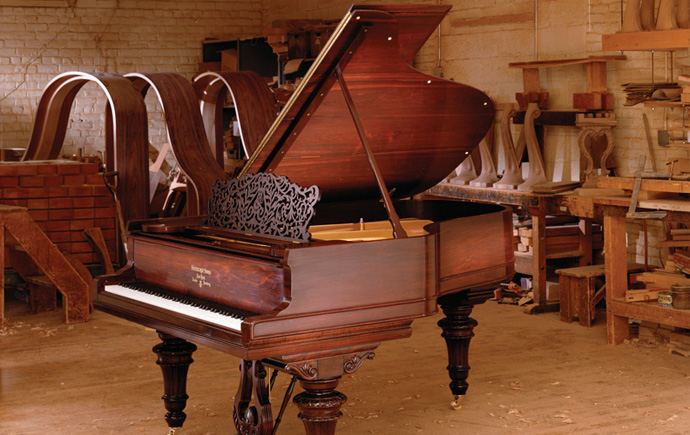
THE HEIRLOOM COLLECTION | Vintage Victorian Steinway Piano rebuilt and certified by the Steinway & Sons Factory
For piano enthusiasts and collectors, what are the other international brands to look at for buying? What are the places [in India and in cities abroad] where one can source/buy the best piano brands?
The other key brands in the market are Fazioli, Bluthner, Bechstein, Yamaha and Kawai. Each has its own unique sound and strengths, but none, so far, have managed to even begin to challenge the supremacy of the Steinway. Abroad, every capital city, and many others besides, has showrooms dedicated to these instruments, but perhaps New York and London have the widest choice. In India the first trip must inevitably be to Furtados (whether in Mumbai, Delhi, Bengaluru, Pune, Goa etc) who have the very widest selection of pianos, to suit all tastes and pockets. Yamaha and Kawai now also have showrooms in major cities, but you will not be able to try a selection of makes due to their single brand status, unlike at Furtados (who also sell Yamahas). However in the South I would also recommend Musee Musicale.
What are your expert tips on taking care of a piano besides showing it all the love?
In India it is essential to get the best advice about installing either a dehumidifier or a humidifier, depending on the local climactic conditions. In an ideal world, the temperature should be kept fairly constant, but obviously this is not always possible. More than this, a piano should be tuned 3-4 times a year, and depending on the amount of playing, will need a certain degree of servicing every 3-5 years. Other than that, please don’t put liquids anywhere near them – these are fine instruments, not coffee tables!
CHARISMA IN PERFORMANCE | The devotion to a piano is what makes it come alive
Being a professor, could you share your thoughts on how the piano is more than just an instrument, but also a symbol of romantic luxury?
The piano is the symbol of the romantic period. The idea that one person alone might sit and perform for people without any help from others (such as an orchestra) is the ideal of genius – one man stepping forward before others through God-given gifts, and, as importantly, the vision, tenacity and sheer hard work, to become an artist who mesmerizes an audience and takes them on journeys they could not have been imagined possible. Even the shape of the piano has been identified with romance – not the least in Hollywood where for about a hundred years, from Dangerous Moonlight, to Song Without End, the Fabulous Baker Brothers and even in Who Framed Roger Rabbit?, it stands as a symbol of hope and escape from everyday life. Indeed, a few years ago BMW asked Steinway to design the interiors of one of their cars, in order to create a kind of uber brand! However, once you have played a few pianos, the real luxury is simply in sitting down at a Steinway and knowing it will respond to your every thought and wish – whatever it might be!
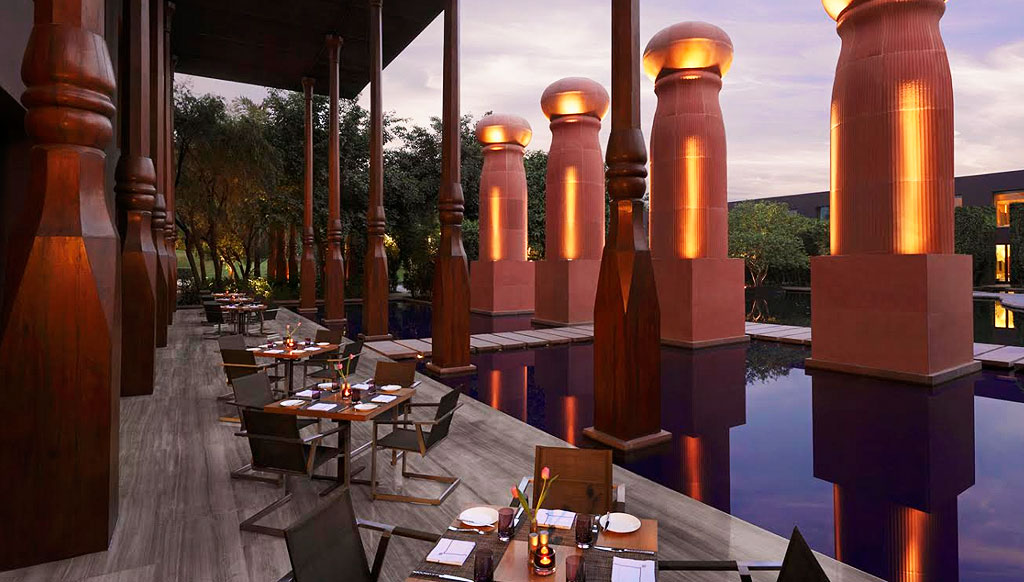
DINE UNDER THE STARS | Al fresco seating at Kiyan, Dusit Devarana
The drive to Dusit Devarana New Delhi on NH8 is not so much an indicator of an entry into an uber luxury urban resort, but once you have arrived, and literally so, what lies beyond is a sight for city-sore eyes. Beautiful landscaped greens studded with a thousand mature trees, blending seamlessly with the tranquil water bodies criss-crossing 8 acres of lushness, with the romantically lit up resort rising in the middle greet you ceremoniously, once you are within the folds of this first Dusit hotel in Delhi.
Designed by Thai architect and interior designer, KhunLekBunnag, there is a running motif of the “five elements” in the hotel. There is the giant rotating pendulum on the staircase of the lobby, there are the lunar designs emerging from large cut-outs on the marble walls, and then there are little flower details everywhere.The genius of it also lies in how effectively the noise from the highway is cut off, and you’d notice the solid wall made of brass leaves as the first sound barrier.
The verandahs fringing the resort, the regal Isfahan pillars, high dome ceilings are all combined to create a modern yet inspired aesthetic. Ankur Bhatia, Executive Director of Bird Group which is in association with Thailand’s premier Dusit Hotels & Resorts, speaks of the uniquely designed resort where“The most interesting element is [Bunnag’s] three dimensional architecture in the dome area. It incorporates light and shadow plays, which changes hue as the day progresses.”
INTO URBAN LUXURY | Serene aesthetics inspired by nature motifs
The predominance of water in this man made oasis of calm is apparent in the 102-meter long temperature-controlled swimming pool while the stained glass of the lobby overlooks another shimmering pool. Even the pathway leading to the Spa is flanked by water bodies. To bring in the aspect of nature unbridled, there is a large pond next to the restaurant, which is said to be housing a family of ducks.And you have all of this in the middle of a city, or rather cities, given the resort’s convenient location midway from Delhi to Gurgaon.
LANDSCAPED LUSHNESS | A cocoon of calm close to the city
While the artistic touchpoints are not its only strong points, the resort has other reasons to justify it having won the Conde`Nast Traveller Reader’s Award 2014 for being the Favourite New Leisure Hotel in India. Inspired by the ‘garden in heaven, there is the Devarana Spa which is situated amidst serene water bodies and has outdoor treatment areas coupled with four indoor treatment suites with private verandahs. The wide range of therapies, trained therapists and the international ambience calling in the best of nature keep up the claim of a ‘high-end sanctuary experience’.
There is an extensive Spa menu with a la carte massages, body scrubs & wraps, facials and there are stand-outs therein, like the Signature Hammam which is long [75 minutes] and lavish with olive oil soap, Rhassoul clay and the precious Argan oil to finish. The other option for a complete face and body reboot is the Half Day Harmony which takes about 5 hours which starts with an aromatic Thai herbal steam, and goes to a floral bath, body scrub, massage, facial and foot reflexology.
DEVARANA SPA | Experience rejuvenation for the mind, body and soul
For the gourmet lovers, there is also Kiyan, the restaurant which calls out with its Isfahan columns, surrounding water bodies and zen-like ambience. The friendly and attentive staff is more than willing to tell you about the ‘world cuisine’ served with élan on beautifully turned out plates. With recipes from Europe, Far East and India, the kitchen uses only select organic vegetables, free range meats and imported ingredients.
There is a selection of new age wines, stock malts and cigars to keep the night going. And for a more food-focused outing to Dusit, think of going for the Sunday Champagne brunch where chef Nishant Choubey and team prepared a melange of appetizers like Lagan ki Boti, Cinnamon Tart, Robatta Chicken and, Cajun Spiced Fish Finger, prawn salad, Mushroom Yakito go with Mumm champagne. The cold cuts and dimsums platters are also tempting to try.
For the main course there are some robust Asian flavours to compete with European delights. The Massaman Curry and pan fried red snapper might stand out for who love their curries a bit sweet and their fish with the skin crispy.
A SANCTUARY OF BLISS | Experience it at the Dusit Devarana, New Delhi
The bar Iah is where you can take to after, should you be loath to bid the place goodbye. The bar’s red toned façade with dim lighting inside is where you will find time stopping, even as the huge windows overlooking the patio will keep you grounded enough. The bar’s mixologist is always happy to mix it your way or you can settle for the summery, breezy Tom Yum Mojito with lemongrass, basil and galangal awing you. The cheese platter is worth a nosh and the drinks are all the more innovative, so that you can sway in a mystical daze so induced by Dusit Devarana – the perfect in-city hideout.
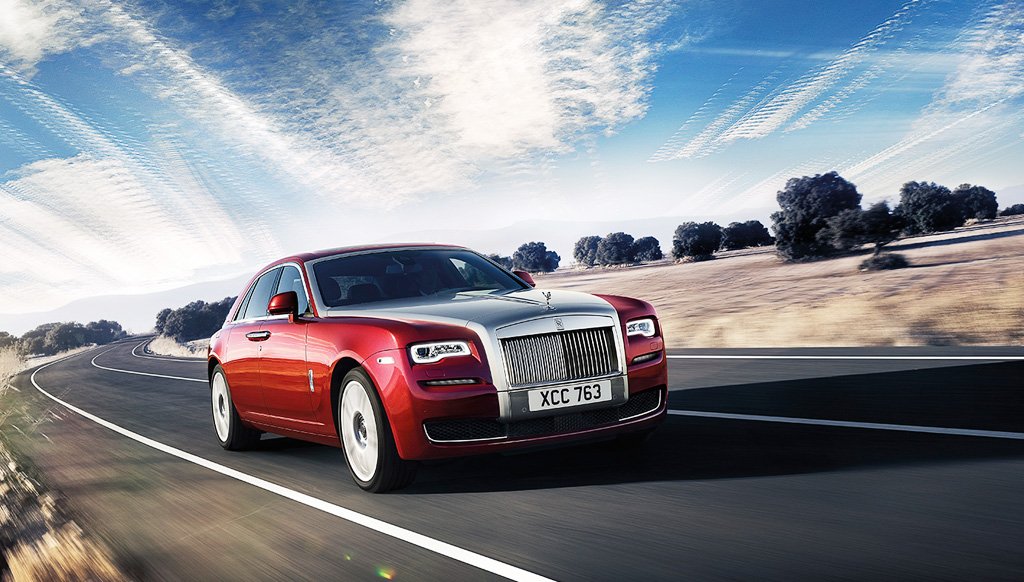
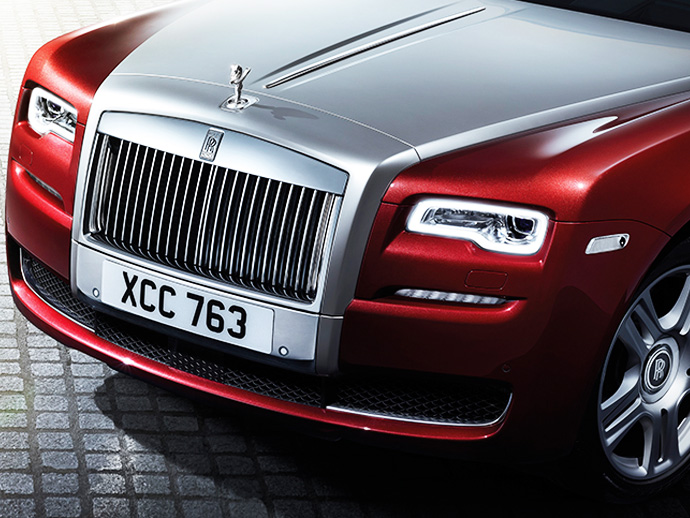
PERFECT FUSION | Ghost Series II depicts traditional Rolls-Royce DNA in the elevated prow, large uninterrupted surfaces, long bonnet and short overhang
In essence, Ghost is a Rolls-Royce that meets its owner’s every need; an exquisitely appointed business tool for the business week and an engaging and effortless driving experience for leisure at the weekend.
A single defining principle came to characterise the Ghost design process – to harness the power of simplicity. In Ghost Series II, tradition blends perfectly with this bold, contemporary direction.
An uncompromising approach to materials and craftsmanship remained and traditional visual tenets were re-imagined to express the car’s modernity and dynamism. For example the stately presence of Phantom’s grille made way for a softer, less formal design – its subtle curvature more akin to a jet air-intake than traditional pantheon facia.
Flowing ‘yacht lines’ and powerful flanks hint at the car’s inherent dynamism, whilst traditional Rolls-Royce DNA is expressed in the elevated prow, large uninterrupted surfaces, long bonnet and short overhang.
Re-sculpted headlights, with unbroken daytime running lights framing a new, more dynamic shape, gives Ghost Series II a distinct visual signature from the front
The eye is immediately drawn towards the re-sculpted headlights, with unbroken daytime running lights framing a new, more dynamic shape, giving Ghost Series II a distinct visual signature from the front. This blends perfectly with revised surface treatments to the front of the car. A tapered ‘wake channel’ on the bonnet, emanating from the Spirit of Ecstasy’s wings, evokes the sight of a jet’s vapour trail, hinting at the car’s dynamism. Subtle re-sculpting of Ghost’s bumpers creates a stronger stance and a sense of extra width and height, whilst the contemporary aesthetic is further enhanced with the addition of chrome inserts to the front air intakes, which now feed more air cooling to the front brakes.
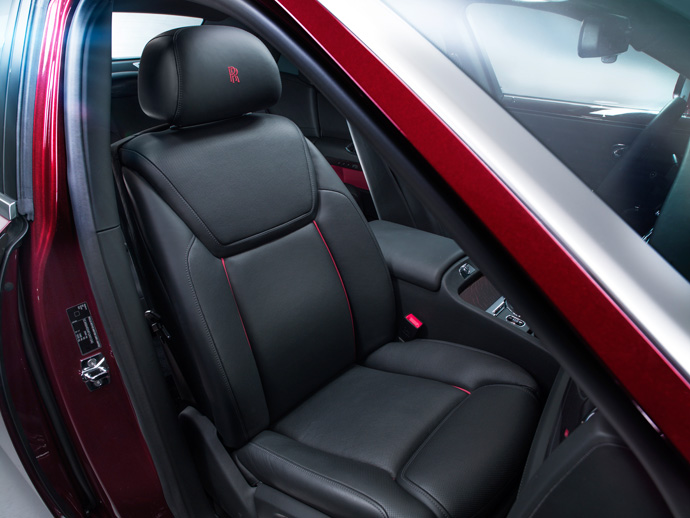
Electronically adjustable thigh supports for front seat passengers complement a new seat structure, enhancing Ghost’s interior comfort levels
One of Rolls-Royce’s defining visual signatures is given an enhanced dynamic edge. The famous waft line has be re-designed on Ghost Series II to lean further forwards – with a view to emphasising the car’s effortless dynamism.
Interior comfort and style are enhanced with re-designed seats. Electronically adjustable thigh supports for front seat passengers complement a new seat structure, enhancing Ghost’s interior comfort levels. A revised rear seat design ensures absolute comfort for those wishing to conduct business or simply relax. In ‘Lounge seat’ configuration, the seats are gently angled towards each other to create a more intimate setting, allowing passengers to communicate more easily.
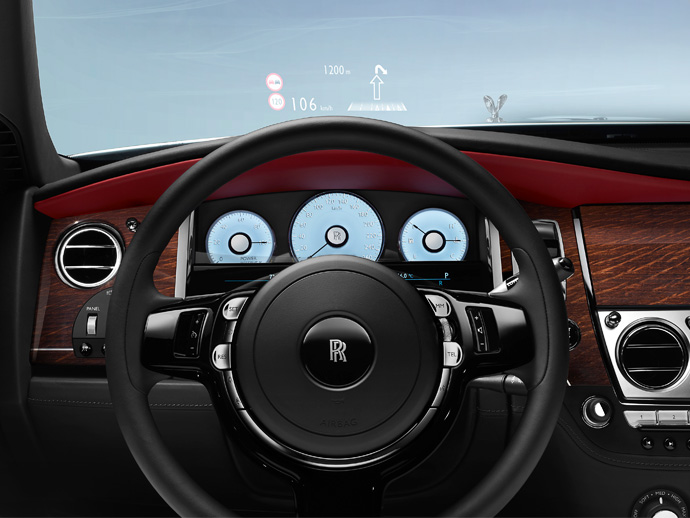
The instrument dials and clock have also undergone subtle enhancements with individually applied polished metal chaplets around the dials
The seats are available with three-level heating as standard with optional massage function and can be reclined for comfort. Chrome surrounds to the sun visor lights and a new soft-feel dashboard treatment enhance the car’s premium tactility, whilst sumptuous natural grain leather can now be optionally extended to the A and C pillars.
The instrument dials and clock have also undergone subtle enhancements with individually applied polished metal chaplets around the dials evoking the precision design of hand-made, luxury wrist watches, whilst the matt chrome centres ‘float’ in the middle of each instrument.
Eighteen individually-tuned speakers, with both theatre and studio settings, deliver a pure ‘larger than live’ sensation
On opening the car’s coach doors, one is met with a calming, light and uncluttered space. Occupants can work, relax or simply enjoy the pleasure of driving in a cosseting, peaceful atmosphere, assure that they are fully connected to the outside world of business affairs through the car’s connectivity suite.
Eighteen individually-tuned speakers, with both theatre and studio settings, deliver a pure ‘larger than live’ sensation. Two bass speakers located in the boot complement seven speakers meticulously placed throughout the cabin. Two ‘exciter’ speakers in the roof-lining bring the sound to occupants’ ear level creating a completely unique listening sensation.
Re-designed front and rear struts married to new steering gear and adjusted dampers significantly increase Ghost Series II’s cornering ability
The system utilises a highly sensitive microphone to constantly monitor ambient exterior noise, subtly adjusting the volume and tone settings accordingly to ensure the system delivers consistent perfection. The technology complements this, with frequency and phase correction for individual speakers eliminating potential loud and dead spots caused by outside influences.
Re-designed front and rear struts married to new steering gear and adjusted dampers significantly increase Ghost Series II’s cornering ability, whilst enhanced feedback levels can be felt through a thicker steering wheel. In all specifications, ride quality and rear stability is further enhanced thanks to new rear hydraulic axle bearings.